If one missed grade, one unclear purity spec, or one inconsistent shipment can stop a production line, a guide to bulk aluminium sourcing is not just useful – it is part of risk control. Industrial buyers do not purchase aluminium on headline price alone. They buy for conductivity, castability, corrosion resistance, downstream performance, and the confidence that each lot will match the spec promised.
That is why bulk sourcing needs a commercial and technical lens at the same time. Whether you are buying ingots for remelting, feedstock for manufacturing, or material for construction and electrical applications, the right sourcing decision starts with understanding what you actually need the aluminium to do once it reaches your plant.
What bulk aluminium sourcing really involves
Bulk aluminium sourcing is often treated like a simple procurement exercise. In practice, it is closer to a supply strategy. You are balancing purity, grade consistency, freight economics, production schedules, and market exposure in one decision.
For most industrial buyers, the core question is not just, “Can this supplier provide volume?” It is, “Can this supplier provide the right volume, in the right grade, with the right documentation, on a schedule that supports production?” A supplier that can offer tonnage but cannot maintain specification consistency may create more cost than it saves.
In aluminium, small differences matter. A buyer sourcing for cable production has a different risk profile than a buyer sourcing for cast components or packaging inputs. High-purity material may command a premium, but that premium can be justified if it reduces defect rates, improves conductivity, or lowers waste in processing.
Start with application fit before price
The fastest way to make a costly sourcing decision is to ask for a quote before defining the end use. Aluminium grades are not interchangeable just because they share the same base metal. Grade selection should reflect the mechanical and chemical demands of the final application.
If the material is going into electrical infrastructure, purity and conductivity are likely major priorities. If it is feeding a casting process, impurity tolerance and melt behavior may shape the decision more than headline purity alone. For transportation and manufacturing, the buyer may weigh strength-to-weight performance, corrosion resistance, and forming behavior.
This is where a practical guide to bulk aluminium sourcing should be strict: do not let commercial urgency replace specification discipline. A lower-cost lot that causes quality variation, rework, or customer rejection is rarely a cheaper purchase.
Common ingot grades and why they matter
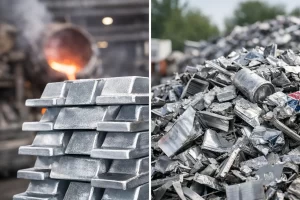
Standardized ingot grades such as A7, A8, A9, and A6 are commonly used reference points in industrial trade. These grades help buyers compare purity ranges and expected application suitability. Higher-purity ingots are often favored where conductivity, finish quality, or controlled alloying inputs matter most.
The right choice depends on your process. Some buyers need premium grade aluminium to support a stable downstream alloying operation. Others need a reliable general industrial input where consistency matters more than the highest available purity. The important point is to match the grade to the production outcome, not to buy the highest number by default.
How to evaluate a supplier in bulk aluminium sourcing
A credible supplier should be able to discuss more than price and availability. They should be able to explain grade specifications, likely application fit, shipment structure, and what quality controls support lot consistency. If the conversation stays vague, the risk usually shifts to the buyer.
Ask how the material is classified, how purity is verified, and what documentation accompanies each shipment. For bulk transactions, traceability is part of the value. Buyers should know whether they are purchasing standardized ingots, what tolerances apply, and how non-conforming material would be handled.
Capacity also deserves a closer look. Some suppliers can fulfill one large order but struggle with recurring schedules. If your operation depends on repeat monthly or quarterly volumes, sourcing confidence should be built around continuity, not just a successful first shipment.
Questions that reveal real supply capability
It helps to pressure-test the commercial promise. Ask whether the supplier can maintain the same grade profile across multiple deliveries, what lead times look like under market pressure, and how they manage fluctuations in raw material access.
For buyers serving regional or export manufacturing, logistics discipline matters almost as much as metallurgy. A supplier with experience supporting industrial flows into markets such as Germany, Turkey, Vietnam, or China may be better equipped to discuss shipment timing, packaging standards, and customs-related documentation where relevant.
Price matters, but total cost matters more
Aluminium buyers know the temptation of chasing the lowest quote in a volatile market. The problem is that the invoice price is only one part of sourcing cost. Bulk aluminium affects energy use, process yield, scrap rates, production efficiency, and even warranty risk in the finished product.
A cheaper ingot can become an expensive input if it creates melt loss, quality inconsistency, or production downtime. On the other hand, paying more for a premium grade can make commercial sense if it improves throughput and reduces rejection rates. The right sourcing decision often sits in the middle – not the absolute cheapest material and not the most premium option without a performance reason.
Freight and packaging also deserve attention. In bulk purchasing, delivery terms can shift the economics quickly. Buyers should understand whether pricing reflects ex-works, port delivery, or landed cost assumptions, and whether packaging is appropriate for their storage and handling environment.
Quality control is where good sourcing decisions hold up
In large-volume aluminium purchasing, paperwork should support the physical product, not replace it. Certificates and declared specifications are necessary, but consistent quality is proven over repeated deliveries.
Look at whether the supplier can maintain uniformity from batch to batch. For manufacturers running continuous or high-throughput operations, variation can create major process instability. Reliable aluminium sourcing should reduce uncertainty in melting, casting, forming, or fabrication.
This is particularly relevant for buyers in construction materials, electrical systems, and transport-related manufacturing, where performance expectations are clear and failures are costly. Corrosion resistance, dimensional reliability in downstream processing, and chemical consistency all affect the commercial value of the material.
Cameroon’s relevance in the aluminium supply picture
For buyers assessing long-term sourcing options, Cameroon has strategic relevance because of its connection to bauxite and its broader role in the aluminium value chain. That matters less as a marketing point and more as a sourcing signal. Industrial buyers often prefer supply relationships tied to real material ecosystems rather than purely transactional trade channels.
A supplier that understands the resource base, grade requirements, and industrial applications can usually speak more clearly about product fit. That is especially useful for buyers who do not want to sort through generic commodity offers with limited technical context.
Building a smarter guide to bulk aluminium sourcing for your business
The best sourcing framework is simple enough to use and strict enough to prevent avoidable mistakes. Start with end-use requirements, then define the acceptable grade range, purity expectations, order volume, delivery schedule, and documentation needs. Only after those are clear should price comparison become the deciding factor.
It also helps to segment purchases by risk. A trial order may be appropriate for a new supplier, but strategic volume should be reserved for partners that have proven consistency. Buyers who treat all suppliers as interchangeable often expose themselves to hidden quality and continuity problems.
For companies buying aluminium as a recurring industrial input, supplier communication should be technical and commercial at once. You want a supplier that can discuss purity and application suitability with the same confidence they discuss tonnage and lead time. That combination usually signals a more dependable sourcing partner.
Aluminium Cm positions its offer around that practical balance: bulk supply, clear grade segmentation, and industrial-use alignment for buyers who need aluminium that performs as expected in real production environments.
Final buying signals to watch
A strong supplier usually shows three things early. First, they are specific about grade and application fit. Second, they are realistic about lead times and volume. Third, they understand that industrial buyers measure value in production outcomes, not just quoted tonnage.
If your sourcing process is built around those signals, purchasing becomes more predictable. And when aluminium is a core input to your business, predictability is often the real margin protector.
The most useful sourcing decision is not the one that looks best on the day you buy. It is the one that still looks right when the material reaches your floor, runs through your process, and performs exactly as your customer expects.