

When a buyer asks for A9 grade, the real question is not just availability. It is whether the a9 aluminium ingot purity level matches the casting, conductivity, finishing, and scrap-loss targets of the job. In bulk procurement, that distinction matters because a small change in purity can affect melt behavior, downstream consistency, and total production cost.
A9 aluminium ingot is generally understood as a high-purity primary aluminum grade with a nominal aluminum content around 99.90%. That puts it above more common commercial grades used for general remelting, while still keeping it practical for large industrial use. For procurement teams, A9 sits in a useful middle ground – cleaner than lower-purity grades, more economical than ultra-high-purity specialty metal, and suitable for a wide range of manufacturing lines that need dependable chemistry.
What a9 aluminium ingot purity actually means
Purity in this context refers to the percentage of aluminum in the ingot, with the balance made up of trace elements and residual impurities such as iron, silicon, copper, zinc, magnesium, and titanium. When buyers refer to A9, they are usually looking for aluminum at or near 99.90%, with impurity limits controlled tightly enough to support repeatable industrial processing.
That number sounds simple, but purchasing decisions should not stop at the headline purity figure. Two suppliers may both present A9 material, yet the impurity profile can vary within acceptable limits. Those differences influence fluidity during remelting, final surface quality, electrical behavior, and compatibility with alloying programs.
For that reason, serious buyers review both the declared purity and the full chemical analysis. A9 grade is not just about reaching 99.90% aluminum. It is about how the remaining 0.10% is distributed across elements that can help or harm the intended application.
Why impurity profile matters as much as the purity number
In industrial use, not all impurities carry the same weight. Iron and silicon are often watched closely because they affect cast structure, ductility, and finishing quality. Copper may improve some alloy systems in controlled amounts, but unintended copper contamination can reduce corrosion resistance. Zinc and other trace elements can also influence downstream performance depending on the product being manufactured.
This is where a9 aluminium ingot purity becomes commercially relevant rather than just technically interesting. If your plant is producing conductor rod, foil feedstock, extrusions, or precision cast components, the chemistry window matters. Cleaner input metal can reduce process adjustments, lower reject rates, and support more predictable alloy formulation.
On the other hand, not every operation needs A9. If the material is being used in applications with wider tolerance for impurities or where remelt economics are the main priority, a lower grade may be more cost-effective. That is why grade selection should start with the end use, not the grade label alone.
Where A9 ingots are commonly used
A9 ingots are widely suitable for remelting and conversion into semi-finished and finished aluminum products where a high-purity base metal is valuable. Common industrial uses include cable and electrical materials, rolled products, extrusions, deoxidation processes, packaging inputs, and selected transport and machinery components.
In electrical manufacturing, higher purity supports better conductivity and cleaner performance in downstream processing. In rolling and extrusion, cleaner feedstock can help maintain consistency in mechanical properties and surface finish. In packaging and consumer-facing metal products, lower impurity levels may also support a better visual result and tighter process control.
For foundries and manufacturers supplying construction or transportation sectors, A9 can be a strong choice when the target is a stable primary metal input for custom alloy production. It provides a dependable base for adding controlled alloying elements without starting from a heavily contaminated melt.
A9 compared with A7 and other ingot grades
Buyers often compare A9 with A7, A8, or A6 when balancing purity against budget. In broad terms, A9 offers a higher aluminum content than A7 and A8, while A6 typically sits lower. That increase in purity can translate into better conductivity, lower contamination risk, and reduced need for melt correction.
The trade-off is price. Higher purity primary aluminum usually carries a premium, so the value case depends on what your operation gains from cleaner metal. If your product line is sensitive to iron and silicon levels, the premium may be justified through lower waste and more stable output. If your manufacturing route already includes extensive alloying and impurity management, the cost advantage of a lower grade may outweigh the benefits of A9.
This is why experienced buyers avoid treating all ingots as interchangeable commodities. Grade choice is a production decision as much as a purchasing decision.
What industrial buyers should verify before ordering
A supplier quote for A9 should come with more than a grade name and tonnage. The practical evaluation starts with the certificate of analysis, which should identify the aluminum percentage and the major trace elements. Batch consistency is just as important as nominal composition because a plant running large volumes needs predictable input from shipment to shipment.
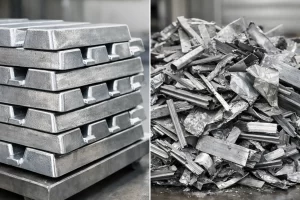
Form factor also matters. Ingot dimensions, stacking method, bundle weight, and packaging condition affect handling efficiency at the receiving site. For export or regional movement into industrial markets, logistics reliability can be as important as chemistry. Late delivery or inconsistent packing creates production risk even when the metal itself meets specification.
Buyers should also confirm whether the material is primary aluminum, the production standard being referenced, and the supplier’s capacity to support repeat orders. A one-time offer may help with spot demand, but industrial planning usually requires continuity.
Quality control and commercial risk
The strongest supply relationships are built around verifiable quality control. For A9 ingots, that means controlled smelting and casting practices, consistent analytical testing, proper marking, and documented traceability. These are not paperwork details. They reduce the chance of receiving mixed-grade material or chemistry drift that affects downstream output.
Commercial risk shows up fast when ingot quality is inconsistent. A plant may need extra fluxing, chemistry correction, sorting, or rework. Furnace time increases. Yield can drop. If final products miss specification, the cost of replacing or downgrading output quickly exceeds the small savings gained from cheaper metal.
That is why procurement teams usually evaluate total value rather than invoice price alone. With a grade like A9, dependable purity can support cleaner remelt cycles, stronger quality assurance, and better planning across production schedules.
Why A9 can be a strategic buying grade
For many manufacturers, A9 is a strategic grade because it offers a strong combination of purity and industrial practicality. It is high enough in aluminum content to serve demanding applications, but still widely usable in mainstream manufacturing. That makes it attractive for buyers who need premium-grade input without moving into niche, ultra-high-purity categories that may be unnecessary for commercial production.
This is especially relevant for firms supplying sectors where performance claims matter – electrical infrastructure, transport components, engineered building products, packaging lines, and export manufacturing. In these environments, cleaner input metal supports confidence in the finished product.
Where sourcing flexibility matters, buyers also benefit from working with suppliers that understand regional and international shipment requirements. For businesses managing supply routes across manufacturing hubs such as China, Turkey, Vietnam, and Germany, consistency in specification and bulk fulfillment matters as much as the metal grade itself.
Choosing the right supplier for A9 aluminium ingot purity
A good A9 supplier should be able to explain the material in commercial terms, not just quote a purity figure. Buyers need clarity on chemistry, order scale, lead time, packing, and intended application fit. A supplier focused on industrial aluminum should also be able to discuss adjacent grades and help determine whether A9 is the best purchasing decision for the job.
That is where product knowledge adds value. If a supplier can connect purity level to conductivity, corrosion resistance, remelt performance, and manufacturing suitability, the buying process becomes more efficient. It also lowers the chance of overbuying a premium grade for a use case that does not require it.
At Aluminum Cm, the focus is on supplying standardized aluminum ingot grades with clear industrial positioning so commercial buyers can match material quality to production goals. That approach is practical because bulk metal purchasing works best when specification, application, and supply capability are aligned from the start.
If you are evaluating A9, the useful question is simple: will higher purity improve your output enough to justify the grade? When the answer is yes, buying cleaner metal is not an upgrade for its own sake. It is a way to protect consistency where it counts most – in the furnace, on the line, and in the final product your customer receives.
Pingback: Aluminium for Construction Materials Explained - Aluminum Cm