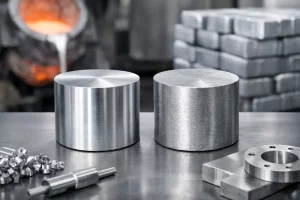
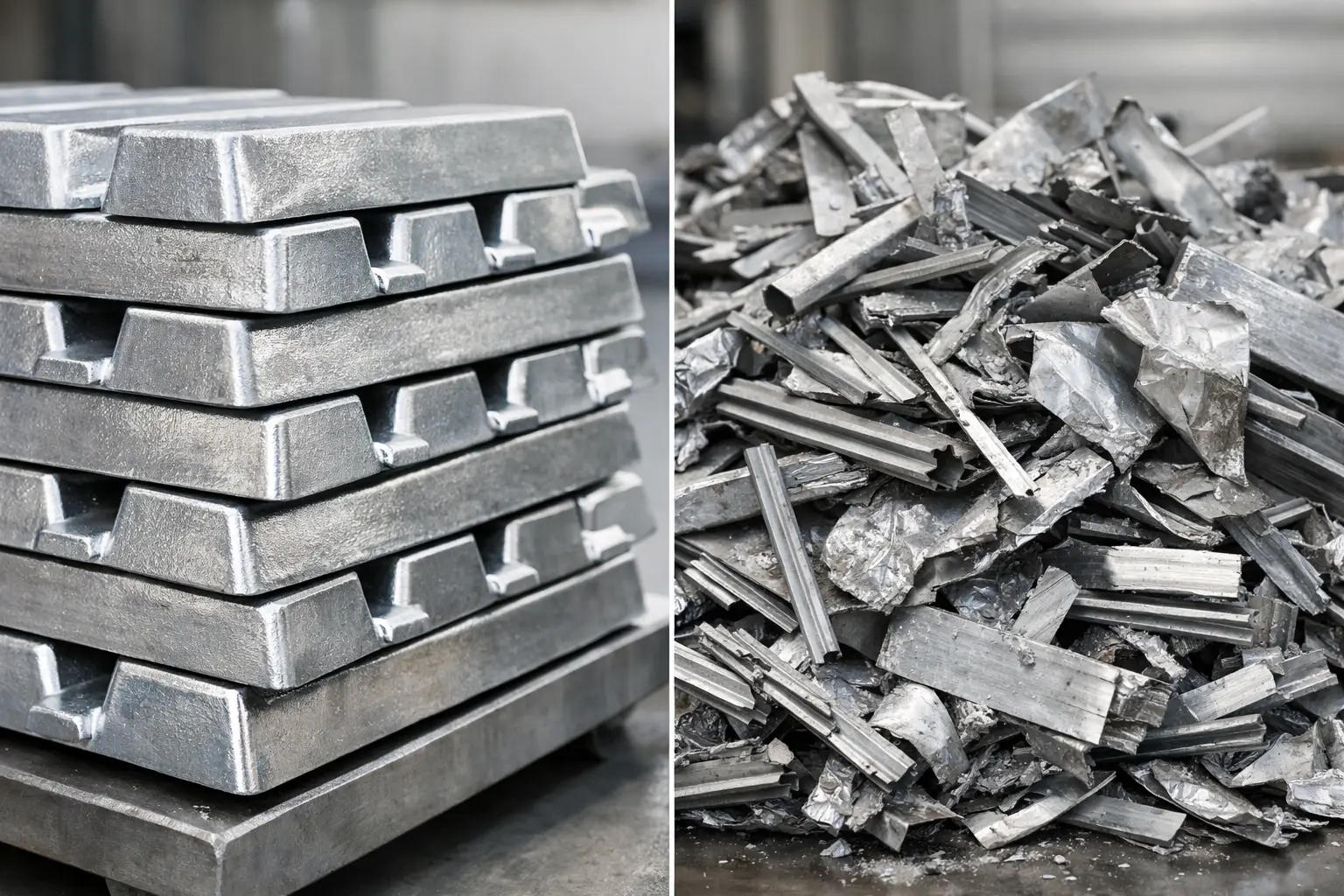
A lower quoted price can hide a higher production cost. That is usually where the real decision around aluminium ingots versus scrap begins – not at the purchase order, but at the furnace, the casting line, the rejection rate, and the final product specification. For industrial buyers, the better option depends on alloy targets, process control, contamination risk, and how expensive inconsistency becomes inside the plant.
Aluminium ingots versus scrap: the real buying question
Buyers often frame the choice as premium material versus low-cost material. In practice, that is too simple. Aluminium ingots offer controlled chemistry, predictable performance, and easier planning. Scrap can reduce feedstock cost, support secondary production, and make commercial sense when the process can tolerate more variation.
The right decision depends on what you are making. If your output includes electrical components, packaging stock, automotive parts, or export-grade semi-finished products, small deviations in chemistry and cleanliness can turn into large downstream losses. If your operation remelts material for less specification-sensitive applications, scrap may be commercially attractive.
Why ingots remain the benchmark for controlled production
Aluminium ingots are standardized raw material units produced to defined purity or alloy specifications. In commercial purchasing, grades such as A7, A8, A9, and A6 matter because they give buyers a known starting point. That reduces uncertainty during melting, alloying, and quality control.
High-purity ingots are especially valuable where conductivity, corrosion resistance, surface finish, or mechanical consistency matter. Electrical cable producers, extrusion plants, rolling mills, and manufacturers supplying regulated or export markets usually place a premium on consistency because it protects process stability. A stable feedstock lowers the chance of off-spec batches and helps production teams maintain tighter control over alloy additions.
There is also a logistics advantage. Ingots are easier to stack, store, count, inspect, and reconcile than mixed scrap streams. For procurement managers, that translates into clearer inventory management and less ambiguity about what actually arrived on site.
Where scrap makes commercial sense
Scrap is not one material. It can include post-industrial offcuts, used components, shredded profiles, turnings, mixed cast material, and segregated alloy scrap. The value of scrap depends heavily on source quality and sorting discipline.
For secondary smelters and remelters equipped to manage variability, scrap can be an efficient input. If the operation has strong sorting, melting, dross handling, and refining capability, scrap may deliver a cost advantage that justifies the extra processing effort. Buyers serving price-sensitive product categories often accept that trade-off.
The problem appears when scrap is treated as interchangeable with prime metal. It is not. Even good scrap lots can vary in oxide content, coatings, attached materials, iron levels, moisture, and residual alloying elements. Those factors affect recovery, energy use, emissions control, furnace time, and final chemistry.
Cost is more than the material price
On paper, scrap often wins the first comparison. The quoted rate per ton can be materially lower than the rate for primary or high-purity ingots. But industrial buyers rarely consume paper pricing. They consume usable metal.
A lower-cost scrap lot may carry hidden costs through lower recovery, more dross generation, longer melt cycles, higher flux use, extra labor, and greater testing requirements. If contamination pushes chemistry outside the target range, the correction cost can erase the original purchase advantage. In some cases, the lot becomes unsuitable for the intended product altogether.
Ingots usually cost more upfront because they deliver more certainty. When yield, furnace efficiency, and quality consistency are measured honestly, the premium can be commercially justified. This is especially true for operations where downtime is expensive or customer specifications are strict.
Purity, alloy control, and rejection risk
This is where the gap between aluminium ingots versus scrap becomes most visible. With ingots, the buyer starts with a known composition. That supports tighter alloy calculations and more predictable melt behavior. It also reduces the frequency of surprise elements that affect machinability, conductivity, corrosion performance, or surface quality.
With scrap, the challenge is residuals. Iron, zinc, magnesium, copper, paint, oils, and non-metal attachments can enter the melt in ways that are difficult to manage without disciplined pre-processing. For some cast products, that may be acceptable within wider tolerances. For high-performance or appearance-sensitive products, it creates risk.
Rejection risk matters at every level. A batch rejection is not just a quality issue. It is a production delay, a labor loss, an energy loss, and sometimes a customer relationship problem. Buyers choosing feedstock should evaluate the cost of one rejected production run against the savings on raw material.
Yield and furnace performance
Yield is one of the most practical decision points. Buyers who focus only on input tonnage can miss what actually converts into usable metal. Clean, standardized ingots generally produce more predictable yield and less melt loss. Scrap may produce acceptable results, but it often requires more process discipline to get there.
Turnings, light gauge scrap, painted scrap, and mixed scrap can all increase oxidation and melt loss. Moisture and contamination can also create safety and handling concerns during charging. If the plant is not equipped for careful scrap preparation, the operational burden rises quickly.
This is why many manufacturers use a blended model rather than an absolute one. They balance ingots and selected scrap to manage cost while protecting chemistry and yield. That approach can work well, but only when the scrap stream is reliable and the metallurgical controls are strong.
Application should drive the feedstock choice
Different sectors tolerate different levels of variability. Construction products with broader tolerance windows may allow more recycled input, depending on the alloy and fabrication method. Electrical applications are much less forgiving because conductivity and purity matter directly to performance. Transportation and machinery components often fall somewhere in between, depending on strength, fatigue, and finishing requirements.
Packaging, extrusion, and rolled products also tend to favor cleaner and more controlled inputs when surface finish and forming behavior are important. Aerospace-related applications, even at early-stage supply levels, usually demand strict chemistry control and traceability, which pushes buyers toward higher-grade metal.
For businesses supplying export markets or large project contracts, material consistency is often part of the commercial promise. In those cases, ingots support both technical performance and supply confidence.
Supply reliability and procurement planning
Procurement teams are not buying metal in isolation. They are buying delivery schedules, production continuity, and fewer surprises. Standardized aluminium ingots are generally easier to specify in contracts and easier to align with recurring production plans. Bulk buyers can match grade requirements with application needs and reduce ambiguity in the sourcing process.
Scrap availability can be more volatile. Quality can shift between lots, and regional market conditions can affect both price and access. Buyers working across industrial markets in China, Turkey, Vietnam, and Germany often see that supply consistency matters just as much as nominal cost, especially when downstream production is contract-bound.
This is one reason many commercial buyers prefer a supplier that can provide clear grade segmentation and dependable volume rather than simply the cheapest available metal. Reliable specification is part of reliable supply.
When to choose ingots, when to choose scrap
If your business depends on purity, repeatable chemistry, high conductivity, premium surface quality, or lower rejection risk, ingots are usually the stronger commercial fit. They support efficient planning and reduce hidden process costs.
If your plant has strong secondary melting capability, broad product tolerances, and disciplined scrap sorting, scrap can be a viable cost-control tool. The savings are real when the operation is built to capture them.
For many manufacturers, the best answer is not ideological. It is operational. Use ingots where quality control and application performance demand certainty. Use selected scrap where the process can absorb variation without damaging yield, compliance, or customer outcomes.
Aluminum Cm serves buyers who need that level of clarity because feedstock is not just a commodity decision. It is a production decision. The smarter purchase is the one that protects your margin after melting, not just before it.