
A facade panel that warps in heat, a window frame that pits near the coast, or a structural component that adds too much dead load can turn a solid project into an expensive correction. That is why aluminium for construction materials keeps gaining ground across commercial, industrial, and infrastructure work. For buyers and specifiers, the appeal is practical – low weight, corrosion resistance, workable strength, and consistent performance across a wide range of fabricated products.
For procurement teams, the question is rarely whether aluminum has a place in construction. The real question is which form, grade, and finish best fit the job. A material that performs well in curtain walls may not be the right choice for load-bearing sections, roofing systems, or conductive building components. Good purchasing decisions start with understanding where aluminium delivers value and where its limits need to be managed.
Why aluminium for construction materials keeps expanding
Construction buyers value materials that reduce handling costs, simplify fabrication, and hold up under environmental exposure. Aluminium checks each of those boxes. It is lightweight compared with many competing metals, which lowers transport burden, eases installation, and can reduce structural demands in the overall building design.
Corrosion resistance is another major advantage. In humid, coastal, or industrial environments, many building materials require intensive protection to maintain appearance and function. Aluminium naturally forms an oxide layer that helps protect the surface. With the right alloy and finish, this makes it a strong option for exterior applications such as cladding, roofing, window systems, and architectural profiles.
There is also the manufacturing side. Aluminium is relatively easy to extrude, machine, roll, and form into precise shapes. That matters in construction, where standard sections, custom profiles, and repeatable tolerances directly affect installation speed and product consistency. For industrial buyers supplying downstream manufacturers, this workability often translates into better production efficiency and less waste.
Common construction applications for aluminium
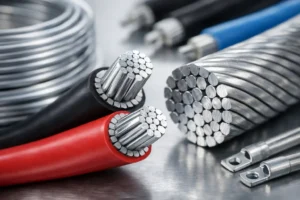
Aluminium appears across modern buildings in both visible and hidden components. It is widely used in window and door frames, curtain wall systems, roofing sheets, facade panels, partitions, ceilings, handrails, and modular building elements. In industrial facilities, it also supports equipment housings, access platforms, ducting components, and lightweight structural assemblies.
Its role is especially strong in projects where weight reduction matters. High-rise systems benefit from lighter framing and cladding. Transport hubs and prefabricated structures often favor aluminium because easier handling can shorten installation schedules. In renovation projects, low-weight replacement materials can reduce the need for major structural modifications.
That said, not every aluminum product is designed for the same performance level. A decorative panel and a structural extrusion may both be aluminum, but they are purchased against very different specifications. Buyers who treat all aluminium products as interchangeable usually create avoidable quality and performance risks.
Choosing the right aluminium form and grade
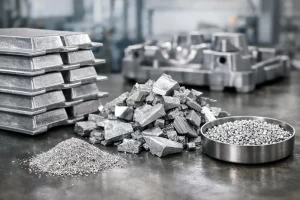
For construction procurement, form matters as much as chemistry. Aluminium may enter the supply chain as ingots, billets, sheets, coils, extrusions, plates, or fabricated components. The starting material affects how efficiently a downstream manufacturer can produce the final construction product.
Ingots are especially relevant for manufacturers that remelt and process aluminum into profiles, cast parts, sheets, or other building materials. High-purity grades support consistent metallurgical control, which is important when a final product needs reliable corrosion resistance, mechanical behavior, or surface quality. For this reason, many industrial buyers look closely at purity specifications and standardized grade availability when sourcing input material.
Common ingot grades such as A7, A8, A9, and A6 are not selected simply by habit. They are chosen based on downstream processing requirements, impurity tolerance, and the end-use expectations of the construction product. Higher purity can support better finishing results and cleaner alloying control, but it may not always be necessary for every application. If a buyer is manufacturing premium architectural products or conductive components, specification discipline matters more than if the material is going into less demanding secondary uses.
Performance benefits and trade-offs
The strongest commercial case for aluminium usually comes from its balance of properties rather than one single feature. It offers a favorable strength-to-weight ratio, good corrosion resistance, and strong formability. In many building systems, that combination can improve service life while reducing labor and transport costs.
Still, trade-offs need to be acknowledged. Aluminium is not automatically the best solution for every structural demand. In some high-load applications, steel may remain the preferred choice because of stiffness or cost at a given section size. Aluminium also expands more with temperature changes than some competing materials, so thermal movement must be accounted for in system design. Ignoring that detail can lead to distortion, joint stress, or long-term maintenance issues.
Surface performance also depends on finish quality. Mill-finish aluminum may be suitable for some industrial uses, but visible architectural applications often require anodizing, powder coating, or other protective and aesthetic treatments. Buyers should treat finishing as part of the specification, not as an afterthought.
What industrial buyers should check before ordering
A construction material purchase is only as strong as its specification discipline. Buyers should confirm alloy or ingot grade, purity level, dimensional tolerance, surface condition, packaging method, and intended downstream use before placing volume orders. This is especially important when aluminum is being supplied into extrusion, rolling, or casting operations that feed construction manufacturing.
Consistency across shipments matters just as much as headline quality. A supplier may advertise premium grade material, but industrial buyers need confidence that chemistry, cleanliness, and lot control will remain stable across repeated orders. For large projects or long production cycles, inconsistency can disrupt output, increase scrap, and create rework costs that exceed any initial price advantage.
Commercial terms should also reflect the reality of industrial operations. Bulk buyers typically need scalable volume, dependable lead times, and documentation that supports quality assurance. For manufacturers serving construction markets in regions such as China, Turkey, Vietnam, and Germany, supply continuity can be as important as the material itself because project schedules leave little room for procurement delays.
Aluminium and the Cameroon supply conversation
Cameroon remains relevant in discussions around aluminium supply because of its connection to bauxite resources and its broader place in the regional metals value chain. For buyers evaluating long-term sourcing strategy, that matters less as a talking point and more as an indicator of upstream industrial potential. A supplier that understands both raw material context and downstream application needs is usually better positioned to support serious B2B purchasing decisions.
That is part of why industrial suppliers such as Aluminum Cm frame aluminium not only as a commodity product but as an application-specific input. Buyers are not purchasing metal in the abstract. They are purchasing feedstock for construction systems that must meet cost targets, fabrication requirements, and performance expectations in the field.
Where aluminium delivers the best value in construction
Aluminium tends to create the strongest return when projects prioritize longevity, reduced maintenance, lower installation weight, and manufactured precision. Building envelope systems are a clear example. Window frames, curtain walls, rainscreen panels, and roofing components all benefit from a material that resists corrosion and can be formed into accurate profiles at scale.
It also performs well where modularity and repeat production are central to the business model. Manufacturers producing standardized construction components often prefer aluminum because it supports efficient fabrication and predictable results. When paired with the right alloying and finishing strategy, it can meet both functional and visual requirements without excessive material mass.
Cost discussions should stay realistic. Aluminium can carry a higher upfront material price than some alternatives, but installed value is not just about initial ton cost. Lower handling weight, reduced maintenance exposure, and better lifecycle performance can shift the economics in its favor. Whether that happens depends on the application, the environment, and the quality of the supplied material.
A practical standard for better buying decisions
If you are sourcing aluminium for construction materials, buy against performance, not assumptions. Start with the actual end use, then work backward through alloy needs, purity requirements, fabrication method, finish, and supply reliability. The better that chain is defined, the more likely the material will support profitable production and dependable building performance.
For serious construction manufacturing, aluminum is not a generic input. It is a specification-driven material that rewards disciplined sourcing and punishes vague purchasing. When buyers treat grade, form, and application fit as commercial priorities, aluminium becomes one of the most efficient and dependable materials in the construction supply chain.