A failed outdoor enclosure rarely starts with a dramatic break. More often, it starts with surface staining, pitting around fasteners, or gradual loss of finish in a chloride-heavy environment. That is why a practical guide to aluminium corrosion resistance matters for industrial buyers – not as a theory lesson, but as a material selection issue that affects service life, maintenance cost, and project reliability.
Aluminium is widely specified because it is lightweight, conductive, formable, and naturally corrosion-resistant. That last point is true, but only when buyers understand what creates the resistance, where the limits are, and how alloy choice, fabrication, and environment change the outcome. For procurement teams, manufacturers, and project planners, corrosion resistance is not simply a yes-or-no property. It is a performance range.
Why aluminium resists corrosion in the first place
Aluminium behaves differently from unprotected carbon steel. When fresh aluminium is exposed to air, it reacts with oxygen and forms a thin oxide layer on the surface. This oxide film is stable, adherent, and self-renewing under many normal conditions. If the surface is scratched, the oxide can reform quickly, which is one reason aluminium performs well in architectural systems, transport components, electrical hardware, and packaging applications.
This passive layer is the foundation of aluminium corrosion resistance. In many indoor, dry, or mildly exposed outdoor settings, it gives aluminium a long service life with relatively low maintenance. That is the commercial advantage buyers are paying for – a metal that combines low weight with a strong resistance to general atmospheric attack.
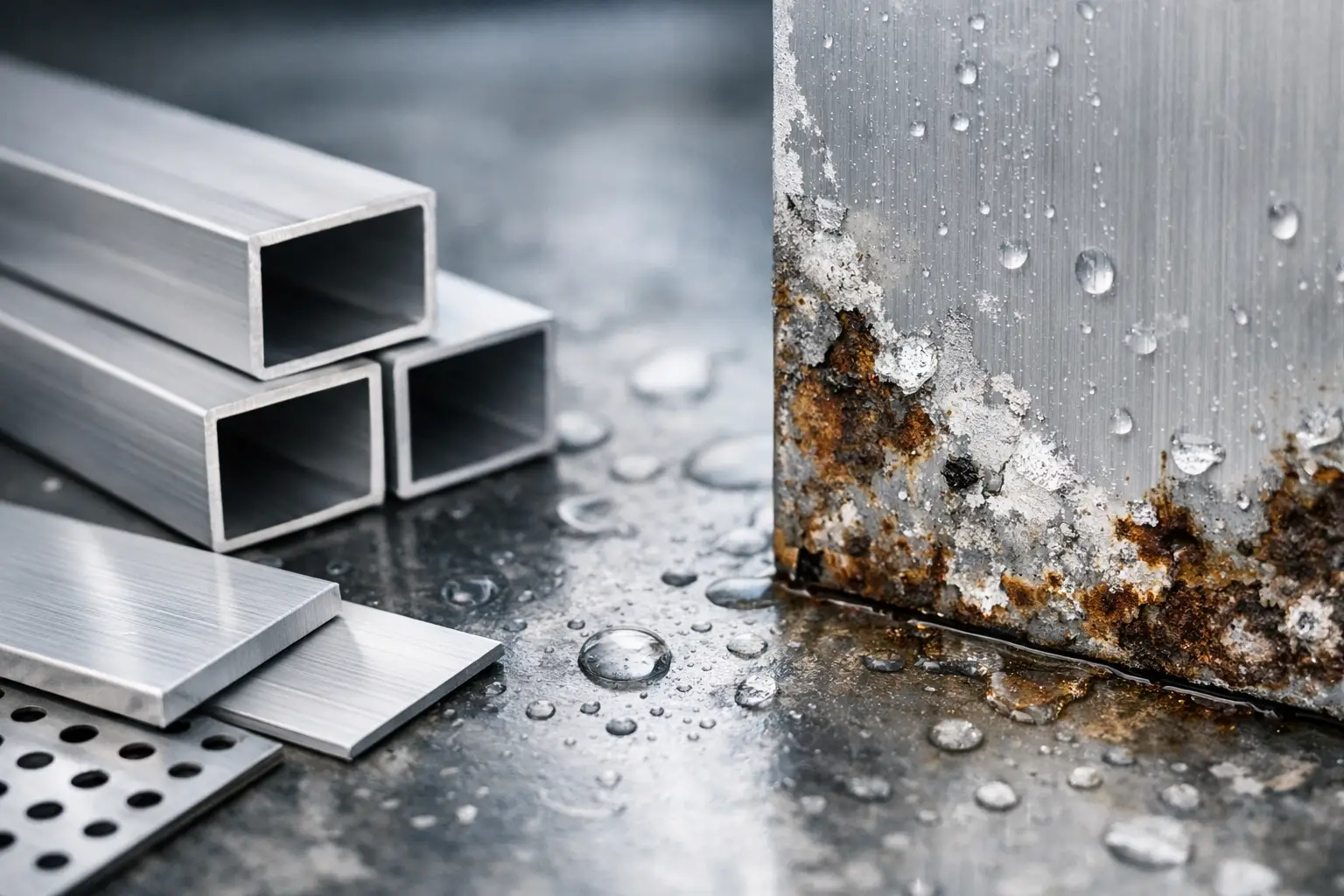
Still, the oxide film is not a blanket guarantee. Certain chemical exposures, poor design choices, trapped moisture, dissimilar-metal contact, and aggressive marine or industrial environments can break down localized protection. When that happens, the corrosion is often limited rather than uniform, but it can still be costly.
A guide to aluminium corrosion resistance by environment
The environment usually tells you more than the alloy data sheet alone. In clean rural air, many aluminium products perform very well for long periods. In urban and industrial settings, sulfur compounds, particulates, and standing contamination can accelerate surface degradation, especially where cleaning is infrequent. In coastal locations, chloride exposure becomes the main concern.
Marine and near-shore use is where many buyers oversimplify aluminium performance. Aluminium is often a strong choice for these applications, but not every alloy, finish, or assembly detail performs equally. Salt deposition, splash zones, and crevice conditions can promote pitting. This is especially relevant for transportation bodies, structural sections, storage equipment, and fabricated parts that remain wet or collect debris.
Chemical exposure also matters. Aluminium generally performs well in a broad pH range near neutral, but strong acids and strong alkalis can attack it more aggressively. Cement contact, some cleaning chemicals, and certain process fluids should be reviewed before committing to a grade for production use. For factories and fabrication shops, this is where corrosion resistance needs to be evaluated alongside the real service environment, not just a catalog description.
How alloy choice affects corrosion performance
Not all aluminium grades resist corrosion in the same way. Purity, alloying elements, and heat treatment influence the result.
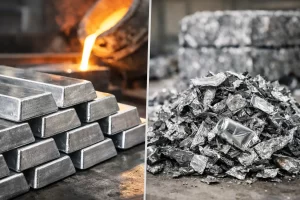
High-purity aluminium typically offers excellent corrosion resistance because there are fewer alloying additions that can create galvanic differences within the metal structure. This is one reason primary aluminium and high-purity grades remain important feedstock for applications where conductivity and corrosion behavior are both priorities.
Commercial alloy series bring trade-offs. Many 1xxx series materials offer strong corrosion resistance and conductivity, which suits electrical and chemical uses. The 3xxx series is often selected for good general corrosion performance and formability. The 5xxx series is well regarded in marine and structural applications because of its favorable combination of strength and corrosion resistance. The 6xxx series is widely used in construction and transport because it balances strength, extrudability, and corrosion performance.
The trade-off appears when buyers push harder on strength or machinability without checking exposure conditions. Some higher-strength grades can become more sensitive to stress corrosion cracking or localized attack in certain environments. That does not make them poor materials. It means the application needs to be matched carefully to the alloy.
For industrial sourcing, this is where grade discipline matters. Buyers comparing ingot grades or downstream alloy production should think beyond price per ton. Purity level, intended alloy route, and final exposure conditions all affect whether the corrosion performance will support the target service life.
The main corrosion types buyers should watch
General surface oxidation on aluminium is often protective rather than destructive. The more serious risks are usually localized.
Pitting corrosion is common in chloride-rich conditions. It appears as small cavities or pits and can progress below the surface while leaving much of the surrounding area intact. This makes it easy to underestimate during early inspection.
Crevice corrosion develops where water and contaminants are trapped – under gaskets, lap joints, deposits, or poorly drained connections. Even a corrosion-resistant alloy can struggle if the design creates stagnant, oxygen-starved zones.
Galvanic corrosion occurs when aluminium contacts a more noble metal in the presence of an electrolyte such as moisture. Stainless steel fasteners, copper components, and mixed-metal assemblies are frequent examples. In these cases, aluminium can corrode faster near the junction unless the connection is electrically isolated or otherwise protected.
Intergranular attack and stress-related corrosion issues are more alloy- and condition-specific, but they matter in high-performance fabrication, transport structures, and critical load-bearing applications. If the component will be welded, machined heavily, or exposed to sustained stress, corrosion review should be part of the engineering conversation early.
Design and fabrication mistakes that reduce aluminium corrosion resistance
A well-chosen alloy can still fail if the part is designed poorly. The most common issue is moisture retention. Horizontal ledges, tight overlaps, blocked drainage paths, and dirt-collecting profiles all increase the time that contaminants stay on the surface. Better drainage and easier cleaning often improve performance more than buyers expect.
Surface damage during fabrication is another issue. Embedded iron contamination from tooling or handling can create local staining and corrosion problems. Shop discipline matters. Separate tooling practices, cleaner storage conditions, and proper post-fabrication treatment help preserve the natural corrosion resistance of aluminium.
Welding changes local metallurgy and may alter corrosion behavior in the heat-affected zone. This is not automatically a problem, but it means filler selection, weld quality, and post-weld finishing should align with the service environment. For high-volume manufacturing, process consistency is part of corrosion control.
When surface treatment makes sense
Natural oxide protection is enough for many uses, but not all. Anodizing thickens the oxide layer and improves both corrosion resistance and surface hardness. It is widely used for architectural, decorative, and some industrial components where appearance and durability matter together.
Painting and powder coating add another barrier, especially in aggressive outdoor exposure. The key is surface preparation. A poor coating system can trap defects under the finish and fail earlier than expected. A well-specified coating system, by contrast, can significantly extend service life in industrial and coastal environments.
Conversion coatings and specialty pretreatments are often used where painting, bonding, or electrical performance must be balanced. The right finish depends on the job. If the component will see abrasion, UV exposure, salt spray, or chemical washdown, the finish should be selected as part of the specification, not as an afterthought.
What industrial buyers should ask before placing an order
For corrosion-critical applications, a purchasing decision should cover more than volume and price. Buyers should confirm the alloy or feedstock chemistry, the intended fabrication route, the service environment, and whether additional finishing will be applied. They should also review contact with other metals, drainage design, expected maintenance, and any chemical exposure during use.
This is especially relevant when sourcing aluminium for construction systems, cable-related infrastructure, vehicle parts, packaging lines, or general manufacturing. Material that performs well in one sector may need a different alloy path or finish in another. The question is not whether aluminium is corrosion-resistant. The question is whether the selected aluminium product is right for the exact operating conditions.
Suppliers that understand industrial use cases can add value here. A commercially useful conversation covers purity, grade pathway, fabrication intent, and end-use exposure together. That reduces the risk of overbuying on specification or underbuying on durability.
Guide to aluminium corrosion resistance for long-term value
Corrosion resistance is one of aluminium’s strongest commercial advantages, but only when it is treated as a specification issue rather than a marketing phrase. The oxide layer gives aluminium an inherent edge, high-purity material supports strong baseline performance, and the right alloy system can deliver excellent durability across construction, electrical, transport, and manufacturing applications. The limits appear when chloride exposure, chemical attack, poor drainage, mixed metals, or weak finishing details are ignored.
For buyers planning bulk procurement, the best results come from matching grade, fabrication method, and environment from the start. That approach protects service life, reduces maintenance exposure, and helps ensure that lightweight, corrosion-resistant aluminium performs the way the project requires. A good purchase decision is not just about securing metal supply – it is about securing performance years after delivery.