
Cameroon sits in a practical position for industrial aluminium buyers because the country brings together two things that matter in bulk metals sourcing – raw material potential and regional manufacturing relevance. The cameroon aluminium industry is not just a story about mineral deposits. It is about how bauxite resources, smelting capacity, power availability, transport logistics, and downstream demand combine to shape real purchasing decisions for ingots, feedstock, and industrial aluminium products.
For procurement teams, that distinction matters. A country can have significant mineral resources and still offer an inconsistent commercial supply picture. In Cameroon, the real opportunity lies in understanding where upstream potential is strong, where infrastructure still affects scale, and how that translates into buying decisions for construction, electrical, transport, and manufacturing applications.
What drives the Cameroon aluminium industry
At the foundation of the Cameroon aluminium industry is bauxite. Bauxite is the primary ore used to produce alumina, which is then refined and smelted into primary aluminium. Cameroon has long attracted attention because of its bauxite reserves, particularly in areas that are considered commercially significant for future industrial development.
That upstream base matters because aluminium supply becomes more strategic when it is connected to local or regional raw material security. Buyers looking at long-term sourcing do not only compare current warehouse inventory. They also assess whether a market has the resource depth to support future production, expansion, and more stable industrial output.
Cameroon also benefits from demand-side relevance. Aluminium has a wide application base across building systems, power infrastructure, transportation, consumer goods, packaging, and fabricated industrial components. When a market sits close to these sectors, aluminium demand is less speculative and more practical. That supports consistent trading activity and broader interest in standardized grades.
From bauxite to ingots
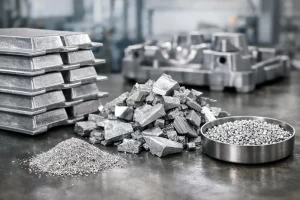
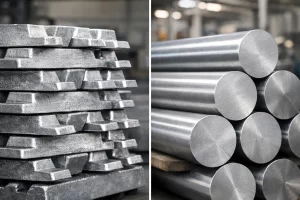
For many industrial buyers, the most useful way to understand the sector is to look at the conversion path from ore to usable metal. The value chain starts with bauxite extraction, moves through alumina refining, then to smelting, casting, and delivery into standard forms such as ingots, billets, sheets, rods, or powders.
The challenge is that not every market is equally strong at every step. Some countries are resource-heavy but processing-light. Others import alumina or aluminium and focus more on fabrication and resale. In Cameroon, discussions around the sector often center on the relationship between resource potential and industrial processing capacity. That is where buyers need a grounded view rather than broad optimism.
If your operation needs primary aluminium ingots for remelting, alloying, or component manufacturing, the key issue is not simply whether Cameroon has bauxite. The issue is whether supply channels can deliver the purity, grade consistency, tonnage, and shipment timing your production line requires.
Cameroon aluminium industry and industrial demand
The commercial value of the Cameroon aluminium industry becomes clearer when viewed through end-use sectors. In construction, aluminium is chosen for its low weight, corrosion resistance, and clean finish. Window systems, curtain walls, roofing products, structural elements, and architectural components all benefit from these properties.
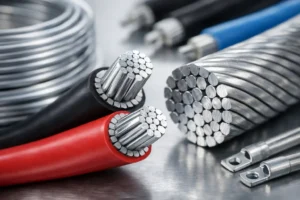
In electrical infrastructure, aluminium remains critical because of its conductivity and favorable strength-to-weight ratio. Cable production, transmission components, and industrial connectors all depend on material quality and composition control. For these applications, buyers pay close attention to purity and performance, not just price per ton.
Transportation and machinery manufacturing create another layer of demand. Aluminium supports weight reduction, easier forming, and improved corrosion behavior in parts exposed to varying environments. Packaging, industrial containers, and fabricated consumer goods add further demand for standard and specialized grades.
This broad application range is why aluminium sourcing decisions are rarely one-dimensional. A cheaper grade that does not fit the intended use can create waste, lower yields, or downstream quality issues. Buyers in the Cameroon market, or buyers sourcing through Cameroon-related trade channels, need to evaluate application fit as carefully as base cost.
Why ingot grades matter more than many buyers expect
A buyer sourcing for industrial use should not treat all primary aluminium as interchangeable. Standardized grades such as A7, A8, A9, and A6 exist for a reason. Purity levels and trace element tolerances directly affect conductivity, casting behavior, surface quality, and suitability for finished goods.
Higher-purity aluminium is often preferred where conductivity, appearance, or further processing performance is critical. That can include electrical applications, selected packaging uses, and precision manufacturing. Other buyers may prioritize practical balance – good purity, solid corrosion resistance, and commercial efficiency at scale.
This is where experienced supply partners add value. They help buyers match grade to use case instead of overspending on unnecessary purity or underbuying for a demanding application. In the Cameroon market, where aluminium is tied to both resource potential and industrial demand, grade clarity is part of a sound purchasing process.
The supply realities buyers should evaluate
No serious procurement decision should rely on resource headlines alone. The cameroon aluminium industry has strengths, but industrial buyers still need to assess operating realities. Power is one major factor because aluminium smelting is energy-intensive. Smelter economics and output stability are closely tied to electricity availability and cost.
Transport is another important variable. Bulk aluminium purchasing depends on predictable movement from production or storage points to ports, factories, and regional distribution hubs. If freight routes are constrained or transit timing is inconsistent, low headline pricing can quickly lose its advantage.
There is also the issue of commercial structure. Some buyers need direct tonnage in primary ingots. Others need downstream forms, specialty products, or regular replenishment contracts. The right supply arrangement depends on order size, production schedule, and tolerance for inventory risk. One-off spot buying may work for some traders, but manufacturers usually need greater consistency.
Where the market offers the most value
The strongest commercial case for Cameroon-linked aluminium supply often appears in buyers who need a combination of volume, standard grades, and application flexibility. Construction material distributors, cable producers, fabricators, and industrial manufacturers all benefit when supply is backed by clear specifications and dependable fulfillment.
For exporters and international buyers, the opportunity is also strategic. Cameroon’s relevance is not limited to local consumption. It sits within a broader conversation about African raw materials, industrial development, and access to markets that can support future aluminium growth. That does not mean every transaction is simple. It means the market deserves attention from buyers planning medium- to long-term sourcing options.
A supplier with established bulk sales capability and clear product segmentation can reduce much of the uncertainty. That is especially important for buyers comparing offers across regions such as China, Turkey, Vietnam, and Germany, where purchasing decisions often come down to a mix of grade assurance, shipping practicality, and production suitability rather than headline price alone.
What industrial buyers should ask before placing orders
When sourcing aluminium connected to the Cameroon market, buyers should start with specification discipline. Confirm the ingot grade, purity range, intended application, and whether the material is primary or intended for remelting. Then evaluate the practical side – available tonnage, lead time, packaging format, shipment terms, and consistency across repeat orders.
It is also worth asking how the material fits your actual production environment. A manufacturer producing electrical components has a different risk profile than a distributor supplying general fabrication customers. The more technical the end use, the less room there is for vague grade descriptions or incomplete test documentation.
This is why product-led supply matters. Industrial aluminium is not a generic commodity once it enters a production schedule. It becomes a performance input. If it fails on conductivity, formability, cleanliness, or composition, the cost shows up downstream in scrap, rework, and delayed output.
A market worth watching closely
The Cameroon aluminium industry deserves attention because it sits at the intersection of resource strength and industrial utility. Its significance comes from more than geology. It comes from how effectively supply can be translated into usable, specification-driven material for real production sectors.
For buyers, the smartest approach is practical rather than speculative. Look at grade integrity, supply continuity, and application fit. If those elements are in place, Cameroon-linked aluminium can be a strong option for bulk purchasing, especially in sectors that depend on lightweight, corrosion-resistant, high-quality metal as a core production input.
The best buying decisions usually start with a simple question: not just where the aluminium comes from, but whether it will perform exactly as your operation needs it to.