A price that looks attractive on bulk aluminum can become expensive fast if the chemistry is off by even a small margin. For industrial buyers, learning how to verify aluminium purity is not a lab exercise for its own sake. It is a purchasing control that affects conductivity, castability, corrosion resistance, fabrication performance, and the value of every ton received.
When purity is misrepresented, the downstream impact shows up in rejected batches, unstable melting behavior, poor surface finish, weaker finished parts, or electrical performance that misses spec. That is why verification should start before shipment, continue at receiving, and match the grade requirements of the final application.
Why aluminium purity matters in commercial buying
Pure aluminum is rarely purchased only for the label. Buyers purchase a chemistry range that fits a production outcome. High-purity metal is essential when conductivity, corrosion resistance, or refined metallurgical behavior is the priority. In contrast, some alloying applications allow a wider impurity profile because strength or processing economics matter more than near-primary purity.
This is where confusion often starts. A buyer may ask for “pure aluminum” when the real requirement is a recognized commercial grade such as A7, A8, A9, or A6. Those designations generally indicate minimum aluminum content, but the commercial decision should never stop at the grade name alone. Two offers may both claim a similar grade, while differing in trace elements, test documentation, batch consistency, and confidence in origin.
How to verify aluminium purity before you buy
The first checkpoint is documentation. A serious supplier should provide a material certificate or certificate of analysis showing aluminum content and the levels of key impurities such as silicon, iron, copper, zinc, magnesium, manganese, and titanium where relevant. For primary aluminum ingots, those figures are not side details. They define whether the material is suitable for electrical conductors, extrusion feedstock, casting, or general industrial processing.
Read the certificate against the standard grade you are sourcing. If a supplier offers A7 aluminum ingots, the reported chemistry should align with the accepted purity expectation for that grade. If the certificate only states “high purity” without a detailed breakdown, treat that as incomplete information rather than proof.
Lot traceability matters as much as the certificate itself. Ask whether the analysis applies to the exact batch being shipped or a general product template. In bulk procurement, a generic specification sheet is useful for product positioning, but it does not verify the chemistry of a specific load. A batch-linked certificate with heat number, lot number, or shipment reference is stronger evidence.
Commercial buyers should also assess whether the testing source is internal, third-party, or both. Internal mill data is common and often sufficient when the supplier has a strong quality system. For higher-risk orders, export transactions, or material intended for sensitive manufacturing, independent verification adds protection.
The most reliable test methods for aluminium purity
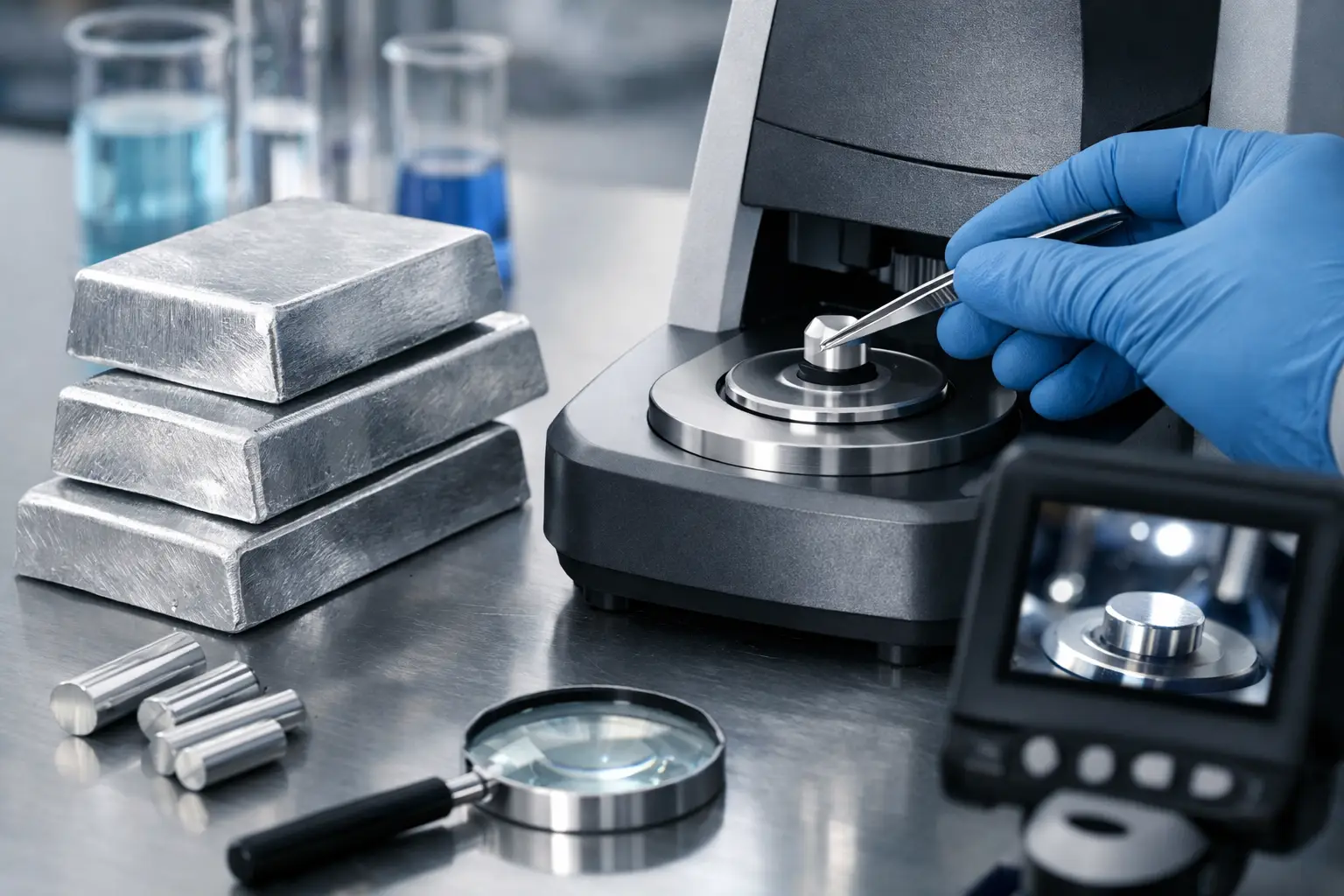
The most practical way to verify aluminum chemistry in an industrial setting is spectrometric analysis. Optical emission spectroscopy, often called OES, is widely used to identify the elemental composition of metals quickly and with strong accuracy. It can confirm aluminum percentage and detect impurity levels that are too low to judge by appearance or basic handling.
For incoming ingots, handheld XRF analyzers can also be useful, especially for fast screening. XRF is convenient in warehouses and receiving areas, but it has limits. It may not match the sensitivity or precision of lab-based OES for very high-purity requirements, and performance can vary depending on the element being measured. For that reason, XRF is often best used as a first-pass inspection rather than the final word on premium-grade purity.
Conductivity testing can provide another useful indicator, especially where electrical applications are involved. High-purity aluminum generally shows higher electrical conductivity than material with elevated impurity content. Conductivity does not replace chemical analysis, but it can help confirm whether the metal behaves as expected for conductor-grade or high-purity use.
In more rigorous cases, laboratory methods such as ICP analysis may be used for detailed composition testing. These methods are slower and less practical for routine receiving checks, but they are valuable when there is a dispute, when a customer specification is very tight, or when a large contract justifies deeper verification.
How to verify aluminium purity at receiving
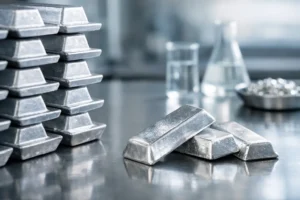
When a shipment arrives, start with physical consistency. Ingots should match the agreed shape, marking, finish, and packaging condition. Surface oxidation, contamination, mixed stamping, or unusual color variation does not prove low purity by itself, but it can signal poor handling or mixed material.
Next, match the shipment paperwork to the goods received. Heat numbers, batch references, gross and net weights, and quantity should align with the certificate. This step sounds basic, but a surprising number of quality issues begin with mismatched documentation rather than wrong chemistry.
Then move to sample-based testing. Do not rely on one ingot from the top of the stack if the order volume is significant. Pull samples from different positions in the load. The larger the shipment, the more important representative sampling becomes. A clean, consistent top layer does not guarantee the full batch is uniform.
If your operation melts aluminum for casting or remanufacturing, monitor furnace behavior as an additional control. Unexpected dross formation, unusual melt loss, or performance shifts in downstream processing can indicate that impurity levels differ from the stated grade. This is not the preferred first method for verification because it catches the issue late, but it does provide real production evidence.
Grade claims, purity percentages, and where buyers get caught
One common mistake is treating all high-purity claims as interchangeable. They are not. A9, A8, A7, and A6 are close enough to confuse inexperienced buyers, yet different enough to matter in electrical, packaging, and precision manufacturing applications. A small change in purity percentage can bring a meaningful change in conductivity, surface quality, and processing results.
Another issue is confusing primary aluminum with recycled or secondary material. Secondary aluminum can be an efficient and commercially valid choice for many applications, but it should never be accepted as equivalent to a primary ingot grade without verified chemistry. The source route affects the impurity profile, and the impurity profile affects use-case fit.
Buyers should also watch for overreliance on visual inspection. Bright-looking metal can still fail purity requirements. Aluminum purity is a chemistry question, not a cosmetic one.
Matching purity verification to the end use
The right verification standard depends on what the aluminum will do next. For electrical infrastructure, conductivity and low impurity content are central, so tighter chemistry checks make sense. For general manufacturing or certain cast products, the acceptable range may be broader if the material still supports process stability and finished-part performance.
Construction buyers often focus on corrosion resistance, workability, and long-term durability. Manufacturers may prioritize extrusion response, weldability, or machining behavior. Exporters and distributors may need clear grade documentation because their own customers will request traceable proof before accepting bulk deliveries.
This is where experienced sourcing matters. A supplier serving industrial markets in China, Turkey, Vietnam, and Germany, for example, may face different customer tolerances and documentation expectations depending on the application and destination. The core principle stays the same: verify the chemistry against the real use case, not just the product name.
A practical supplier checklist
If you want a cleaner buying process, ask five direct questions before placing the order. What exact grade is being offered? What is the certified aluminum content and impurity breakdown? Is the certificate tied to the shipment lot? What test method was used? Can the supplier support third-party verification if required?
Clear answers to those questions reduce risk early. Vague answers usually do the opposite.
For repeat purchasing, track actual received performance against certified chemistry over time. Reliable suppliers show consistency from batch to batch, not just strong numbers on one sample document. That consistency matters when you are buying for ongoing production, resale, or project-based delivery schedules.
If you are sourcing ingots for commercial use, purity verification should be built into procurement rather than handled as an exception. It protects production planning, supports product quality, and gives buyers stronger control over cost per usable ton.
The best purchase is not simply the cheapest aluminum on paper. It is the material that arrives with the right chemistry, performs as promised, and keeps your operation moving without costly surprises.