
A casting line rarely fails because of one dramatic mistake. More often, output slips because the aluminium casting raw material is inconsistent – chemistry drifts, contamination rises, melt loss increases, and finished parts stop meeting tolerance or surface requirements. For industrial buyers, that makes raw material selection a production decision, not just a purchasing task.
Foundries and manufacturers buying aluminum for casting usually balance three pressures at the same time: metal quality, process efficiency, and delivered cost. A cheaper input can raise dross, increase reject rates, or force more alloy correction in the furnace. A higher-purity input can improve control, but only if it matches the casting method, alloy target, and end-use specification.
What counts as aluminium casting raw material?
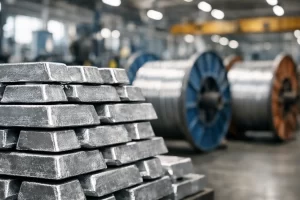
In practical terms, aluminium casting raw material includes the primary and secondary metal inputs used to produce cast components. That can mean pure or high-purity ingots, remelt ingots, alloy ingots, sow, scrap selected for controlled remelting, and master alloys used to adjust chemistry. The right choice depends on the casting operation and the specification of the final part.
For many industrial buyers, standardized ingot grades are the starting point because they offer a more predictable chemistry and cleaner melting behavior than mixed scrap streams. This matters when the cast product must deliver repeatable mechanical strength, corrosion resistance, conductivity, or machinability. In sectors such as automotive components, electrical hardware, machinery housings, and construction fittings, consistency is often worth more than the lowest headline price per ton.
Why raw material quality affects casting results
Aluminum casting is sensitive to small variations. A melt with excess iron, silicon imbalance, hydrogen pickup, or non-metallic inclusions can produce porosity, poor fluidity, hot tearing, or weak final properties. Those issues do not only affect metallurgical performance. They also affect cycle time, mold fill, machining cost, rework, and customer acceptance.
Higher-quality raw material helps foundries maintain tighter process windows. Clean ingots with reliable composition reduce the need for repeated melt correction. They also support more stable furnace practice, especially in operations running pressure die casting, sand casting, gravity casting, or permanent mold casting across multiple batches.
This is where commercial value becomes clear. Better input control can mean lower melt loss, fewer rejects, less downtime, and more predictable scheduling. For procurement teams, the material cost must be judged against total production cost, not against the invoice price alone.
Primary ingot vs recycled input
One of the first decisions is whether to buy primary aluminum, recycled material, or a blend. There is no single correct answer. It depends on the alloy requirement, the quality threshold of the finished part, and the economics of the casting process.
Primary ingot is favored when purity and composition control are critical. Grades such as A7, A8, A9, and A6 are often used as reliable base metal for downstream alloying because they offer known purity levels and lower contamination risk. This gives foundries better control when producing castings for demanding applications where surface finish, conductivity, or structural performance matter.
Recycled or secondary inputs can lower material cost and support sustainability goals, but they require stronger sorting, testing, and melt management. If the scrap stream is poorly controlled, the foundry may spend more time correcting chemistry and removing impurities. In some applications, that trade-off is acceptable. In others, especially where defect tolerance is low, it is expensive.
Choosing the right grade for casting
Grade selection should start with the final application, not the warehouse inventory. Buyers sometimes focus on what is available fastest, then ask production to adapt. That approach can work for low-spec output, but it creates risk in industrial casting.
If the casting operation needs a high-purity base for alloy development, standard primary ingot grades are usually the safest route. A7 and A8 are commonly preferred where tight impurity control is needed. A9 may suit applications where very high purity supports specialized downstream processing. A6 can also be relevant where the process can tolerate a slightly different purity profile while still requiring dependable industrial metal.
The point is not that one grade is universally better. The point is fit. A foundry making decorative parts, electrical connectors, pump housings, or transport components may each arrive at a different purchasing decision based on conductivity, castability, finish, and cost.
Purity and impurity control
Purity affects more than marketing language. In casting, impurity levels influence fluidity, corrosion behavior, finishing response, and mechanical properties. Iron, copper, zinc, and other trace elements must be controlled based on the intended alloy system. If the base metal already carries unwanted elements, the foundry has less room to formulate accurately.
That is why industrial buyers often prefer documented raw material with clear specifications. It gives production teams confidence that the melt will behave as expected and that quality issues can be traced if they arise.
Form and handling matter too
Raw material form influences melting speed, furnace loading, storage efficiency, and material loss. Uniform ingots are easier to stack, inspect, and charge than irregular scrap. They generally provide cleaner handling and more predictable furnace behavior, which matters in operations trying to protect throughput.
This may sound basic, but logistics and handling often affect real production cost. Material that is awkward to store, slow to melt, or prone to contamination can erode the savings from a lower purchase price.
Key buying criteria for industrial procurement
When sourcing aluminium casting raw material, serious buyers usually evaluate more than grade alone. Supplier capability matters just as much as chemistry. A reliable source should be able to provide consistent specifications, scalable volume, and documentation that supports procurement and quality control.
Batch consistency is one of the most important factors. Even if a supplier offers attractive pricing, frequent chemistry variation creates hidden cost inside the plant. Industrial procurement teams should also assess packaging, lead time, shipment stability, and the supplier’s ability to support repeat orders across changing demand cycles.
For buyers supplying projects in manufacturing hubs such as Germany, Turkey, Vietnam, or China, continuity of supply can be as important as purity itself. Delayed or inconsistent metal deliveries can disrupt casting schedules, downstream machining, and customer commitments across multiple facilities.
Common mistakes when sourcing casting metal
The most common mistake is buying on price without measuring process impact. Low-cost metal can become high-cost material if it raises furnace correction, dross generation, energy use, or rejection rates. Another mistake is treating all ingot grades as interchangeable. Similar-looking products can perform very differently once they enter the melt.
A third issue is weak specification matching. Buyers may order high-purity metal when a secondary alloy ingot would be more economical for the part being produced. Or they may choose lower-grade material for a casting that actually needs tighter impurity control. Both decisions create waste, just in different ways.
Documentation is another area where shortcuts cause trouble. Industrial buyers should know exactly what they are receiving, including grade, composition range, and any relevant test or inspection data. When the paperwork is unclear, the production risk shifts to the customer.
How to align raw material with end-use performance
The best purchasing decisions connect raw material to the function of the final casting. If the part must resist corrosion in outdoor service, chemistry control and alloy design matter from the start. If the casting supports electrical performance, conductivity becomes a higher priority. If the component is structural, consistency and defect reduction take center stage.
That is why product-led sourcing works better than commodity-only sourcing. A buyer should ask a simple question before placing volume orders: what must the casting do in service, and what raw material gives production the best chance of delivering that result at scale?
At Aluminum Cm, that commercial logic sits behind the way industrial grades are positioned. Buyers are not just choosing metal by name. They are choosing a base material that affects melt behavior, production efficiency, and final product performance.
A good supplier helps narrow that choice with clear grade segmentation and realistic application guidance. A good buyer brings process knowledge, quality requirements, and volume planning into the discussion. When both sides do that well, raw material becomes a production advantage instead of a recurring source of variance.
The smartest buying decision is usually the one that keeps your melt predictable, your castings consistent, and your production team out of corrective mode.