When a cable line underperforms, the problem often starts long before drawing and stranding. It starts with alloy selection. Choosing the best aluminium grade for cable manufacturing affects conductivity, tensile performance, process stability, scrap rates, and the long-term reliability of the finished conductor.
For industrial buyers, there is no single answer that fits every cable type. Power transmission conductors, building wire, armored cable, and specialty electrical products do not all require the same balance of purity, strength, and formability. The right grade depends on whether conductivity is the top priority, whether the conductor will be alloyed further, and how the material needs to behave during rod casting, wire drawing, and final cable production.
What makes an aluminium grade suitable for cable production
Cable manufacturers usually evaluate aluminium against four commercial requirements. The first is electrical conductivity. Higher-purity aluminium generally offers better conductivity, which is critical for efficient current flow and lower transmission losses. The second is mechanical performance. Some cable designs need greater tensile strength, especially where sag, handling, or installation stress matters.
The third factor is processability. A grade may look strong on paper but still create problems during rolling, extrusion, or wire drawing if impurity levels are inconsistent. The fourth is corrosion resistance. Aluminium already performs well in many environments, but grade selection still matters when cables are used in humid, coastal, or industrial settings.
For most standard electrical applications, manufacturers favor high-purity primary aluminium because it delivers the conductivity needed for conductor performance while remaining workable in downstream processing.
Best aluminium grade for cable manufacturing in most cases
If the question is which aluminium grade is best for cable manufacturing in general, the strongest starting point is EC grade aluminium, commonly produced from high-purity primary aluminium around 99.7 percent and above. In commercial supply terms, this often brings buyers to grades such as A7 and sometimes A8, depending on the exact production route and end specification.
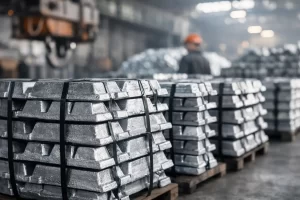
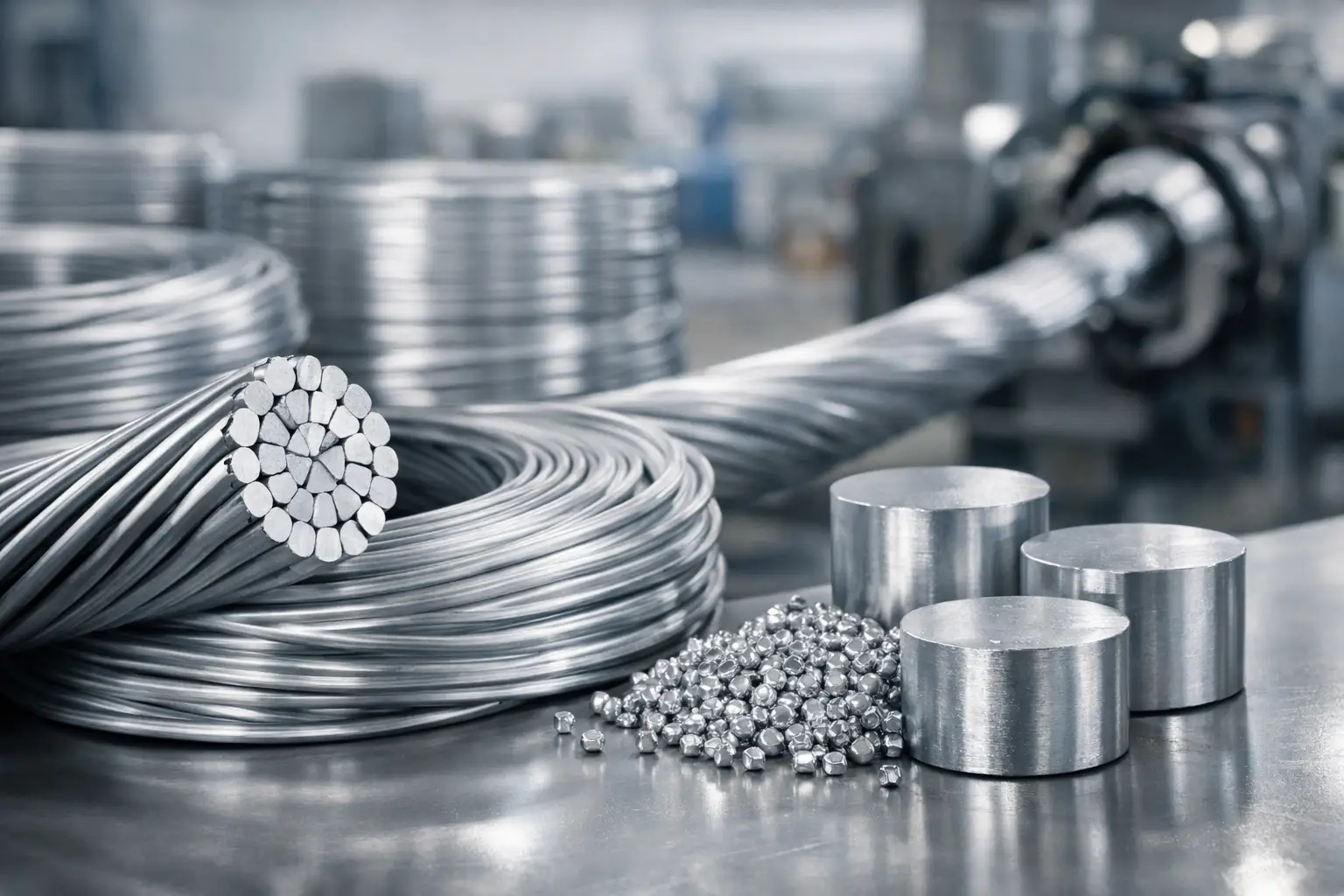
A7 aluminium is widely used as a feedstock for electrical applications because it combines high purity with strong conductivity potential. For cable manufacturers producing EC aluminium rod and conductor wire, this grade is often the preferred choice. It supports efficient redraw operations and helps meet electrical performance targets without introducing unnecessary impurity-related variation.
A8 can also be suitable where the required purity and conductivity remain within the customer’s specification window. In some operations, it provides a commercially viable option if the finished cable design is less demanding or if the producer has process controls that compensate for slightly different input characteristics.
A9 and lower-purity grades may still have industrial value, but they are generally less attractive for conductor applications where conductivity is the primary concern. As impurity content rises, electrical performance tends to decline. That trade-off may be acceptable in casting, alloying, or non-electrical uses, but it is usually not ideal for premium cable manufacturing.
Why A7 is often the practical choice
Among standard primary ingot grades, A7 stands out because it aligns well with what cable producers actually need on the factory floor. Its high purity supports strong electrical conductivity. It also offers good consistency for melting and casting into redraw rod, which matters when production teams are trying to maintain line speed and reduce waste.
This is where purchasing decisions become commercial, not just technical. A cheaper grade can become more expensive if it creates drawing breaks, inconsistent resistivity, or quality rejections. Buyers focused only on ingot cost per ton can miss the larger production cost tied to yield, downtime, and finished cable performance.
For many B2B cable operations, A7 delivers the best balance of premium electrical properties and practical large-volume availability. That makes it a reliable benchmark grade when sourcing aluminium for conductor production.
When the best aluminium grade for cable manufacturing is not pure aluminium
There are cases where maximum conductivity is not the only target. Overhead conductors, for example, may require a better strength-to-weight ratio than pure aluminium can provide on its own. In those situations, manufacturers may use alloyed aluminium conductor materials rather than relying entirely on very high-purity input metal.
This does not mean purity stops mattering. It means the material strategy changes. Some cable products use alloy systems designed to improve strength, heat resistance, or mechanical durability while keeping conductivity within an acceptable range. The result is a trade-off. As strength rises, conductivity usually drops compared with EC-grade aluminium.
That trade-off can be the right one. If the cable will span long distances, face mechanical loading, or operate under harsher physical conditions, the best material may be an electrical aluminium alloy rather than the purest ingot available. Buyers should match the grade to the application instead of treating all cables as the same product category.
Key grade differences buyers should compare
Purity is the first checkpoint, but it should not be the last. Procurement teams should also review impurity limits for elements such as iron and silicon, since both can affect conductivity and processing behavior. Small differences in chemistry can produce noticeable changes in rod quality and wire performance.
Form also matters. Some producers buy primary ingots and process them internally. Others prefer feedstock already aligned with rod manufacturing requirements. The best aluminium grade for cable manufacturing is not just the right chemistry. It is the right chemistry delivered in a form and consistency that fit the production line.
Documentation is equally important. Industrial buyers should look for clear specification control, batch consistency, and supplier transparency around grade designation. In cable production, variability creates risk quickly. A grade that appears acceptable in one shipment but drifts in another can disrupt qualification and customer acceptance.
Choosing the right grade by cable type
For general electrical conductors and EC rod production, A7 is typically the leading choice because conductivity comes first. For less demanding electrical applications, A8 may be considered if the final specification allows it and the economics justify the selection.
For overhead conductors or applications with higher mechanical demands, alloy-based conductor materials may be more appropriate than relying strictly on high-purity primary aluminium. For building wire and power cable where efficiency and stable electrical performance are central, higher-purity primary aluminium remains the safer path.
The buyer’s job is to define the actual performance target. If the cable specification is built around conductivity, start with the purest commercially practical grade. If the design is built around strength, heat tolerance, or structural performance, review alloy options with the same discipline.
Sourcing considerations for industrial buyers
Bulk purchasing decisions should not be based on grade labels alone. Supply stability, lot-to-lot consistency, and volume readiness are just as important. A supplier serving cable manufacturers needs to understand how aluminium behaves in downstream electrical production, not simply how it is traded as a commodity.
That is especially relevant for buyers managing production across multiple markets or contract manufacturing networks. Whether sourcing into Germany, Turkey, Vietnam, or China, the same issue applies: inconsistent feedstock can compromise a standardized cable product. Reliable grade control supports better planning, fewer quality issues, and stronger customer confidence.
For companies buying primary aluminium ingots for conductor manufacturing, premium-grade supply with clearly defined specifications is usually the better commercial decision over time. It protects output quality and reduces the hidden cost of rework and process instability.
Final answer: which grade should you buy?
For most standard conductor and electrical cable applications, A7 is the best aluminium grade for cable manufacturing because it offers the high purity, conductivity, and processing consistency needed for reliable cable production. A8 can work in some cases, but it is usually a secondary option where specification and cost targets allow more flexibility. If the cable design requires higher mechanical strength, a dedicated electrical alloy may be the better choice than pure primary aluminium alone.
The smart purchase is the one that fits your cable design, not just your raw material budget. In cable manufacturing, the right grade pays back in conductivity, yield, line stability, and product confidence long after the metal reaches the furnace.