Cable production does not tolerate raw material inconsistency for long. When conductivity shifts, drawability drops, or surface quality varies from batch to batch, the effect shows up quickly on the line as waste, downtime, and performance risk. That is why aluminium ingots for cable plants are not just a commodity input. They are a process decision that influences electrical performance, production stability, and cost control.
For procurement teams and plant managers, the real question is not simply whether aluminium is the right metal for cable production. In many power and utility applications, that answer is already clear. The more useful question is which ingot quality, purity range, and supply arrangement will support continuous output without introducing avoidable defects or commercial friction.
Why aluminium is a core material in cable production
Aluminium remains a preferred material for many cable plants because it balances conductivity, low weight, corrosion resistance, and cost efficiency. Compared with heavier conductive metals, it offers a strong value proposition in overhead transmission, power distribution, building wire, and selected industrial cable applications where weight and economics matter as much as electrical properties.
That balance matters in downstream manufacturing. A lighter conductor can reduce transportation costs, ease installation in certain project environments, and improve handling at scale. For manufacturers serving utilities, infrastructure contractors, and export markets, those practical advantages can strengthen the competitiveness of the finished cable.
The case for aluminium is strong, but it is not identical across every cable type. Some applications demand tighter conductivity targets, some prioritize mechanical performance after processing, and some depend on compatibility with specific alloying or rod-making methods. That is where ingot selection becomes more than a purchasing exercise.
What cable plants need from aluminium ingots
Cable plants typically look for more than headline purity. They need aluminium ingots that melt predictably, cast cleanly, and support stable transformation into rod, wire, or conductor components. If impurity levels drift or inclusions increase, the plant may see breakage during drawing, inconsistent electrical performance, or poor final surface finish.
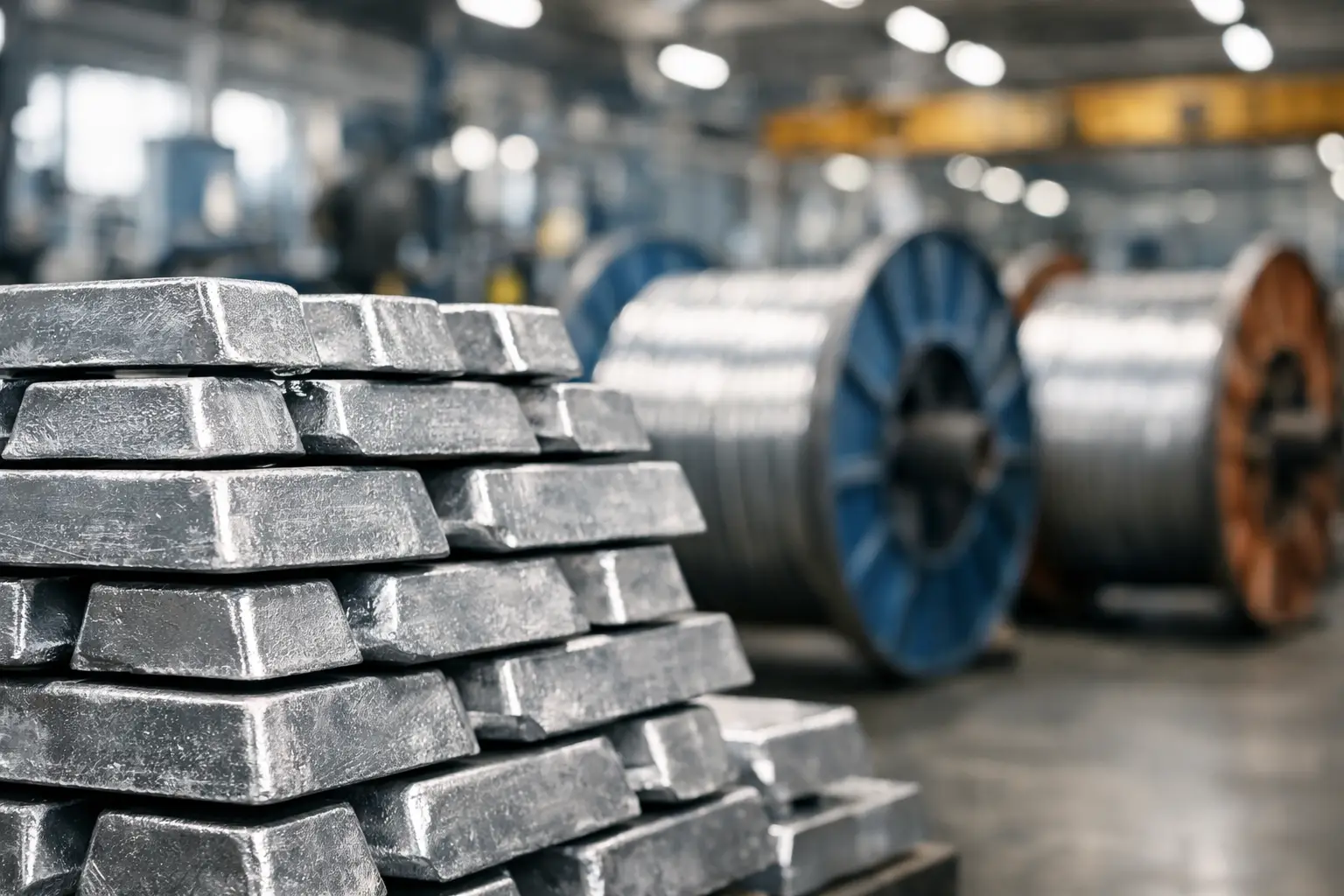
In practical terms, buyers usually assess ingots against several production realities. First is chemical composition. High-purity primary aluminium grades are often preferred where conductivity is central and contamination must be tightly controlled. Second is physical consistency. Uniform ingot shape, manageable dimensions, and dependable batch quality help support smoother furnace charging and melt management. Third is supplier reliability. Even high-grade material creates problems if deliveries are irregular or specification control is weak.
This is why cable manufacturers often favor standardized ingot grades rather than loosely defined supply. Grades such as A7, A8, A9, and A6 can serve different industrial requirements depending on purity targets and downstream use. The right choice depends on the cable plant’s process route, end-market specifications, and tolerance for metallurgical variation.
Purity and conductivity are closely linked
For cable applications, purity is not just a certificate value. It has a direct relationship with conductivity and process behavior. Higher purity aluminium generally supports better electrical performance, which is critical in conductors intended for efficient current transmission. Low levels of iron, silicon, and other residual elements can help maintain the material characteristics expected in electrical production.
That said, the highest purity option is not automatically the best commercial choice in every case. Some plants may optimize around cost, alloying practice, or end-use standards that allow a broader specification window. The right procurement decision depends on the cable category being produced and the plant’s quality controls.
Surface quality affects downstream efficiency
Surface defects on ingots can translate into avoidable trouble during melting and casting. Oxidation, contamination, or inconsistent finish may increase dross formation or interfere with process stability. For high-volume cable operations, even small inefficiencies can add up quickly over repeated production runs.
A supplier that understands cable manufacturing will treat surface condition, stacking, and handling as part of product quality, not as afterthoughts. That is especially relevant for buyers managing large-volume schedules where material flow needs to remain predictable.
Choosing aluminium ingots for cable plants by grade
Not every cable plant buys the same grade for the same reason. Some operations prioritize premium purity for electrical conductor performance. Others balance purity with broader production economics, especially when output spans multiple product lines.
A7 aluminium ingots are commonly considered where high purity is required and conductivity performance is a major priority. They can be well suited to electrical applications that demand a cleaner base metal for rod and wire production. A8 and A9 grades may also serve industrial uses effectively, depending on the plant’s processing method and finished cable specifications. A6 may fit where the application can accommodate different purity and commercial requirements.
The key is matching grade to process. A plant producing conductor material for demanding electrical infrastructure will usually evaluate ingots differently from a manufacturer focused on less sensitive fabricated aluminium products. Buying above the required specification can raise input costs unnecessarily. Buying below it can create quality claims, production loss, or customer rejection.
Supply consistency matters as much as specification
A cable plant can engineer around many variables, but frequent raw material inconsistency is expensive to absorb. Production planning, furnace scheduling, and order fulfillment all depend on regular inbound supply. That makes supplier discipline a major part of raw material quality.
For bulk buyers, a dependable aluminium ingot supplier should be able to support repeatable specifications, commercial clarity, and scalable volume. This becomes even more important for manufacturers serving large projects or export contracts, where missed production windows can affect customer relationships and cash flow.
In markets connected to major industrial trade routes, including China, Turkey, Vietnam, and Germany, buyers often compare suppliers not only on price per metric ton but also on lead times, documentation quality, and confidence in repeat orders. For cable plants, those factors can have a real operational impact.
Bulk purchasing requires a different evaluation standard
When procurement shifts from occasional buying to steady industrial volume, the risks change. A minor impurity issue across one test batch is manageable. The same issue across multiple container loads is a plant-wide problem. That is why large-volume buyers tend to evaluate suppliers on long-run consistency rather than on isolated samples alone.
A commercially useful supplier should be prepared to discuss grade, purity, intended application, packaging, shipment scheduling, and volume capability in practical terms. For cable manufacturers, that level of clarity supports better purchasing decisions and fewer surprises after material arrives on site.
Common trade-offs when sourcing aluminium ingots for cable plants
The market does not usually offer perfect material, perfect timing, and the lowest price at the same time. Buyers often choose between competing priorities.
One common trade-off is purity versus cost. Higher-purity ingots may support better conductivity and process confidence, but they can also raise input expense. Another is spot pricing versus supply stability. Opportunistic buying can look attractive when prices soften, but contract-based sourcing may better protect production continuity. A third is broad availability versus application fit. Material that is easy to source is not always the best match for electrical-grade output.
Experienced buyers do not treat these as abstract concerns. They map them directly to line performance, customer specifications, and margin. If a lower-priced ingot increases scrap, slows throughput, or risks failing conductivity targets, the apparent savings can disappear quickly.
What to ask before placing a bulk order
Before committing to volume, cable plants should review the ingot grade, purity range, typical impurity profile, and intended use case. They should also confirm batch consistency, packaging format, shipping terms, and documentation support. These details help distinguish between generic metal supply and material that is genuinely prepared for industrial cable production.
It also helps to ask how the supplier positions the product commercially. A supplier focused on industrial aluminium applications should be able to explain where a grade performs well, where it may be less suitable, and how it aligns with production needs. That kind of conversation is useful because it reduces mismatch at the quotation stage rather than after delivery.
For buyers looking at long-term sourcing, educational support can also add value. A supplier that explains grade options clearly and understands application-specific requirements is easier to work with than one that only quotes tonnage and price.
Reliable cable production starts with fewer surprises at the melt stage. When aluminium ingots are chosen with the right attention to purity, grade, and supply consistency, the result is not just a better raw material purchase. It is a more stable manufacturing operation and a better foundation for every meter of cable that leaves the plant.