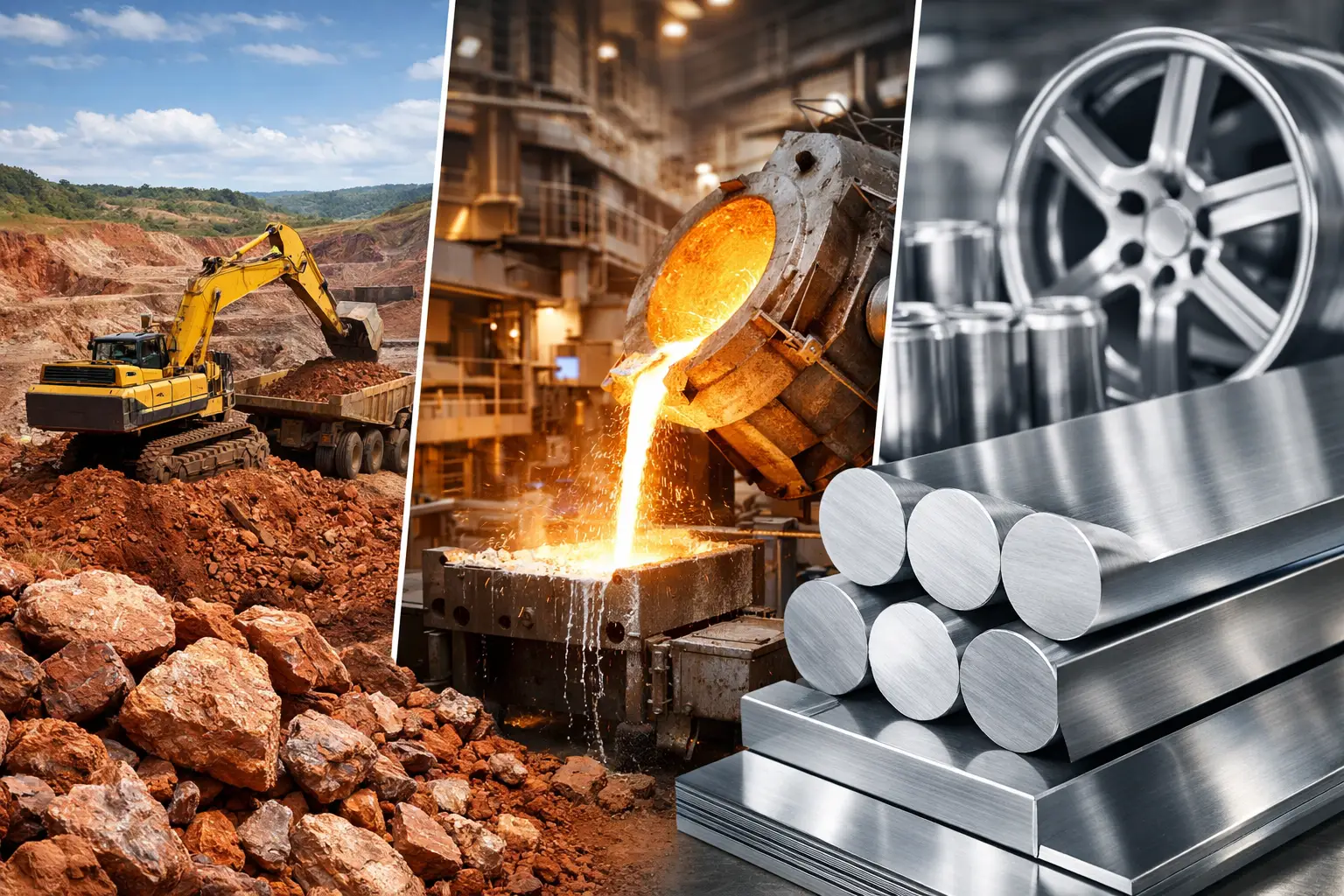
A buyer evaluating aluminium supply is rarely buying metal alone. They are buying energy intensity, ore quality, refining discipline, smelting capacity, logistics reliability, and grade consistency. That is why the bauxite to aluminium value chain matters – it explains where cost, purity, availability, and performance are created long before aluminium ingots reach a warehouse or production line.
For industrial procurement teams, this chain is not just background knowledge. It affects lead times, pricing exposure, grade selection, and confidence in the material’s end-use performance. If your business depends on aluminium for cable, construction profiles, transport parts, packaging, or fabrication, understanding how value is added at each stage helps you make better sourcing decisions.
What the bauxite to aluminium value chain includes
The value chain starts with bauxite, the primary ore used to produce aluminium. Bauxite contains alumina-bearing minerals along with iron oxides, silica, titanium dioxide, and other impurities. On its own, bauxite is not a usable industrial metal input for most manufacturers. It must move through a series of energy-intensive and technically controlled stages before it becomes commercial aluminium.
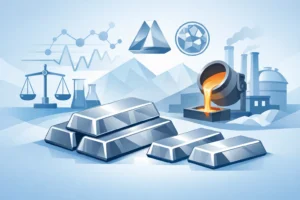
At a practical level, the chain has four core stages: bauxite mining, alumina refining, aluminium smelting, and downstream casting or fabrication. Each stage adds value, but each stage also introduces its own risks. Ore quality can vary by deposit. Refining efficiency depends on feed chemistry and plant control. Smelting depends heavily on power cost and stable energy supply. Downstream conversion determines whether the final product meets the grade, form, and dimensional requirements of the buyer.
That is why aluminium supply should be viewed as a system, not a single product category.
From bauxite mining to alumina refining
Bauxite mining is the starting point, and deposit quality shapes everything that follows. High-grade bauxite with favorable alumina content and manageable impurity levels generally supports more efficient refining. Lower-quality ore can still be processed, but recovery rates, chemical consumption, and waste handling become more challenging.
For buyers, this matters because the economics of raw material extraction influence upstream supply stability. Regions with strong bauxite reserves often become strategic to the broader aluminium market. Cameroon’s bauxite resource base is one reason the country remains relevant in discussions around future aluminium supply, especially for buyers tracking long-term sourcing opportunities tied to ore availability.
After mining, bauxite is refined into alumina, also known as aluminum oxide. This is typically done through the Bayer process, where crushed bauxite is treated with hot caustic soda under pressure. The alumina-bearing compounds dissolve, impurities are separated out, and the resulting hydrate is calcined into smelter-grade alumina.
This refining step is where a large portion of chemical and process value is created. It is also where feedstock suitability matters. Not all bauxite behaves the same way in the refinery. Silica content, moisture, and mineral composition can change operating costs and output efficiency. For procurement professionals, alumina supply conditions often signal how tight or flexible aluminium production may become downstream.
The smelting stage creates primary aluminium
Once alumina is produced, it moves to smelters where it is converted into primary aluminium through electrolytic reduction. In simple terms, alumina is dissolved in molten cryolite and exposed to a high electric current. The process separates oxygen from aluminium, producing liquid metal that can then be cast into usable commercial forms.
This is the most power-intensive stage of the bauxite to aluminium value chain. Electricity cost and supply security are central factors in aluminium pricing and production geography. Smelters are often located where long-term energy access is competitive and dependable. If power prices rise sharply or grid reliability weakens, production costs move quickly.
For industrial buyers, this is one reason aluminium prices can be sensitive even when demand conditions seem stable. The metal is lightweight, strong, corrosion-resistant, and highly conductive, but it is also energy-linked in a very direct way. Understanding that relationship helps buyers interpret market shifts more realistically.
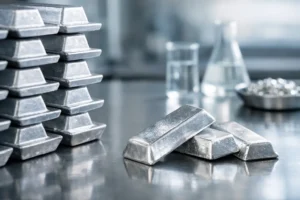
At the smelter level, purity also becomes commercially relevant. Primary aluminium can be cast into standard ingot grades used across industrial markets. Buyers sourcing grades such as A7, A8, A9, or A6 are not just comparing labels. They are comparing purity ranges, suitability for remelting, compatibility with alloying operations, and expected fit for specific production applications.
How value is added after smelting
Smelting does not end the commercial chain. Liquid aluminium or cast primary metal still needs to be converted into forms the market can use efficiently. This includes ingots, billets, slabs, rods, wire feedstock, rolled products, extrusions, powder, and alloyed inputs for specialized manufacturing.
This downstream stage often gets less attention than mining or smelting, but for buyers it is where commercial value becomes most visible. A manufacturer does not simply need aluminium. It needs the right form, the right purity, the right dimensions, and the right delivery schedule.
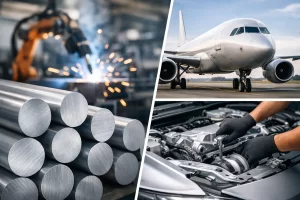
An electrical manufacturer may prioritize conductivity and consistency for cable-related use. A construction buyer may focus on corrosion resistance, workability, and supply volume for structural or architectural applications. A transportation or machinery producer may need a balance of low weight and mechanical performance for forming or machining. The same base metal serves very different outcomes depending on how it is processed.
That is why the strongest suppliers do more than quote tonnage. They connect product form and grade to use case.
Why the value chain matters for pricing and procurement
Aluminium buyers often ask a simple question: why does pricing move when the end-use market has not changed much? The answer is usually somewhere inside the value chain.
Ore quality affects refining costs. Refining conditions affect alumina supply. Smelting costs react to electricity prices, carbon policies, and plant utilization rates. Logistics affect the movement of raw materials and finished metal. Downstream conversion affects availability of the exact form or grade a buyer needs. A disruption at any point can tighten supply or raise replacement cost.
This does not mean every buyer needs to track every refinery or mine. It does mean procurement teams should understand where their risk sits. If you buy high-volume primary ingots, your concerns may center on smelting economics, grade consistency, and shipping reliability. If you buy semi-fabricated aluminium products, downstream conversion capacity may matter just as much as primary metal output.
There is also a trade-off between price and assurance. The lowest quoted price is not always the lowest operating cost if chemistry variation, delayed shipment, or grade mismatch creates production losses later. Commercially, dependable specification control often matters more than a narrow price advantage.
Where Cameroon fits into the aluminium conversation
Cameroon is relevant because upstream resource potential shapes future industrial supply narratives. Buyers looking beyond spot purchases often pay attention to countries with meaningful bauxite deposits, especially where long-term development could strengthen regional aluminium capacity or feed global production chains.
That said, resource potential alone does not guarantee finished metal availability. The full value chain requires infrastructure, refining capability, energy access, capital investment, and efficient export logistics. This is an area where buyers should stay practical. A strong ore base is a strategic advantage, but commercial supply strength depends on how much of the chain is operational and scalable.
For businesses sourcing aluminium in bulk, that distinction matters. A region may be highly relevant as a raw material origin while still relying on broader international processing and trade networks for primary aluminium or finished industrial forms.
What industrial buyers should evaluate
When assessing suppliers within the bauxite to aluminium value chain, buyers should look past broad claims and focus on commercially useful signals. Material specifications should be clear. Product grades should be aligned with the intended use. Supply volumes should be realistic, not promotional. And the supplier should understand how purity, form, and application fit affect manufacturing outcomes.
It also helps to ask where in the chain the supplier has strength. Some businesses are strongest in raw material access. Others are strongest in primary metal supply. Others bring value through downstream processing and application-specific formats. The best fit depends on your production model.
A cable producer, for example, may care most about conductivity and repeatable feedstock quality. A packaging manufacturer may prioritize cleanliness, formability, and alloy suitability. A distributor serving construction clients may value broad stock availability and reliable replenishment. The right sourcing decision is tied to end use, not just tonnage.
For companies buying at scale, a supplier that combines technical clarity with dependable commercial execution is usually the safer long-term choice. That is the logic behind product-led industrial sourcing, and it is one reason Aluminum Cm positions aluminium not as a commodity in the abstract, but as a performance material with clear grade and application relevance.
The closer you look at the value chain, the easier it becomes to see aluminium supply for what it really is: a sequence of technical and commercial decisions that shape the quality of every ingot, billet, and finished component. Buyers who understand that chain tend to buy with more precision and fewer surprises.