When a buyer asks for aluminum ingots, the real question often starts one step earlier: primary aluminium versus secondary. On paper, both can enter the same production stream. In practice, the choice affects purity, consistency, remelt behavior, downstream performance, and total procurement cost. For manufacturers, traders, and project buyers, that decision is less about labels and more about whether the metal matches the application.
For bulk purchasing, this distinction matters most when product specifications are tight. Electrical components, high-performance castings, packaging stock, transport parts, and precision fabrication all place different demands on chemistry and mechanical behavior. A lower upfront price can look attractive, but if the material creates yield loss, extra refining, or quality variation, the economics change quickly.
Primary aluminium versus secondary: the core difference
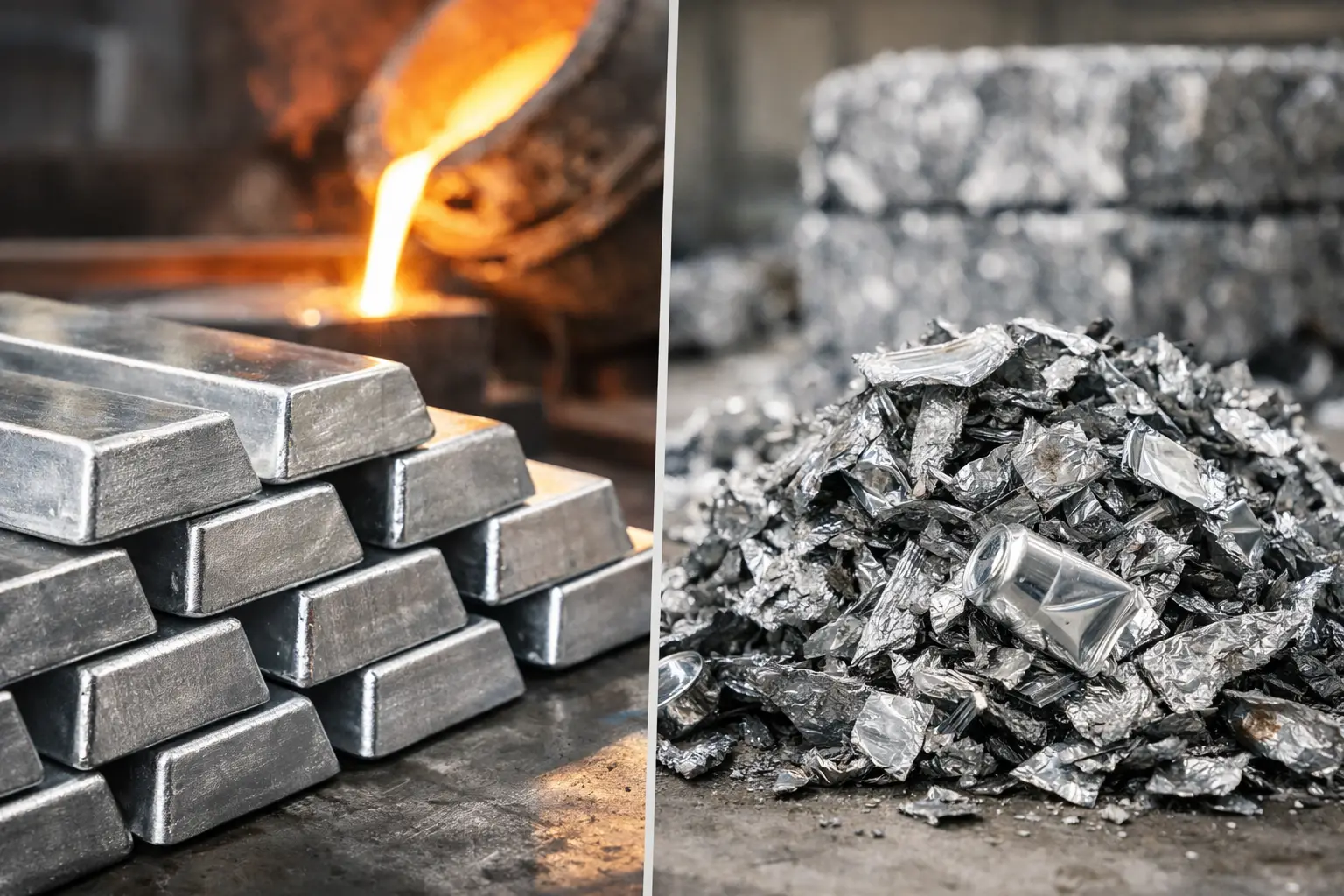
Primary aluminum is produced from alumina derived from bauxite through electrolytic reduction. It is new metal, not previously used in another product cycle. Because of that production route, primary metal typically delivers higher purity and more predictable chemistry. This is why grades such as A7, A8, A9, and similar high-purity ingot specifications are widely used where tight control matters.
Secondary aluminum is produced from recycled scrap, process returns, used products, and remelt feedstock. The material is recovered, sorted, melted, and refined for reuse. This route can be highly effective and commercially attractive, especially for applications that tolerate broader chemistry ranges or are already designed around recycled input.
The difference is not that one is automatically good and the other is bad. The difference is control. Primary metal usually offers a cleaner chemical baseline. Secondary metal can offer strong value, but its suitability depends heavily on scrap source quality, sorting discipline, and the target alloy.
Why buyers choose primary aluminum
Primary aluminum is often the preferred option when performance starts with purity. Industrial buyers in cable manufacturing, electrical infrastructure, foil production, premium extrusion, and engineered components usually need reliable conductivity, low contamination risk, and consistent processing behavior. In these cases, high-purity ingots support stable production and reduce surprises on the shop floor.
Another advantage is alloying flexibility. Starting from a cleaner metal base gives manufacturers more control when building a finished alloy. If the target chemistry is narrow, unwanted residual elements can become a serious issue. Primary metal makes it easier to hit specification without excessive correction, dilution, or rework.
Surface finish and metallurgical consistency also matter. In rolled products, drawn wire, and some structural or transport applications, variation in trace elements can affect formability, corrosion behavior, and final appearance. Buyers who supply demanding customers often prefer primary material because it supports tighter quality assurance from melt to finished product.
This is where standardized ingot grades become commercially important. A buyer sourcing premium-grade aluminum for repeat industrial use is not only buying tonnage. They are buying predictability, which protects schedules, processing efficiency, and finished product acceptance.
Where secondary aluminum makes strong commercial sense
Secondary aluminum has a clear place in industrial supply, and in many sectors it is the practical choice. Cast products are a common example. Many casting applications can work very well with recycled aluminum, provided the chemistry is appropriate and well controlled. Automotive castings, machinery housings, non-critical components, and general manufacturing parts may all be suitable depending on the required specification.
The cost advantage is the most obvious reason buyers consider secondary material. Recycled feed can reduce raw material expense, and for large-volume consumption that difference can be meaningful. Secondary production also uses far less energy than primary production, which can support sustainability targets and improve the environmental profile of a finished product.
Still, lower cost should not be treated as the only metric. The value of secondary aluminum depends on how well it performs in your process. If sorting and refining are strong, the material can deliver reliable commercial results. If feedstock quality is inconsistent, buyers may face chemistry drift, inclusions, or processing inefficiencies that offset the savings.
Purity, residuals, and specification risk
The biggest technical gap in primary aluminium versus secondary usually comes down to residual elements. Secondary aluminum can contain traces of iron, silicon, copper, zinc, lead, or other elements depending on the scrap mix. Even after refining, some residuals remain more difficult to remove economically.
That matters because residual chemistry can shape end-use performance. Electrical conductivity can drop if impurities rise beyond acceptable limits. Corrosion resistance can change. Mechanical properties can shift. In forming and finishing operations, inconsistent chemistry may increase defects or make process control harder.
For procurement teams, this creates a practical rule: the tighter the specification, the stronger the case for primary metal. If the product has strict conductivity requirements, premium surface standards, export compliance needs, or repeatable alloy targets, primary ingots often reduce operational risk.
If the application is more tolerant, secondary metal may still be the better buying decision. The key is to qualify the source and verify the chemistry against the real production requirement rather than buying on category name alone.
Cost is not just the ingot price
A straightforward comparison of quoted prices rarely tells the full story. Primary aluminum generally carries a higher purchase cost because of its production route and purity profile. Secondary aluminum often enters the market at a lower price point. But total cost includes remelt loss, refining additions, labor, rejection rates, process stability, and customer claims.
For example, a manufacturer buying lower-cost secondary feed for a sensitive extrusion application may spend more correcting chemistry or managing defects. Another buyer producing general cast components may see no penalty at all and benefit from a better margin. The right answer depends on the process window and the tolerance for variation.
Commercial buyers should also consider supply continuity. In some market conditions, scrap availability and quality can fluctuate. Primary metal supply is not immune to volatility, but standardized primary ingot grades can offer a clearer basis for procurement planning, especially for long-term industrial contracts.
Primary aluminium versus secondary in key applications
In electrical applications, primary aluminum usually has the advantage because conductivity and purity are central. Busbars, conductors, and cable-related products benefit from a cleaner metal base and more stable chemistry.
In construction and general fabrication, the answer depends on the product. Structural and architectural applications may require specific alloy behavior, corrosion resistance, and finish quality. Some products are well suited to secondary input, while others justify primary metal to protect fabrication consistency and service life.
In transportation and machinery, both routes can work. Cast parts often use recycled content effectively. Higher-performance parts, thin-gauge products, or applications with strict weight-to-strength expectations may lean toward primary or tightly controlled alloy systems built from primary input.
For packaging and premium rolled products, purity and surface performance often push buyers toward primary aluminum or a very carefully managed blend. This is especially true where product uniformity is critical across large production runs.
How procurement teams should evaluate suppliers
The strongest buying decisions come from specification-first sourcing. Ask for the chemical composition, grade designation, production method, and intended application fit. If the supplier offers secondary aluminum, ask about scrap origin, sorting controls, melt treatment, and testing practices. If the supplier offers primary ingots, confirm purity level and grade consistency.
Documentation matters. Mill certificates, assay reports, and batch-level traceability help procurement managers reduce risk before material reaches production. This is particularly important for exporters, contract manufacturers, and buyers supplying regulated or high-acceptance markets.
It also helps to match the form of supply to your operation. Some buyers need high-purity primary ingots for alloying control. Others need remelt-grade material at scale for cost efficiency. A capable industrial supplier should understand both the metallurgy and the commercial reality behind that choice.
For buyers sourcing across international supply channels, including markets tied to industrial trade hubs such as China, Turkey, Vietnam, and Germany, consistency in specifications becomes even more important. Cross-border purchasing adds logistics and compliance variables, so the metal itself should be one part of the transaction that remains clear and verifiable.
Which option is better?
The better option is the one that fits your process, your quality threshold, and your customer commitment. Primary aluminum is usually the stronger choice where purity, conductivity, alloy precision, and repeatability drive value. Secondary aluminum is often the smarter choice where cost efficiency, recycled content, and application tolerance make it commercially effective.
Experienced buyers do not choose between primary and secondary based on price alone. They choose based on what the finished product must do, how stable the production process needs to be, and how much chemistry risk the operation can absorb.
If your end use demands premium-grade performance, predictable metallurgy, and dependable bulk supply, start with material that gives you the cleanest possible foundation. That decision tends to pay for itself long after the purchase order is issued.