A material does not become standard across heavy industry by accident. The top aluminium uses in industry come from a specific mix of low weight, corrosion resistance, conductivity, formability, and scalable supply. For industrial buyers, that combination affects more than product design – it influences freight cost, production speed, maintenance cycles, and long-term material performance.
For that reason, aluminum is not limited to one sector or one grade profile. It moves from smelter output and ingot supply into construction systems, cable production, transport components, packaging stock, industrial machinery, and high-spec aerospace manufacturing. The real value is not just that aluminum is versatile. It is that the right grade can be matched to the right industrial outcome.
Why the top aluminium uses in industry keep expanding
Industrial demand for aluminum keeps growing because manufacturers are under pressure to reduce weight, improve durability, control energy use, and maintain production efficiency. Aluminum answers several of those requirements at once. It is lightweight compared with steel, naturally corrosion-resistant in many environments, and easy to cast, extrude, roll, or machine depending on the process route.
That said, application fit is never one-size-fits-all. Purity, alloying elements, mechanical requirements, fabrication method, and final exposure conditions all matter. A buyer sourcing ingots for electrical products will evaluate conductivity differently than a fabricator producing transport parts or a processor supplying building materials. The commercial decision is usually less about whether aluminum works and more about which form and grade works best.
Construction and building systems
Construction remains one of the largest industrial consumers of aluminum. Window frames, curtain walls, roofing components, facade systems, cladding panels, doors, railings, and structural support elements all benefit from aluminum’s balance of strength and low weight. For installers and project developers, easier handling can reduce labor strain and simplify movement on large sites.
Corrosion resistance is another major reason aluminum performs well in building applications. In humid, coastal, or variable climates, that matters for service life and maintenance planning. A properly selected aluminum product can help reduce repainting, replacement frequency, and structural deterioration compared with heavier or more reactive alternatives.
There are trade-offs. Aluminum is not automatically the answer for every load-bearing function, and thermal performance must be engineered correctly in fenestration systems. But in modern construction, especially where appearance, durability, and fabrication flexibility are priorities, aluminum remains a practical material for high-volume use.
Where aluminum adds the most value in construction
Extruded profiles are especially valuable because they allow manufacturers to create precise shapes for doors, windows, and modular systems. Rolled aluminum is widely used for roofing and cladding, while cast products support specialized fittings and hardware. For distributors and procurement teams, consistent supply quality matters because dimensional control, finish quality, and alloy stability affect downstream fabrication.
Electrical infrastructure and power transmission
One of the most commercially significant entries among the top aluminium uses in industry is electrical infrastructure. Aluminum is widely used in power transmission lines, cable conductors, busbars, transformer components, and related electrical hardware. Its conductivity-to-weight ratio makes it particularly attractive where long spans, installation efficiency, and overall system weight are critical factors.
Copper still has advantages in some high-performance electrical applications, especially where maximum conductivity in a compact footprint is required. But aluminum often wins on cost efficiency and weight reduction at industrial scale. That is why utilities, cable manufacturers, and power equipment suppliers continue to rely on it for broad network deployment.
Purity plays an important role here. Higher-purity aluminum can support stronger electrical performance, while manufacturing consistency helps reduce processing issues in conductor production. Buyers sourcing for this segment tend to focus closely on material specifications, because small variations can affect finished product quality and operating reliability.
Transportation and automotive production
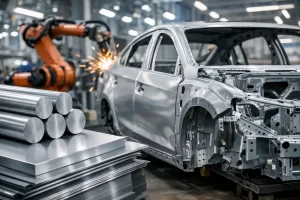
Every kilogram removed from a vehicle can matter. In automotive, rail, marine, and commercial transport manufacturing, aluminum supports lower overall weight without giving up the production flexibility manufacturers need. Body panels, wheels, engine parts, heat exchangers, trailer structures, fuel systems, and internal support components all make use of aluminum in different forms.
The commercial case is straightforward. Lower vehicle weight can improve fuel economy in conventional fleets and extend range in electric platforms. It can also help increase payload efficiency in trucks, trailers, and freight systems. For manufacturers, aluminum offers a workable path to lighter designs while still supporting high-volume production methods such as casting, stamping, rolling, and extrusion.
This is also a sector where grade selection is critical. Some components require better formability, while others need stronger mechanical properties or improved thermal behavior. A transport buyer is rarely purchasing aluminum in the abstract. They are purchasing a material route tied directly to manufacturing process, regulatory demands, and service conditions.
Manufacturing equipment and industrial machinery
Aluminum is also a valuable material in general manufacturing. It appears in machine housings, process equipment, frames, fixtures, tanks, enclosures, conveyor parts, tooling components, and fabricated industrial assemblies. In these uses, the benefit is often a combination of machinability, corrosion resistance, and manageable weight.
For machinery builders, a lighter component can simplify assembly and maintenance. For production plants, corrosion resistance can improve service life in wet or chemically exposed environments. For fabricators, aluminum can support faster machining and efficient shaping when compared with harder and heavier materials.
Still, this is an area where performance needs careful review. Some heavy-load or high-wear environments may require steel, cast iron, or specialized alloys instead. Aluminum works best when buyers evaluate the full use case – weight, exposure, precision, stress levels, and expected service duration – rather than selecting by cost alone.
Packaging and container production
Packaging is one of the most visible aluminum applications, but at industrial scale it is also one of the most efficient. Aluminum is used in beverage cans, food containers, foil products, closures, aerosol cans, and pharmaceutical packaging. The material protects contents well, resists corrosion, and can be formed into thin, reliable barriers.
What matters commercially is the combination of lightweight logistics and high-volume manufacturability. Packaging producers need a material that can run fast through rolling, forming, and finishing operations while maintaining quality and appearance. Aluminum meets that requirement in a way few materials can.
Recyclability also strengthens its position. For industrial packaging buyers and producers, recycled aluminum can support circular material flows without eliminating the need for quality control. That does not remove the importance of primary metal supply, especially where purity and consistency are essential, but it does increase aluminum’s long-term value in packaging markets.
Aerospace and high-performance engineering
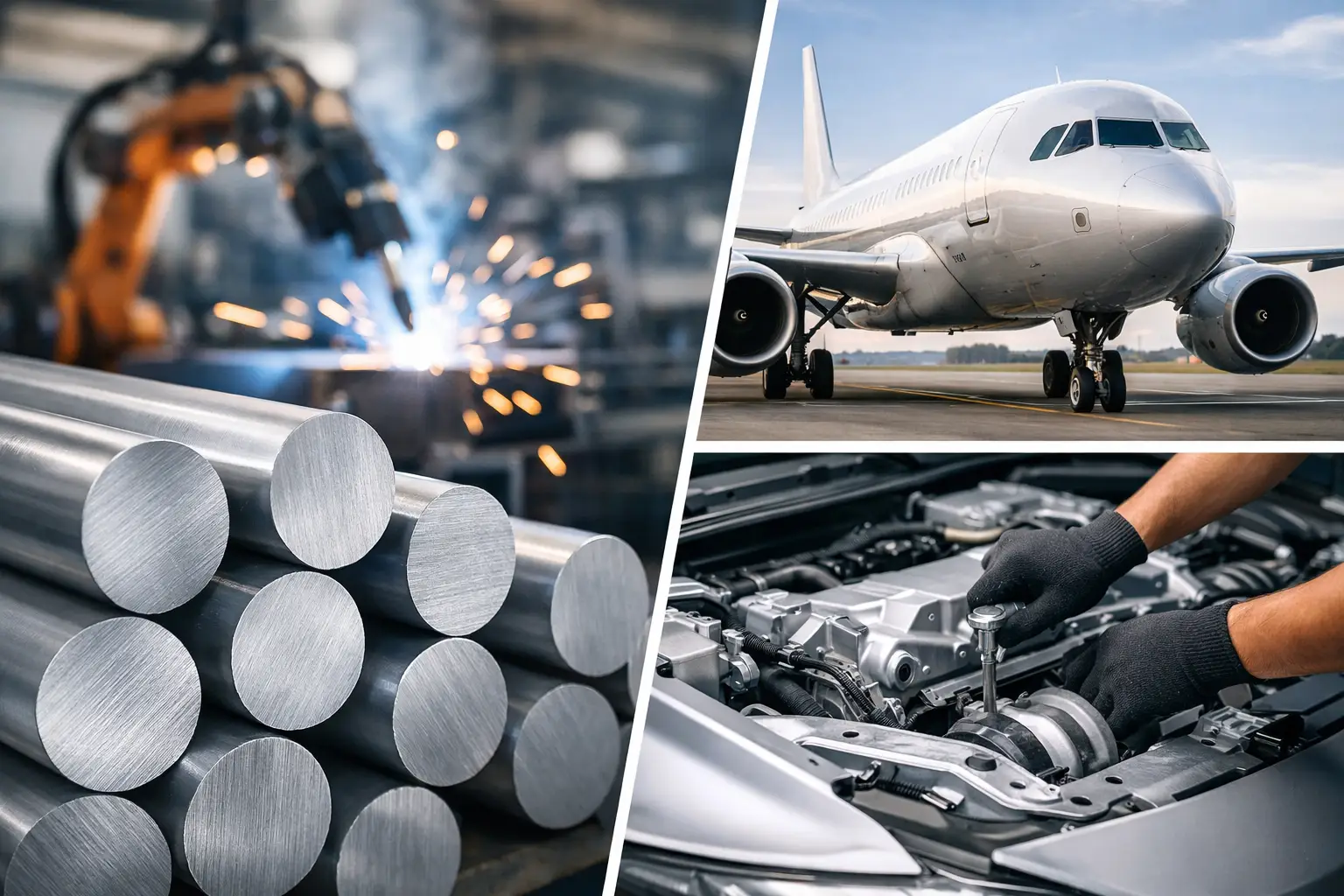
Aerospace remains one of the most technically demanding examples of top aluminium uses in industry. Aircraft structures, fuselage sections, wing components, interior systems, and precision-engineered parts often rely on aluminum because weight reduction is critical and material performance must remain predictable under demanding conditions.
In this segment, the margin for error is small. Strength, fatigue behavior, corrosion resistance, and processing consistency all matter. Buyers in aerospace and adjacent high-performance sectors do not simply look for aluminum availability. They look for verified composition, traceable supply, and material suited to exact manufacturing standards.
Although advanced composites and titanium serve some roles, aluminum continues to hold a major place because it offers an effective balance of weight, cost, manufacturability, and proven field performance. For suppliers, credibility in this market comes from consistency and specification discipline more than broad product claims.
Matching aluminum grade to industrial use
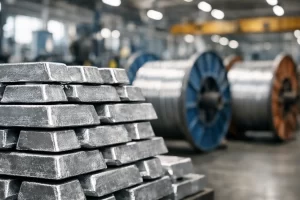
The broad market value of aluminum only becomes useful when grade selection is handled correctly. High-purity primary aluminum, including standard ingot grades such as A7, A8, A9, and A6, serves as a starting point for many downstream industrial processes. The right choice depends on whether the buyer prioritizes conductivity, casting behavior, surface quality, alloying control, or end-product performance.
For example, electrical and high-purity processing applications may place greater weight on metal purity and conductivity. Construction and transport manufacturers may focus more on alloy development and fabrication compatibility. Packaging producers need material that supports thin-gauge forming with stable quality, while industrial processors may require dependable input for repeated casting or extrusion cycles.
This is where supplier capability matters. A reliable source does more than quote tonnage. It helps buyers align grade, volume, and intended application so the metal performs correctly in production.
What industrial buyers should look at before ordering
When sourcing aluminum for large-scale use, purchase decisions should be based on more than headline price. Purity level, consistency between lots, form of supply, lead time, and suitability for the intended process all affect commercial outcomes. A lower-cost material can become more expensive if it causes scrap, slows production, or fails to meet downstream specifications.
Regional supply conditions also matter. Buyers working across manufacturing hubs in markets such as China, Turkey, Vietnam, and Germany often compare suppliers not only on price but on specification reliability and shipment readiness. For companies buying into construction, cable, machinery, or export manufacturing, stable supply can be just as valuable as the metal itself.
Aluminum remains one of the few industrial materials that can serve infrastructure, mobility, manufacturing, packaging, and high-spec engineering at the same time. The best buying decisions start with a simple question: what does the finished product need the metal to do, day after day, at production scale?