When a buyer is quoting material for cable, castings, extrusions, or rolled products, the real question is rarely whether aluminum is a good fit. The harder decision is primary aluminium versus recycled aluminium, because that choice affects purity, cost stability, processing behavior, and end-use performance in very different ways.
For industrial procurement, this is not a simple good-versus-bad comparison. Both material streams have commercial value. Both can perform well in production. The right choice depends on the grade required, the tolerance for residual elements, the manufacturing route, and the level of consistency needed across large-volume orders.
Primary aluminium versus recycled aluminium: the basic difference
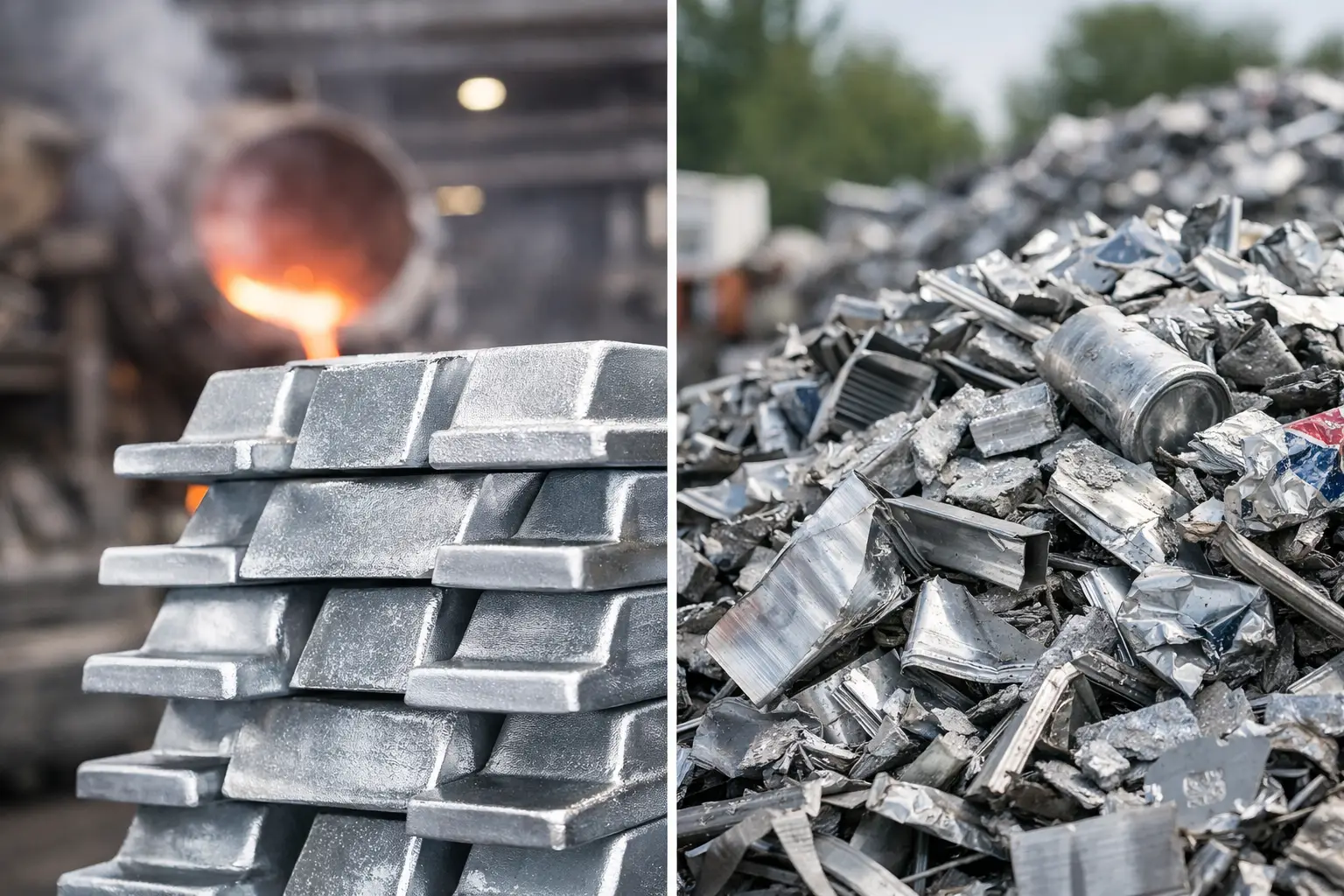
Primary aluminum is produced from bauxite through alumina refining and electrolytic reduction. It starts at the source, which allows producers to control chemistry more tightly and deliver high-purity metal for demanding industrial uses. Standardized ingot grades such as A7, A8, A9, and A6 are often associated with this supply route, especially where buyers need predictable composition and repeatable processing.
Recycled aluminum is produced by recovering scrap, sorting it, cleaning it, and remelting it into usable metal. That scrap may come from post-industrial sources such as machining offcuts and process scrap, or post-consumer sources such as used cans, automotive parts, and construction materials. Recycled material can be highly effective, but its quality depends heavily on feedstock control and secondary refining practices.
That distinction matters because aluminum is used across very different sectors. A packaging plant, a die-casting operation, and an electrical manufacturer do not evaluate metal the same way. One may prioritize conductivity, another fluidity, and another cost per ton.
Purity and composition control
For many industrial buyers, purity is the first dividing line in primary aluminium versus recycled aluminium. Primary metal generally offers higher purity and lower levels of unintended residual elements. That makes it easier to use when downstream production requires strict chemistry control.
This is especially relevant in electrical applications, high-spec extrusion, and products where conductivity, corrosion resistance, or surface finish must remain consistent. High-purity primary ingots are often selected because they reduce uncertainty in alloying and help manufacturers stay within specification without repeated adjustments.
Recycled aluminum can also meet demanding specs, but the margin for variation is usually wider unless the scrap stream is tightly segregated. Elements such as iron, copper, zinc, magnesium, or silicon can carry over from previous use cycles. In some alloys, that is manageable or even beneficial. In others, it creates risk.
A buyer sourcing feedstock for remelting should therefore ask a practical question: is the operation designed to absorb compositional variation, or does it require a clean, stable base metal? If chemistry drift creates downtime, rejects, or extra refining cost, lower headline pricing may not translate into lower total cost.
Energy use and sustainability claims
The sustainability case is where recycled aluminum has the clearest advantage. Producing secondary aluminum typically requires far less energy than producing primary metal from ore. That reduced energy input can lower carbon intensity and improve environmental reporting for manufacturers under pressure from customers, regulators, or internal procurement standards.
For some buyers, this is now a deciding factor rather than a marketing point. Construction products, packaging components, transportation parts, and consumer-facing manufactured goods increasingly carry sustainability expectations through the supply chain. Recycled content can support those targets.
That said, procurement teams should be careful with broad assumptions. Not all recycled aluminum has the same environmental profile, and not all primary metal has the same footprint. Energy source, transport distance, scrap recovery efficiency, and refining methods all influence the final number. A blanket claim that one option is always better in every commercial context can lead to poor sourcing decisions.
Cost, pricing behavior, and supply risk
On paper, recycled aluminum often looks like the cheaper option. In many cases, it is. Secondary production avoids part of the high energy burden associated with primary smelting, and scrap-based feedstock can be commercially attractive.
But industrial buying is about more than spot price. Primary metal often delivers stronger consistency across large-volume contracts, especially where buyers need standardized grades and dependable tonnage. For plants that run continuously, supply reliability can matter as much as unit price.
Recycled aluminum pricing can also be affected by scrap availability, sorting quality, contamination levels, and regional recovery conditions. If the scrap market tightens, secondary supply can become less predictable than expected. Buyers in manufacturing hubs may see periods where availability is strong, then suddenly constrained by competing demand.
In contrast, primary supply chains are tied more directly to mining, refining, smelting capacity, and global commodity conditions. They carry their own volatility, particularly around energy costs, but they can be easier to specify when a purchaser needs exact grade definitions for export, large projects, or repeat production runs.
Primary aluminium versus recycled aluminium in real applications
The application usually makes the decision clearer.
For electrical infrastructure, primary aluminum is often preferred because conductivity and purity matter. Residual elements can reduce performance, and manufacturers producing conductor material or related components generally want a cleaner base metal.
For aerospace and other tightly engineered sectors, the answer depends on the alloy system and qualification requirements. Some applications permit recycled content within controlled alloy production, while others require a more tightly managed primary input stream to maintain certification and mechanical consistency.
For construction, transportation, and general manufacturing, the decision is more flexible. Recycled aluminum can perform very well in products where alloy design, forming method, and final service environment are already built around secondary material. Window frames, cast components, non-critical fabricated items, and many packaging applications can use recycled feedstock successfully when quality control is strong.
For foundries and casting operations, secondary aluminum is often commercially attractive, especially where silicon-bearing or mixed alloy systems are already part of the process. In those settings, recycled content may fit the production model naturally. By contrast, manufacturers producing premium-grade ingot-based products with strict impurity ceilings may still favor primary inputs.
Processing performance on the shop floor
One of the less discussed parts of primary aluminium versus recycled aluminium is how each behaves once it reaches production.
Primary metal usually gives processors a cleaner starting point. Alloying is more predictable, melt treatment can be simpler, and quality control teams spend less time correcting chemistry. In high-throughput environments, that can improve efficiency and reduce waste.
Recycled aluminum may require more attention during melting and refining, particularly if scrap origin is mixed or contamination is present. Dross generation, inclusion control, and chemistry correction can all affect yields. None of this makes recycled metal unsuitable. It simply means buyers should account for processing cost, not just purchase cost.
This is where supplier transparency matters. A good industrial supplier should be able to explain grade, purity range, intended applications, and whether the material is suitable for remelting, alloying, or direct downstream use. Commercial confidence starts with specification clarity.
What industrial buyers should ask before ordering
A practical purchasing decision starts with four checks. First, confirm the required chemistry and purity window for the end product. Second, evaluate whether recycled content is technically acceptable for that application. Third, compare not only material price but also melt loss, reject risk, and process adjustment costs. Fourth, look at supply continuity across the full order cycle, especially for project-based demand or export schedules.
For buyers sourcing ingots in bulk, standardized primary grades can make planning easier. For buyers operating cost-sensitive manufacturing lines with more flexible alloy tolerance, recycled inputs may improve margins. Many operations use both, depending on the product mix.
That mixed approach is often the most commercially realistic. A manufacturer may reserve primary aluminum for high-purity products and use recycled metal where alloy tolerance and process design allow it. That is not compromise. It is disciplined sourcing.
Which option is better?
There is no universal winner in primary aluminium versus recycled aluminium. Primary metal is typically the stronger choice where purity, conductivity, corrosion resistance, and consistent composition are critical. Recycled metal is often the stronger choice where energy savings, sustainability targets, and cost efficiency carry more weight and the application can accommodate carefully managed secondary material.
For industrial buyers, the best decision is the one that protects product performance and purchasing efficiency at the same time. If your operation depends on premium-grade chemistry and repeatable output, primary supply usually justifies its position. If your production model can absorb secondary feedstock without sacrificing quality, recycled aluminum can deliver real commercial value.
The smart buy is not the cheapest ton on paper. It is the material that performs the way your production line, your customers, and your specifications require.