A poor form choice can slow a production line before the metal even reaches the furnace. In aluminium ingots versus billets, the real question is not which product is better in general. It is which form fits your process, specification, and buying strategy with the least waste and the most predictable output.
Industrial buyers often compare ingots and billets as if they are interchangeable raw materials. They are related, but they are not the same commercial input. Their geometry, production route, and downstream purpose affect melting behavior, handling, machining, extrusion performance, and total cost per finished part.
Aluminium ingots versus billets: the basic difference
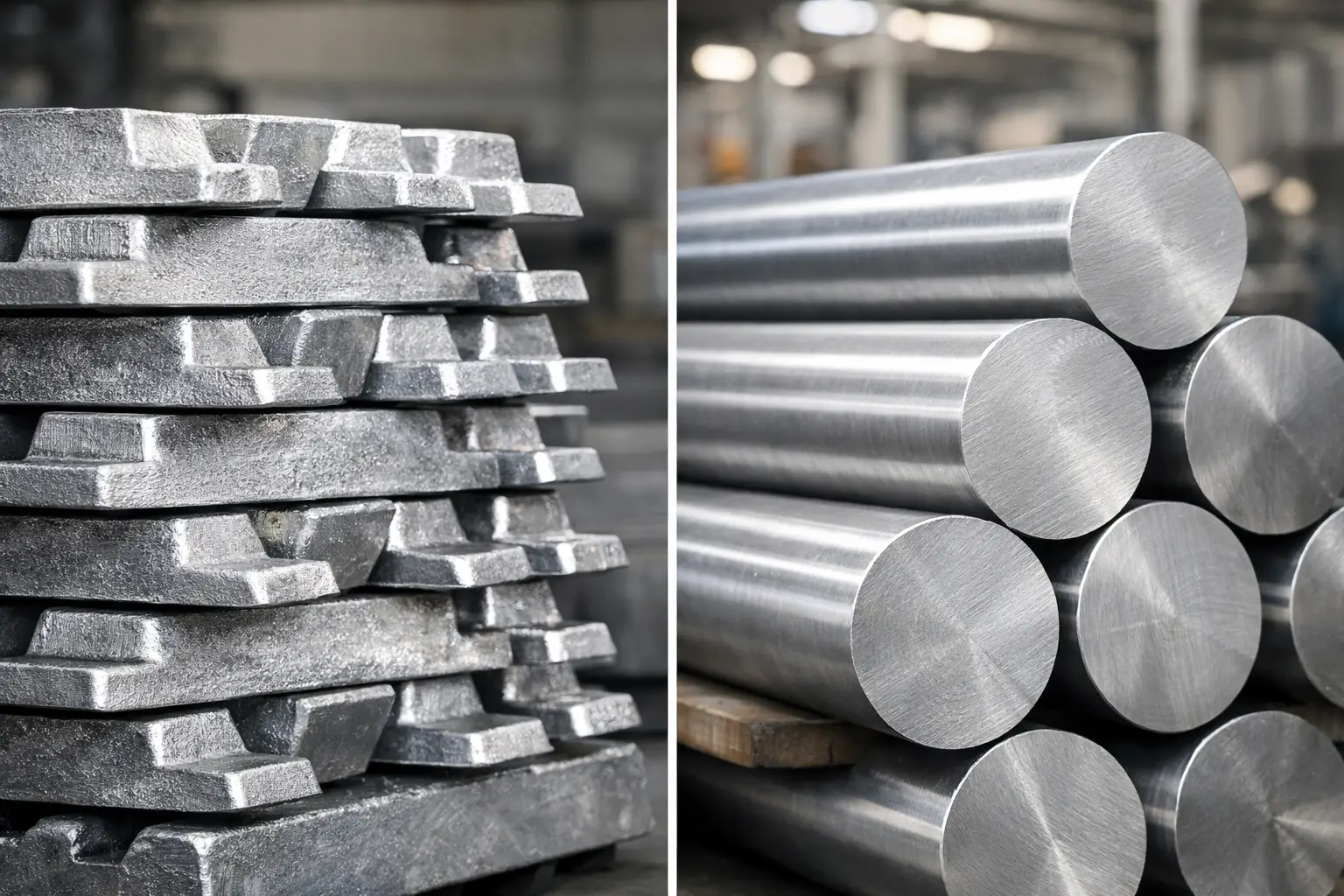
At the most practical level, aluminium ingots are cast blocks of metal produced for storage, remelting, alloying, or resale into foundry and manufacturing channels. They are commonly associated with primary aluminium supply, standardized grades, and bulk trading. Billets are cylindrical or occasionally square semi-finished forms made specifically for further processing, especially extrusion, forging, and rolling preparation.
That distinction matters because form follows function. An ingot is often the starting commodity form for smelters, foundries, and manufacturers that will melt and recast. A billet is usually closer to the next manufacturing step. It is designed to feed a shaping process rather than simply serve as a bulk metal reserve.
If your plant plans to remelt metal and cast its own shapes, ingots may be the better commercial fit. If your operation runs extrusion presses or requires consistent feedstock for profile production, billets are usually the more efficient choice.
How each product is made
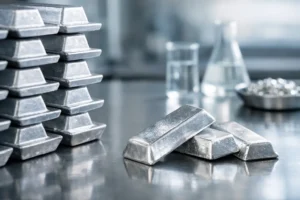
Aluminium ingots are typically produced by casting molten aluminium into molds that create rectangular, trapezoidal, or sow-style forms. In many bulk supply chains, ingots are sold by purity or alloy grade, such as A7, A8, A9, or A6, depending on the required chemistry. These grades are valued where high purity, reliable conductivity, corrosion resistance, or controlled alloying is essential.
Billets go through a more specialized route. After casting, they are commonly homogenized to improve internal structure and reduce segregation. They are then cut to specific lengths and diameters for downstream use. This extra processing is one reason billets usually carry a higher price than basic ingots of similar chemistry.
For buyers, the commercial takeaway is clear. You are not just paying for aluminium content. You are paying for process readiness, dimensional control, and metallurgical preparation.
Why shape changes the economics
Shape affects more than storage and transport. It changes how the material enters production.
Ingots are straightforward to stack, warehouse, and move in bulk. They work well for traders, secondary smelters, and plants that batch melt metal for multiple product lines. Their simplicity supports large-volume procurement, especially when a buyer needs standardized purity and flexibility across several end uses.
Billets are more process-specific. Their controlled dimensions help improve loading into extrusion equipment and support better consistency during deformation. For an extrusion plant, that can mean lower setup losses, tighter dimensional performance, and better throughput. The higher purchase price may be justified by lower conversion inefficiency.
This is where aluminium ingots versus billets becomes a cost-per-output decision, not just a price-per-ton decision. A cheaper input is not cheaper if it creates more scrap, more energy use, or more downtime.
Typical applications for aluminium ingots
Ingots are widely used where remelting is part of the production plan. That includes foundries, alloy producers, cable manufacturers, automotive casting operations, and general industrial fabricators. High-purity ingots also support applications where conductivity and chemistry control are critical, such as electrical infrastructure and selected packaging or engineering uses.
For buyers in construction and transportation supply chains, ingots often make sense when the business converts raw aluminium into cast components, sheets, or custom alloy batches. They are also a common purchasing format for exporters and commodity buyers because grade specifications are usually clear and commercially standardized.
In markets tied to long-term industrial development, including supply channels connected to Cameroon’s aluminium resource base, ingots remain a practical trading form because they align with large-volume movement and broad downstream flexibility.
Where billets perform better
Billets are preferred when the buyer needs a feedstock that is already optimized for shaping operations. Extrusion is the clearest example. Window frames, curtain wall systems, heat sinks, tubing, rails, automotive profiles, and industrial structural sections all rely on billet quality to maintain consistency under pressure.
A billet with proper homogenization and controlled chemistry can improve surface finish, reduce cracking risk, and support better die performance. For manufacturers supplying precision profiles, those gains are significant. Even slight variations in billet quality can affect straightness, finish, and reject rates.
Billets can also be used in forging and other deformation-heavy processes where internal structure matters. In these cases, the buyer is selecting not just a metal grade but a semi-finished product engineered for conversion.
Grade, purity, and specification still come first
Form does not replace grade selection. An ingot in a high-purity primary grade and a billet in a specific extrusion alloy solve different problems.
If a buyer needs high-purity aluminium for conductivity, controlled alloying, or corrosion-sensitive applications, ingot grade selection is often the first filter. Standardized grades such as A7, A8, A9, and A6 are commonly evaluated on purity, contamination limits, and intended downstream use. If the material will enter remelting, these values directly affect process control and final product quality.
For billets, chemistry must match the forming process and the final application. Mechanical performance, extrusion speed, finish quality, and heat treatment behavior all depend on alloy choice and casting quality. Buying billets without close specification control can create expensive problems later in production.
The practical rule is simple: choose the form based on process, then choose the grade based on performance.
Buying considerations for procurement teams
Procurement decisions around ingots and billets often come down to four commercial questions: What process are you feeding, how much conversion will you handle in-house, how tight are your quality tolerances, and what does failure cost?
If your facility has melting capacity and regularly adjusts chemistry for different jobs, ingots usually provide more flexibility. They can support multiple production streams from a single inventory class. That is useful for buyers managing variable demand across casting, electrical, and fabrication segments.
If your plant runs dedicated extrusion or profile manufacturing, billets usually reduce operational uncertainty. The material arrives closer to the exact form needed, which can simplify planning and improve output consistency.
Lead time also matters. Commodity-grade ingots can be easier to source in large volumes depending on market conditions. Billets may involve more exact production scheduling because diameter, alloy, and treatment requirements are more specific. For project buyers working on fixed delivery windows, that difference can affect purchasing strategy.
When ingots are the stronger commercial choice
Ingots are often the better option when the buyer wants broad application range, straightforward bulk storage, and a cleaner fit for remelting economics. They are especially useful for manufacturers producing cast parts, alloy blends, or general-purpose industrial products at scale.
They also make sense when price sensitivity is high and the plant already has the equipment to convert raw aluminium efficiently. In that environment, paying a premium for billet preparation may not add enough value.
For suppliers serving multiple industries, ingots support a wider customer base because they are not tied to a single downstream shaping process.
When billets justify the premium
Billets justify their higher cost when process stability, dimensional consistency, and downstream forming performance have direct financial value. Extrusion plants are the clearest case, but not the only one. Any operation where feedstock quality influences output speed, finish, or scrap rates should evaluate billets on total manufacturing impact.
A billet can be more expensive on paper and still be the smarter buy. If it cuts defects, improves throughput, and protects tooling, the premium may be modest compared with the savings across a production run.
That is why experienced buyers do not compare ingots and billets as simple substitutes. They compare them against the exact operational result they need.
The right choice depends on your production model
There is no universal winner in aluminium ingots versus billets. Ingots are efficient, flexible, and commercially strong for remelting and broad industrial use. Billets are more specialized and more valuable when the next step is controlled forming, especially extrusion.
For procurement managers and manufacturers, the better question is not which form is more advanced. It is which form gives your operation the right chemistry, the right handling profile, and the right cost structure for the final product you need to ship.
Good aluminium buying starts with the production line, not the warehouse. When your material form matches your process from the start, everything after that tends to run cleaner.