A wrong aluminium grade rarely fails at the purchase stage. It fails later – when a fabricated part cracks in forming, a conductor misses performance targets, or a coastal installation corrodes faster than expected. That is why knowing how to choose aluminium grade matters for procurement teams, fabricators, and project buyers working with strict performance and cost targets.
For industrial buying, grade selection is not just a metallurgy question. It affects production yield, downstream machining, welding behavior, weight, finish quality, and long-term service life. In bulk purchasing, the cost of choosing the wrong grade is usually much higher than the price difference between two suitable options.
How to choose aluminium grade for the actual job
The starting point is the application, not the catalog. Buyers often compare grades by purity or by a familiar designation, but the better question is simpler: what must the material do once it enters production or service?
If the aluminium is being used in electrical systems, conductivity becomes the priority. If it is headed into structural fabrication, the balance shifts toward strength, weldability, and corrosion resistance. If the material will be deep drawn, rolled, or stamped, formability matters more than headline strength. Packaging, transportation, cast parts, and industrial machinery all pull grade selection in different directions.
That is why there is no universal best grade. There is only the right grade for the combination of environment, process, specification, and budget.
Start with the end-use environment
Service conditions quickly narrow the field. Aluminium performs well in many environments because of its natural oxide layer, but grades do not behave identically under moisture, chemicals, salt exposure, heat, or repeated stress.
For outdoor construction, marine-adjacent projects, and infrastructure exposed to humidity, corrosion resistance should be near the top of the selection criteria. A grade that looks cost-effective on paper can become expensive if it requires extra coating, replacement, or maintenance.
For interior industrial applications with limited exposure, buyers may have more flexibility to prioritize mechanical properties or price. In other words, the environment can either widen or sharply restrict your acceptable grade range.
Match the grade to the manufacturing process
A grade that performs well in service can still create problems on the shop floor. This is where many purchasing mistakes happen.
If the material will be welded, some grades are far easier to join without losing too much strength or introducing defects. If the part will be machined, the wrong grade can increase tool wear, reduce finish quality, or slow production. If the aluminium will be bent or formed, high-strength material may not deliver the ductility required for efficient fabrication.
This is especially relevant for buyers sourcing bulk aluminium for downstream manufacturing. The lowest-cost metal is not the lowest-cost input if it adds scrap, rework, or cycle time.
The main factors that decide aluminium grade selection
Purity and chemical composition
In many industrial buying decisions, purity is a headline metric because it directly affects conductivity, corrosion behavior, and suitability for specialized applications. High-purity aluminium grades are often favored in electrical and certain technical applications where consistent performance matters.
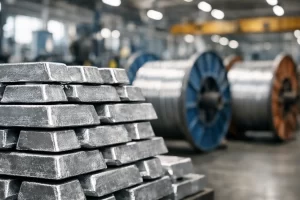
Standardized ingot grades such as A7, A8, A9, and A6 are commonly evaluated by purity level and intended industrial use. Higher purity material can be attractive for buyers who need dependable conductivity, cleaner downstream processing, or tight production consistency. At the same time, very high purity is not always necessary for every use case. If your application is less sensitive to conductivity and more focused on alloying or remelting, paying for excess purity may not improve the commercial result.
Strength versus formability
This is one of the most common trade-offs in aluminium selection. Stronger grades can support demanding structural or mechanical applications, but they may be less forgiving in forming operations. Softer, more formable grades are often better for products that need shaping, rolling, or drawing, yet they may not meet load-bearing requirements.
Procurement teams should avoid evaluating strength in isolation. A stronger grade that causes forming defects can disrupt production. A more formable grade that cannot handle the service load creates a different kind of failure. The correct choice depends on where performance is most critical – in fabrication, in final use, or both.
Corrosion resistance
Aluminium is widely selected because it is corrosion-resistant, but expected exposure still matters. Industrial facilities, transportation equipment, roofing systems, and coastal infrastructure all place different demands on the material.
When long service life is a priority, corrosion resistance should be treated as a cost-control factor, not just a technical feature. Better resistance can reduce coating needs, maintenance intervals, and replacement rates. For commercial buyers, that directly affects lifecycle cost.
Conductivity
For electrical cable, busbars, power-related components, and conductive applications, aluminium grade selection should closely track conductivity requirements. In this category, purity and composition matter more than they would in many structural uses.
A buyer sourcing material for electrical infrastructure should not approach grade selection the same way as a buyer sourcing feedstock for general manufacturing. Similar-looking products may have very different performance expectations.
Weight and strength-to-weight performance
Transportation, machinery, and engineered systems often use aluminium because it is lightweight without giving up too much strength. But not every grade delivers the same balance.
If weight reduction is part of the value calculation, look beyond the simple assumption that all aluminium performs equally. The right grade can improve payload efficiency, energy use, handling, and structural performance. The wrong one can force compensating design changes that erase the expected advantage.
Surface finish and downstream quality
For buyers supplying packaging, consumer-facing components, or architectural products, finish quality can matter as much as mechanical performance. Some grades are better suited to anodizing, coating, or producing a consistent appearance.
This may seem secondary at the raw material stage, but finish-related rejection can become a real cost in large-volume production. If appearance, coating adhesion, or surface consistency matters, it should be part of the grade decision early.
How bulk buyers should compare aluminium grades
Commercial buyers should compare grades through three lenses at the same time: technical fit, processing fit, and supply fit.
Technical fit asks whether the grade meets the actual performance requirement. Processing fit asks whether it runs efficiently through casting, rolling, machining, welding, or forming. Supply fit asks whether the material can be sourced consistently in the volume, specification, and delivery schedule the operation requires.
That last point is easy to underestimate. A technically ideal grade is less useful if supply is inconsistent, lead times are unstable, or specifications vary between shipments. In industrial purchasing, repeatability matters as much as first-batch performance.
For buyers working across sourcing channels in manufacturing markets such as China, Turkey, Vietnam, and Germany, this becomes even more important. Grade availability, specification discipline, and volume reliability can differ by supplier and region. A dependable supply partner reduces the risk of production interruption and material mismatch.
Common mistakes when choosing aluminium grade
One common mistake is buying on price per ton without calculating production impact. Another is assuming a grade used successfully in one application will perform equally well in a different environment or process.
Buyers also run into problems when they focus only on purity or only on strength. Aluminium selection is rarely that simple. Conductivity, corrosion resistance, fabrication method, and end-use exposure all interact. A grade can look right in one column of a data sheet and still be wrong for the job.
Another avoidable issue is vague specifications. If the purchase requirement does not clearly define grade, chemistry expectations, form, and intended use, mismatched deliveries become more likely. Precision at the inquiry stage usually saves time later.
A practical way to make the final grade decision
If you need a reliable buying framework, begin with four questions. What performance is non-negotiable? What manufacturing process will the material go through? What environment will the finished product face? What cost are you measuring – purchase cost alone, or total production and service cost?
Those questions usually narrow the field quickly. From there, confirm the grade against required purity, mechanical expectations, fabrication needs, and supply consistency. If you are sourcing ingots for remelting or industrial production, align the grade with downstream alloying and output requirements rather than choosing by familiarity alone.
For many commercial buyers, the strongest purchasing decision comes from treating aluminium grade as an operational input, not a commodity line item. That is where supplier guidance also has real value. A supplier that understands grade segmentation, industrial applications, and volume requirements can help prevent expensive specification errors before the order is placed.
Choosing well is less about finding the most premium option and more about buying material that fits the process, the product, and the business case. When those three align, aluminium performs like it should – efficiently, consistently, and at scale.