
A low unit price on aluminum ingots can disappear fast when the material arrives off-spec, poorly documented, or inconsistent from batch to batch. If you are sourcing bulk metal for casting, extrusion, electrical applications, or manufacturing, knowing how to verify aluminium supplier quality is not a paperwork exercise. It is a direct control on yield, downtime, customer claims, and margin.
Industrial buyers rarely have trouble finding aluminum suppliers. The harder part is separating a serious production partner from a trading layer that cannot consistently prove purity, grade control, or shipment reliability. Quality verification starts before the first order, and it continues through sampling, documentation, logistics, and post-delivery performance.
How to Verify Aluminium Supplier Quality at the Source
The first checkpoint is simple – confirm what the supplier actually is. Some companies are producers, some are stockists, and some are intermediaries. None of those models is automatically bad, but the risk profile changes. A producer with direct control over melting, refining, casting, and inspection can usually provide stronger process visibility. A trader may still be a good option if they have dependable upstream mills and disciplined documentation, but you need to know who owns quality control.
Ask where the material is produced, how often the supplier handles your required grade, and whether they can support repeat volume under the same specification. If you are buying A7, A8, A9, or A6 ingots, the supplier should speak clearly about chemistry ranges, intended applications, and production consistency. Vague answers are a warning sign. Serious suppliers do not need to improvise around core grade data.
It also helps to understand whether the supplier is serving your type of industry or simply offering aluminum as one item in a broad commodity catalog. A supplier that regularly serves construction manufacturers, cable producers, foundries, or industrial fabricators is more likely to understand why purity variation, inclusion control, and packaging condition matter on the receiving side.
Check grade knowledge, not just product availability
A supplier can list multiple grades online and still have weak technical control. Ask what differentiates one grade from another in practical use. For example, higher-purity ingot may be preferred where conductivity, finish quality, or downstream metallurgical consistency are critical. In other cases, the right choice depends on cost balance, remelting behavior, or the final product standard.
If the sales team cannot explain grade fit in commercial terms, that usually means technical support is thin. Strong suppliers connect specification to production outcome.
Review Material Documentation Carefully
Quality claims mean very little without documents that are current, traceable, and batch-specific. The most useful record is the mill test certificate or equivalent certificate of analysis tied to the actual lot you will receive. This document should show the chemical composition and identify the heat, batch, or cast number.
Do not stop at asking whether a certificate exists. Review whether the numbers match the grade standard you are buying and whether the certificate format looks consistent across shipments. Buyers sometimes receive generic templates that are not lot-specific. That creates risk, especially in export transactions where claims may be difficult to resolve after unloading.
Traceability matters just as much as chemistry. Each pallet, bundle, or ingot stack should be linked to the relevant batch reference. If labels are unclear or easily separated from the load, the document trail weakens immediately.
What good documents should tell you
A reliable supplier should be able to provide batch identification, chemical analysis, product form, net and gross weight, production date or lot reference, and inspection confirmation. Depending on your market and use case, you may also request packing lists, origin records, and quality management certifications.
Certifications can help, but they should not replace material verification. A factory may hold a quality certification and still ship inconsistent metal if process discipline is weak. Certificates support confidence. They do not prove the batch in front of you is correct.
Inspect Process Control and Testing Capability
If your order volume is meaningful, ask how the supplier verifies each production lot. You want to understand whether the chemistry is checked in-house, how frequently samples are taken, and whether the facility has calibrated testing equipment. A supplier that relies entirely on outside labs for routine verification may still be acceptable, but response times and consistency can suffer.
The practical question is this: when a melt drifts toward the edge of spec, what happens next? Strong suppliers have a defined hold-and-release process. They do not blend uncertainty into outgoing shipments and hope the customer does not notice.
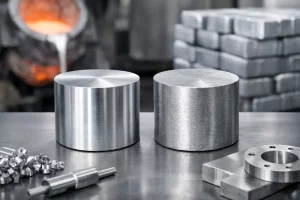
In aluminum ingot supply, process control often shows up in the small details. Ingot shape consistency, surface condition, stacking quality, and contamination control all tell you something about the discipline of the operation. Heavy oxidation, excessive dirt, mixed branding, or inconsistent casting appearance can indicate weak handling standards even if the chemistry paperwork looks acceptable.
Use Samples and Trial Orders to Verify Aluminium Supplier Quality
For new suppliers, a trial order is usually cheaper than a quality dispute. If possible, start with a manageable lot and evaluate both the documents and the material in production. This is one of the most practical ways to verify aluminium supplier quality because it tests the supplier under real commercial conditions.
A proper trial should measure more than chemistry. Review dimensional consistency where relevant, packaging integrity, gross-to-net weight accuracy, loading condition, moisture exposure risk, and transit damage. Then assess how the material performs in your own process. Does it melt cleanly? Does it create excess dross? Does it run consistently across batches? Does it support your target finish, conductivity, or fabrication result?
Sometimes a supplier passes laboratory checks but still causes production inefficiency. That is still a quality problem. Procurement decisions should reflect total process performance, not only certificate compliance.
Compare samples across more than one batch
One sample can be staged. Two or three lots tell a more accurate story. If a supplier performs well once but cannot repeat the same chemistry, packaging, and shipment discipline, the risk remains high. Repeatability is what industrial buyers are actually purchasing.
Evaluate Commercial Reliability Alongside Material Quality
Supplier quality is not limited to the metal itself. Delivery reliability, claim handling, response speed, and specification discipline are part of the quality equation. A good batch delivered late to a production-critical site can still be a costly failure.
Ask how the supplier manages lead times, what safety stock they maintain, and how they handle urgent replenishment or schedule changes. If you operate across multiple sourcing corridors such as China, Turkey, Vietnam, or Germany, consistency in export packing, documents, and shipment coordination becomes even more important. Logistics errors can compromise otherwise sound material.
It is also worth asking how nonconformance is handled. The answer should be direct. Serious suppliers define the review process, evidence required, response timing, and commercial remedy. If the response is vague or defensive before you place the order, expect difficulty later.
Red Flags Buyers Should Not Ignore
Some warning signs show up early. Prices that sit well below the market without a clear explanation deserve scrutiny. So do suppliers who resist batch certificates, avoid sample requests, or change grade descriptions during negotiation.
Another red flag is inconsistency between sales claims and technical records. If the website says premium-grade, high-purity aluminum but the certificate language is generic and incomplete, verify before committing. Mixed product photos, unclear warehouse images, and recycled paperwork are also worth noticing.
Communication quality matters more than many buyers admit. Clear, accurate answers usually reflect organized operations. Delayed, evasive, or contradictory replies often point to deeper control issues.
Build a Verification Standard Before You Scale
The most effective buyers do not verify suppliers casually. They build an internal approval standard. That may include required documents, acceptable chemistry tolerance, sample approval steps, packaging rules, shipment labeling, and claim procedures. Once those controls are written down, supplier comparison becomes much easier.
This is especially useful when sourcing for multiple end uses. The verification standard for aluminum used in general manufacturing may not be strict enough for electrical, transport, or high-performance applications. Quality should be defined by the downstream requirement, not by a generic purchasing checklist.
For bulk buyers, the strongest supplier relationships are usually built on transparency rather than broad promises. If a supplier can show grade discipline, repeatable test data, clear traceability, and dependable shipment execution, the commercial value is real. Good aluminum buying is not about finding the cheapest ton. It is about securing material that performs the same way every time your production line depends on it.
The best moment to test a supplier is before your schedule gets tight, your inventory gets thin, and your customer is waiting.