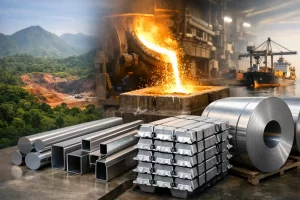

A bulk aluminium order can solve a production problem or create a costly one. The difference usually comes down to specification discipline. If you are evaluating how to order aluminium bulk, the first decision is not price. It is whether the material grade, form, purity, and supply terms actually match your downstream use.
Industrial buyers do not purchase aluminium in the abstract. They purchase conductivity for cable production, corrosion resistance for construction, lightweight strength for transport components, or consistent chemistry for remelting and fabrication. That is why bulk ordering should be treated as a technical procurement exercise, not a simple commodity checkout.
How to order aluminium bulk without costly mistakes
The fastest way to get a bulk order wrong is to ask for aluminium without defining what the plant, project, or customer really needs. Aluminium ingots, powders, and processed forms serve very different production environments. Even within ingots, grade differences affect purity, casting behavior, conductivity, and suitability for specific industrial applications.
If your end use is electrical, a higher-purity grade may matter more than a small price advantage. If your material is headed into general manufacturing or construction-related processing, volume availability and repeatable chemistry may be more valuable than chasing the highest purity available. Bulk purchasing works best when procurement, engineering, and operations are aligned before the inquiry goes out.
Start with the end-use application
Begin with the final use case. Construction buyers may prioritize corrosion resistance, strength-to-weight performance, and reliable delivery windows tied to project schedules. Manufacturers may focus on melt consistency, defect reduction, and compatibility with existing production lines. Exporters and distributors often care most about standardized grades, commercial packaging, and scalable tonnage.
This matters because the same word – aluminium – can describe material for very different outcomes. A buyer sourcing aluminium for packaging applications is not asking the same technical question as a buyer sourcing for automotive castings or electrical infrastructure.
Match the grade to the application
This is where many purchasing delays happen. Standardized ingot grades such as A7, A8, A9, and A6 are not interchangeable in a practical sense, even if they appear close on paper. Purity level influences how the material performs in downstream processing and where it fits commercially.
Higher-purity aluminium is often favored when conductivity, cleaner chemistry, or tighter performance expectations matter. For broader industrial use, buyers may balance purity against budget, available tonnage, and production tolerance. The right grade is the one that supports your manufacturing result with the least operational friction.
If you are sourcing for repeated monthly consumption, grade consistency matters as much as the initial price quote. An attractive rate loses value quickly if every shipment behaves differently in production.
What to confirm before placing a bulk order
Once the application and grade are clear, the next step is building a purchase specification that leaves less room for assumption. Strong suppliers can work quickly when the buyer provides enough detail. Weak inquiries create delays, revisions, and avoidable commercial risk.
Quantity and shipment structure
Bulk means different things to different buyers. For one manufacturer, it may mean a single trial order of several metric tons. For another, it may mean scheduled container-scale or contract-scale deliveries over several months.
State the total quantity, the preferred shipment size, and whether the order is a one-time purchase or part of an ongoing supply program. This affects pricing, lead time, packing format, and inventory planning. It also helps the supplier determine whether the request fits spot supply or contract allocation.
Product form and packaging
Not every industrial buyer needs the same handling format. Ingots may be the obvious requirement, but packaging still matters. You should confirm how the material will be bundled, palletized, protected, labeled, and loaded. This is especially relevant when the receiving site has equipment limitations or strict warehouse procedures.
A buyer with efficient unloading systems may prefer a packaging format that reduces handling time. A distributor moving material through multiple locations may need more protective packaging and clearer identification. These are operational details, but they directly affect landed efficiency.
Chemistry, purity, and documentation
For industrial aluminium, documentation is part of the product. Ask for the material specification and confirm whether a certificate of analysis or equivalent quality documentation is available for the batch. This is not just a compliance issue. It protects production planning.
If your operation depends on high-purity feedstock, make that requirement explicit in the inquiry. If your process can tolerate a broader commercial range, define that too. Buyers save time when they communicate acceptable parameters instead of leaving the supplier to guess.
Supplier questions that actually matter
When buyers ask only for price, they usually get incomplete answers. A better procurement approach is to test supplier capability early. The right commercial conversation should cover material quality, availability, lead time, and supply reliability in equal measure.
Ask what grades are available in bulk, what monthly or quarterly volumes can be supported, and how consistently those volumes can be maintained. Ask how the material is inspected and how shipment documentation is handled. If your business operates across multiple sourcing lanes, it may also be useful to confirm whether the supplier can support delivery into markets such as Germany, Turkey, Vietnam, or China, depending on your logistics strategy.
Price still matters, but it should be evaluated against specification certainty and supply continuity. For a manufacturer, a lower-priced shipment that arrives late or off-spec is usually more expensive than a correctly priced shipment that performs as expected.
Evaluating the quote beyond the ton price
A serious aluminium bulk quote should give you more than a number. It should help you understand what is included, what is assumed, and where cost exposure could change.
Look closely at grade, purity reference, quantity basis, packing terms, lead time, and payment terms. Confirm whether the quote reflects current availability or is subject to market movement. In commodity purchasing, small wording differences can produce large commercial differences later.
This is also the point to check freight responsibility, loading terms, and delivery expectations. Some buyers focus so heavily on headline pricing that they miss a less favorable shipping structure or a lead time that does not fit the production schedule. A quote only makes sense when it works in your real operating environment.
Common buying errors in aluminium bulk orders
The most common error is vague specification. Buyers ask for aluminium ingots but do not define grade, purity expectation, quantity tolerance, or intended application. That forces assumptions on both sides and increases the chance of mismatch.
Another frequent problem is overbuying the wrong grade. Some teams assume higher purity always means better value. It does not. If your application does not require premium purity, you may be tying up capital in unnecessary specification.
There is also the opposite problem – buying too cheaply for a demanding use case. Electrical, precision manufacturing, and quality-sensitive industrial applications usually expose inconsistent chemistry quickly. In those cases, the cheapest material can become the most expensive material in the plant.
Finally, many buyers treat logistics as an afterthought. Packaging, loading, transit conditions, and receiving capability should be discussed before the order is finalized, not after the invoice is issued.
A practical buying process for repeat orders
If you expect recurring demand, treat the first order as the beginning of a supply relationship rather than a single transaction. Standardize your internal purchase criteria. Record which grade performed best, how the shipment arrived, whether documentation met expectations, and how the supplier handled communication.
That internal feedback loop matters. It turns future buying into a controlled process instead of a fresh negotiation every time. It also helps procurement teams compare suppliers on actual performance rather than sales language.
For businesses buying aluminium at industrial scale, consistency is a commercial advantage. A dependable supplier that can support the right grade, predictable volume, and clear documentation often creates more value than a supplier that wins only on the first quote. That is the real answer to how to order aluminium bulk effectively – buy with the end use, operating reality, and long-term supply performance in mind.
The smartest bulk orders are rarely the fastest ones. They are the ones built on clear specs, realistic tonnage, and material that does the job without surprises.