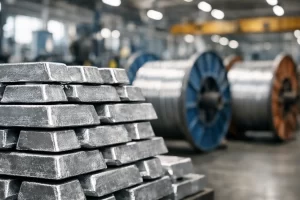

A 10% vehicle mass reduction can translate into meaningful gains in fuel economy, battery range, handling, and emissions performance. That is why aluminium in automotive manufacturing has moved from a niche material choice to a mainstream engineering and procurement decision. For manufacturers, the issue is not whether aluminum belongs in the vehicle mix. It is where it delivers the best return in cost, performance, manufacturability, and supply reliability.
Why aluminium in automotive manufacturing keeps expanding
Automotive production is shaped by competing pressures. Carmakers need lighter vehicles, but they also need crash performance, corrosion resistance, design flexibility, and scalable production. Aluminum meets many of these requirements at the same time.
Its low density is the obvious advantage. Compared with steel, aluminum can reduce part weight significantly while still supporting structural performance when the design is properly engineered. That matters in passenger vehicles, commercial fleets, and electric vehicles, where every kilogram affects energy consumption.
Corrosion resistance is another practical benefit. Components exposed to moisture, road salt, and varying temperatures often benefit from aluminum’s natural oxide layer. In many applications, that helps extend service life and reduce maintenance risk over time.
For manufacturers, aluminum also offers strong formability and recyclability. It can be cast, extruded, rolled, forged, and machined into a wide range of automotive parts. Scrap recovery adds further value, especially in high-volume production environments where material efficiency affects margins.
Where aluminum delivers the most value in a vehicle
Not every automotive component should be made from aluminum. The material performs best where weight reduction, corrosion resistance, thermal conductivity, or casting flexibility create a clear commercial advantage.
Body structures are a major area of growth. Hoods, doors, trunk lids, roof panels, and fenders are common aluminum applications because these parts benefit from lighter gauge construction without severe compromises in durability. In premium and electric vehicle platforms, manufacturers also use aluminum in body-in-white structures and subframes to control total vehicle weight.
Powertrain and thermal management systems are another strong fit. Engine blocks, transmission housings, cylinder heads, heat exchangers, radiators, battery enclosures, and cooling plates often rely on aluminum because it combines low weight with good thermal performance. In EV production, battery systems have made this even more relevant.
Wheels and suspension components also show why material selection is never just about mass. Aluminum wheels improve unsprung weight, which can support ride and handling. Suspension arms and knuckles made from suitable aluminum alloys can also contribute to overall vehicle dynamics. The trade-off is that design, alloy choice, and production method must be tightly controlled to meet fatigue and impact requirements.
The main production routes behind automotive aluminum parts
In procurement and manufacturing, the value of aluminum depends heavily on the processing route. Different automotive components require different combinations of strength, dimensional control, surface quality, and production speed.
Die casting remains one of the most important methods. It is widely used for transmission cases, motor housings, structural nodes, and other complex shapes that need repeatability in large volumes. High-pressure die casting supports fast cycle times and good shape complexity, although the final performance depends on alloy chemistry, porosity control, and downstream finishing.
Sheet forming is essential for closures and body panels. Automotive sheet aluminum must balance formability with dent resistance and final strength. This creates a very different sourcing requirement than bulk ingot for casting operations. Buyers need to understand whether they are procuring primary metal, remelt ingot, slab feedstock, or semi-fabricated material.
Extrusion is common for crash management systems, side-impact beams, battery frame elements, and structural reinforcements. Extruded profiles allow engineers to design cross-sections that optimize stiffness and energy absorption while keeping weight under control.
Machining and forging also play an important role in performance parts and precision components. These routes generally involve higher unit cost, so they are used where dimensional tolerance and mechanical properties justify the expense.
Alloy selection matters more than the headline material
When buyers discuss aluminum for automotive use, the biggest mistake is treating it as a single material category. Performance depends on alloy family, temper, purity, and process route.
Cast components often use silicon-containing alloys because they offer good fluidity and castability. Wrought products used in sheet and extrusions may rely on different alloy series depending on strength, corrosion resistance, and formability targets. For heat exchangers, conductivity and brazing behavior become important. For structural components, crash response and fatigue resistance are central.
This is where upstream material quality affects downstream production. High-purity primary aluminum and consistent ingot specifications support tighter process control, especially when manufacturers need predictable melt chemistry for castings or controlled alloying in remelt operations. Industrial buyers sourcing standardized grades such as A7, A8, A9, or A6 are often looking for exactly that kind of consistency.
A lower-cost feedstock may appear attractive at purchase, but if it introduces variability in casting quality, surface finish, or mechanical performance, the actual production cost can rise quickly. Scrap rates, rework, and quality claims are far more expensive than a small difference in raw material price.
The trade-offs manufacturers need to evaluate
Aluminum is not a universal replacement for steel or other materials. In automotive manufacturing, the right decision usually depends on part function, target cost, joining method, and production volume.
The first trade-off is material price. On a per-unit basis, aluminum often costs more than conventional steel. The business case works when weight reduction leads to better fuel efficiency, improved EV range, easier emissions compliance, or lower system-level cost. Sometimes a lighter part also allows secondary weight savings elsewhere in the vehicle, which improves the economics.
The second trade-off is joining and repair. Aluminum requires different welding, fastening, bonding, and corrosion management strategies than steel. Mixed-material vehicle designs can deliver excellent performance, but they add complexity in assembly engineering.
The third trade-off is springback and forming behavior. Stamping aluminum body panels is not identical to stamping steel. Tooling, lubrication, and process settings must be adjusted accordingly. For procurement teams, this means material substitution decisions should be made with manufacturing engineers, not in isolation.
Supply chain priorities for industrial buyers
For automotive manufacturers and tier suppliers, sourcing aluminum is about more than availability. They need dependable chemistry, clean metal, batch consistency, and a supply partner that understands end-use demands.
A supplier serving automotive-adjacent buyers should be able to discuss purity, application fit, and volume capability with precision. This is especially relevant for foundries, component manufacturers, and industrial processors that purchase aluminum ingots in bulk for remelting and alloy production. Reliable feedstock supports more stable casting operations, better yield, and fewer production disruptions.
Regional supply strategy also matters. Buyers operating across manufacturing centers in markets such as China, Turkey, Vietnam, and Germany often balance price, lead time, logistics, and specification control when planning raw material procurement. A commercially useful supplier is one that can support these decisions with clear grade segmentation and consistent industrial documentation.
For companies evaluating bulk aluminum inputs, Aluminum Cm is positioned around that practical requirement – high-volume aluminium supply, standardized ingot options, and material suited for downstream industrial production.
What this means for the future of vehicle production
The role of aluminum will continue to grow, but not in a simple one-material-takes-all way. The market is moving toward smarter material placement. Carmakers and suppliers are using aluminum where it creates measurable gains in efficiency, corrosion resistance, thermal management, and structural design.
Electric vehicles will keep pushing that trend. Lightweight battery enclosures, motor housings, thermal systems, and structural castings are all areas where aluminum offers a strong performance case. At the same time, manufacturers will keep balancing it against steel, magnesium, plastics, and composites based on cost and application.
For industrial buyers, the opportunity is clear. Aluminum is not just a commodity input. In the right grade and form, it is a production lever that affects quality, efficiency, and finished vehicle performance. The better the material match, the better the manufacturing result.
The most useful question is not whether to use aluminum. It is whether your current specification, alloy route, and supply source are aligned with the part you need to produce next.