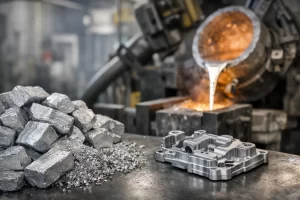
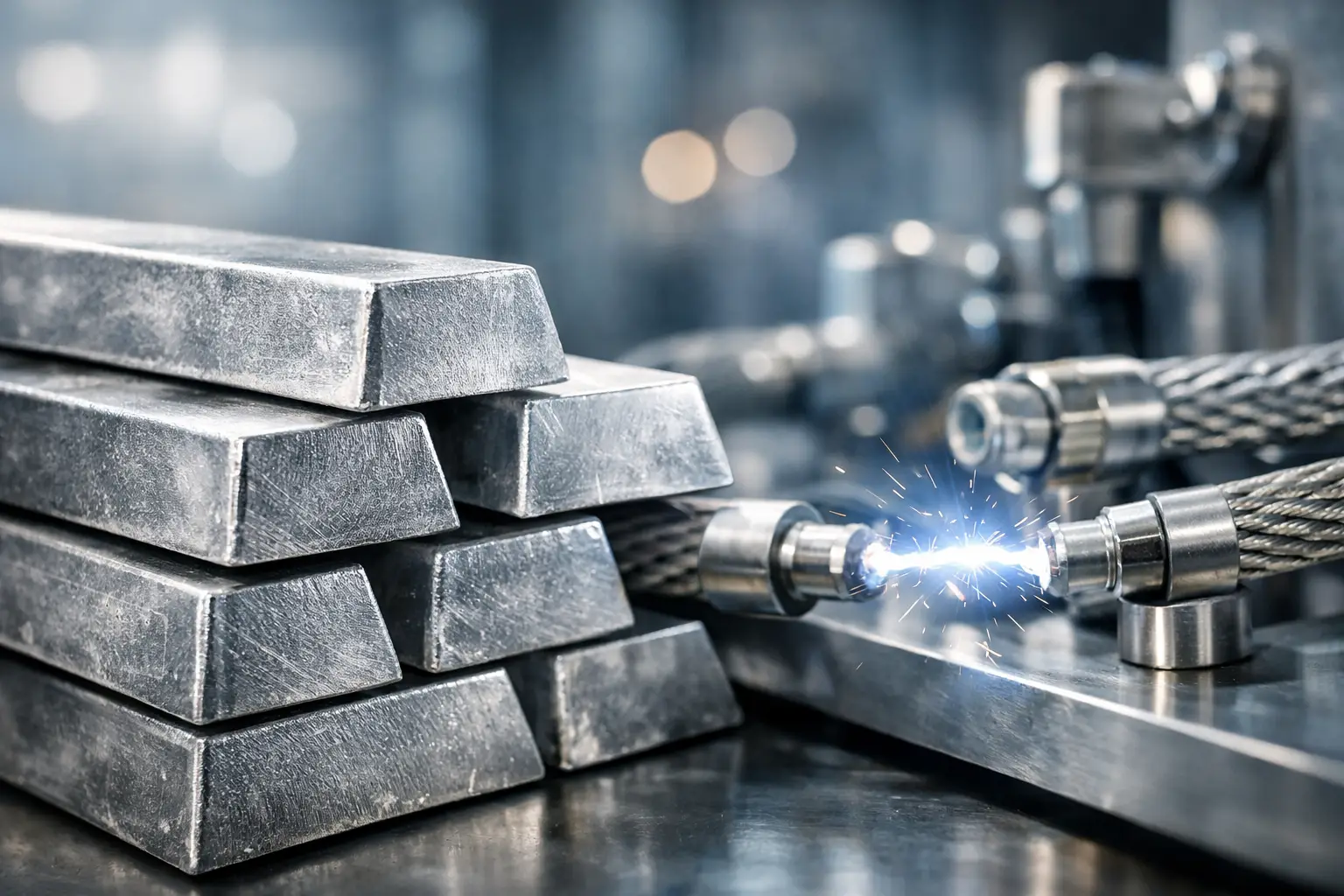
When a buyer is sourcing metal for busbars, cable inputs, transformer parts, or conductive cast components, conductivity is not a side detail. It is often the deciding factor. That is why aluminium ingot conductivity properties matter well beyond a lab figure on a certificate. They affect electrical efficiency, heat behavior, downstream processing, grade selection, and ultimately the commercial value of the material in production.
Aluminium is widely specified in industrial supply because it offers an unusual combination of low density, corrosion resistance, workable strength, and good electrical and thermal conductivity. For many manufacturers, that balance is more useful than chasing conductivity alone. Copper remains the stronger conductor by volume, but aluminum can deliver a favorable conductivity-to-weight ratio, which is why it continues to play a major role in power infrastructure, transport systems, and large-scale fabricated products.
What defines aluminium ingot conductivity properties
In practical terms, conductivity describes how well aluminum allows electric current or heat to pass through it. For industrial buyers, electrical conductivity is usually the main concern, especially when ingots will be remelted for conductor rod, strip, extrusions, cast parts, or other current-carrying products. Thermal conductivity also matters in heat exchangers, housings, radiators, and process equipment.
Pure aluminum has high conductivity because its atomic structure allows electrons to move relatively freely. Once alloying elements or impurities are introduced, that movement becomes less efficient. This is the central rule behind aluminium ingot conductivity properties – higher purity generally supports higher conductivity, while added elements tend to reduce it.
That sounds simple, but procurement decisions are rarely that simple. A manufacturer may not want the highest conductivity if the part also needs better castability, greater mechanical strength, or improved wear performance. In real purchasing environments, conductivity is one performance target among several.
Purity and conductivity in commercial ingot grades
For standardized primary aluminum ingots, purity level is one of the clearest indicators of expected conductivity behavior. Grades such as A7, A8, A9, and A6 are often assessed not only for chemical composition but also for suitability in conductive end uses.
Higher-purity grades typically provide better conductivity because they contain fewer metallic and non-metallic elements that interfere with electron flow. A9, for example, will generally present stronger conductivity potential than lower-purity alternatives, assuming proper melt handling and downstream processing. A7 also remains a strong commercial choice where buyers need a high-purity balance with broad industrial usability.
A6 may still be appropriate in many manufacturing settings, but expectations should be aligned with the end use. If the application is highly sensitive to electrical loss, even small differences in impurity content can matter. If the ingot is going into a general casting process where conductivity is relevant but not critical, a slightly lower purity grade may still meet performance and cost targets.
This is where material selection becomes a commercial exercise, not just a technical one. A higher-purity ingot may cost more, but that premium can be justified if it improves conductor performance, reduces resistance, or supports tighter specifications in a finished product.
Which elements reduce conductivity most
Not all impurities affect aluminum in the same way. Some have a modest effect, while others can cause a more noticeable drop in conductivity, even at relatively low levels.
Elements such as iron, silicon, copper, manganese, magnesium, and zinc are common points of attention. In many alloy systems, these additions are useful because they change strength, hardness, castability, or corrosion behavior. The trade-off is that they usually reduce conductivity to some degree.
Copper is a good example of this balance. It can improve strength in certain alloys but tends to lower electrical conductivity compared with purer aluminum. Magnesium can be valuable in structural alloys, yet it also pushes conductivity downward. Silicon helps casting performance in many foundry applications, but again, it is not chosen for maximizing electrical flow.
For buyers, the key point is straightforward. If the application depends on conductivity, chemistry control needs to be tight. If the application depends on mechanical performance first, then some conductivity loss may be acceptable.
Electrical conductivity versus thermal conductivity
These two properties are related, but they are not interchangeable in purchasing decisions. Aluminum performs well in both areas, which is one reason it is used so widely across industrial sectors.
Electrical conductivity matters in conductors, electrical connectors, transmission components, motor parts, and energy systems. Thermal conductivity matters in cooling systems, molds, heat sinks, process housings, and transport applications where heat needs to move efficiently away from a source.
In many cases, a grade that performs well electrically will also perform well thermally, especially when purity is high. Still, production method, alloying practice, and final form can influence results. Buyers should avoid assuming that one favorable property automatically guarantees top performance in the other without checking the actual specification.
How processing affects conductivity after the ingot stage
An ingot is the starting point, not the finished performance story. Even when the base metal chemistry is favorable, melting, alloying, casting, rolling, extrusion, and heat treatment can all influence final conductivity.
Excess contamination during remelting can reduce the advantage of a high-purity ingot. Poor melt discipline, uncontrolled scrap additions, or inconsistent furnace practices may introduce unwanted elements that alter the final electrical profile. For manufacturers producing conductive products, traceability from ingot chemistry through remelt operations is essential.
Grain structure and work hardening can also play a role. In some finished aluminum products, temper and processing route affect resistivity enough to matter in tight engineering applications. That means buyers should evaluate conductivity as part of the whole production chain, not just the incoming ingot grade.
Aluminium ingot conductivity properties in end-use sectors
Electrical infrastructure is the clearest example of why conductivity matters. Aluminum is commonly used in overhead transmission systems, conductor rod, busbars, and related components because it combines good conductivity with low weight. Lower mass can simplify handling and reduce structural load in large installations.
In transportation and industrial manufacturing, the picture is more mixed. A component may need enough conductivity for grounding, current transfer, or heat dissipation, but also enough strength for service loads. In those cases, a buyer may select a grade that gives up some conductivity in exchange for better fabrication or performance in operation.
Packaging and general construction are different again. Conductivity may be secondary to corrosion resistance, formability, or cost efficiency. Here, the buyer is not ignoring conductivity. It is simply not the lead criterion.
This is why specification should always begin with the actual use case. The right ingot for conductor applications is not automatically the right ingot for cast machine parts or architectural products.
What buyers should ask before placing a bulk order
For bulk procurement, conductivity should be tied to measurable data, not assumptions based on generic grade names alone. Grade designation is useful, but serious purchasing requires a closer look.
A buyer should confirm purity range, expected impurity limits, certificate availability, consistency across lots, and whether the ingot is intended for electrical, casting, or general industrial remelt use. It is also worth asking how tightly the supplier controls chemistry from batch to batch. In high-volume production, consistency often matters as much as the headline conductivity level.
For projects serving electrical manufacturers or export supply chains, it may also be necessary to verify that the ingot can support downstream compliance requirements. That becomes especially important when the final product is being sold into markets with stricter performance tolerances.
Choosing the right balance of conductivity and commercial value
The best buying decision is usually not the most conductive ingot on paper. It is the ingot that matches the intended application, process route, and production economics with the least risk.
If the product is conductivity-driven, higher-purity aluminum ingots are often the safer choice. If the product is more dependent on casting behavior or mechanical strength, a different chemistry may deliver better overall value. That is the real commercial reading of aluminium ingot conductivity properties – they should be assessed in context, not in isolation.
For industrial buyers evaluating large-volume supply, the strongest position comes from pairing technical requirements with dependable specification control. A supplier that understands purity, grade fit, and end-use performance helps reduce rework, stabilize production, and protect margins. When conductivity is part of the decision, the smartest order is the one that solves the application first and the tonnage second.