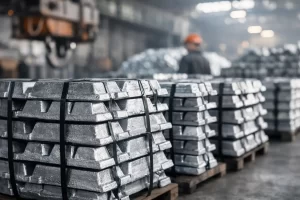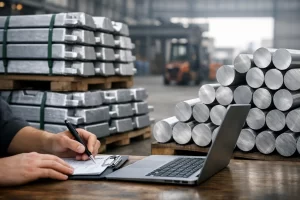

A delayed aluminum shipment rarely fails on price alone. More often, the problem starts earlier – a grade was specified too loosely, purity was assumed instead of confirmed, or supply terms did not match the production schedule. This industrial aluminium procurement guide is built for buyers who need fewer surprises in bulk purchasing and better alignment between metal specification, application, and commercial terms.
For industrial procurement teams, aluminum is not a generic input. The wrong ingot grade can affect conductivity, casting performance, surface finish, corrosion resistance, and downstream machining. Even when two offers look similar on paper, the actual purchasing decision should account for purity, consistency, logistics, and the supplier’s ability to support repeat volume without changing material quality.
What an industrial aluminium procurement guide should help you solve
A useful buying framework does more than compare quotes. It helps procurement managers reduce operational risk while keeping cost discipline. In aluminum purchasing, that usually means balancing four pressures at once: material performance, unit price, lead time, and supply reliability.
That balance shifts by sector. A buyer sourcing for electrical applications will weigh conductivity and purity differently than a manufacturer producing structural parts or packaging inputs. A construction materials distributor may prioritize dependable volume and corrosion resistance over ultra-high-purity material. Procurement works best when the specification starts with end use, not with whichever grade appears cheapest in the market that week.
Start with application before grade
The first procurement error is often treating aluminum ingots as interchangeable. They are not. Grade selection should begin with what the material must do in production and in service.
For electrical infrastructure and cable-related manufacturing, higher-purity aluminum supports conductivity and predictable processing. In transportation and machinery fabrication, the buyer may care more about weight reduction, strength-to-weight performance, and compatibility with downstream alloying or forming. In packaging and industrial processing, consistency across batches often matters as much as nominal purity because process variation creates waste and downtime.
Common industrial ingot grades such as A7, A8, A9, and A6 each serve different sourcing priorities. Higher-purity grades are often preferred where conductivity, refined chemistry, or demanding industrial use cases are involved. Other grades may be commercially suitable for broader manufacturing applications where the buyer needs scale, stable quality, and cost control. The right choice depends on the production requirement, not just the product name.
Grade, purity, and specification discipline
An industrial aluminium procurement guide should put grade verification near the top of the process. Buyers should ask for exact grade designation, purity range, and any relevant chemical composition details before comparing offers. If a quotation only says aluminum ingot without a defined grade, that is not enough for industrial purchasing.
Purity affects more than technical performance. It can influence scrap rates, remelt behavior, finish quality, and process efficiency. A premium-grade material may cost more per metric ton, yet reduce hidden production losses. On the other hand, over-specifying purity can raise procurement cost without adding real value if the application does not require it. This is one of the clearest it-depends decisions in aluminum sourcing.
Consistency matters just as much as the headline number. A buyer may accept a slightly narrower use case if the supplier can deliver the same quality reliably over multiple orders. That predictability helps stabilize manufacturing output and procurement planning.
The commercial side of industrial aluminium procurement
Price per ton gets attention, but total procurement value depends on the full commercial structure. Buyers should evaluate how pricing is tied to grade, volume, packaging, shipment timing, and payment terms. A low headline quote can become expensive if it introduces production risk or delivery uncertainty.
Minimum order quantities matter for both sides. Industrial suppliers are structured around bulk movement, and better pricing often follows higher tonnage commitments. That said, buyers should avoid taking more volume than storage, cash flow, or production schedules can absorb. Inventory carrying cost can erase a negotiated discount very quickly.
Lead time is another point where procurement teams need precision. Ask not only when the shipment leaves, but when the material is realistically available for your plant or distribution network. Transit, customs handling, inland movement, and unloading schedules all affect real supply timing.
Supplier evaluation beyond the quote
The strongest suppliers do not just sell aluminum. They provide clarity around grade options, product suitability, and supply continuity. That matters when purchasing for manufacturing lines that cannot pause while procurement rechecks specifications.
A credible supplier should be able to explain where a grade fits, what applications it supports, and how it performs in industrial settings such as construction, electrical systems, transportation, and fabrication. Buyers should also look for evidence that the supplier understands scale. Bulk supply is not simply a larger version of small-order sales. It requires disciplined stock planning, specification control, and dependable order handling.
For companies sourcing with interest in Cameroon-linked aluminum trade, supplier knowledge of the regional raw material base can add value, especially when discussing long-term procurement strategy or sector relevance. That context is useful when it informs availability and commercial planning. It is less useful when it is used as a substitute for hard product data.
Industrial aluminium procurement guide for risk control
Procurement risk in aluminum usually shows up in five places: unclear specifications, inconsistent quality, delayed logistics, weak communication, and poor fit between grade and application. The best buying process addresses each one before a purchase order is issued.
Specification clarity comes first. Confirm grade, purity, form, quantity, packing method, and any required documentation. Then validate operational fit. If the aluminum will be remelted, cast, machined, or used in conductivity-sensitive production, make sure the quoted material supports that process.
Communication quality is a practical signal. If a supplier is vague before the order, they are unlikely to become precise after payment. Industrial buyers should prefer suppliers who answer directly on material specs, volume availability, and shipment timing.
Logistics risk deserves equal attention. Bulk aluminum purchasing is often won or lost at the delivery stage. The procurement team should confirm loading schedules, shipment milestones, and what happens if timelines move. It is better to discuss contingency early than argue over delays later.
Matching procurement strategy to end markets
Different end markets justify different buying strategies. In construction, buyers often prioritize corrosion resistance, dependable volume, and pricing discipline because material flows into large projects with tight cost controls. In electrical applications, quality and purity can justify a premium because conductivity and reliability are central to the finished product.
Automotive and transportation buyers usually care about lightweight performance and consistency, especially when aluminum supports efficiency targets or downstream forming requirements. Manufacturers working with industrial components may focus on stable chemistry and repeat supply because process consistency affects output quality more than one-time price savings.
This is why a generic sourcing model rarely works. Procurement should align with the revenue logic of the buyer’s own market. If production downtime costs more than a modest premium in material price, the smarter decision may be the supplier with stronger delivery confidence and tighter specification control.
When bulk purchasing makes sense
Bulk procurement offers clear advantages when demand is stable, storage is controlled, and the supplier can maintain consistent material quality. Buyers gain leverage on pricing, secure production inputs, and reduce the frequency of sourcing cycles. For exporters, manufacturers, and large project purchasers, bulk buying often supports better planning across operations and finance.
But scale should be deliberate. If your demand fluctuates sharply or your application is still changing, large-volume commitments can reduce flexibility. In those cases, the better move may be to establish the right grade and supplier relationship first, then expand order size once material performance is confirmed.
Suppliers that specialize in industrial aluminum can help buyers make that transition with more confidence. A company such as Aluminum Cm, which focuses on bulk ingots and application-based grade positioning, reflects the kind of product-led supply approach industrial buyers generally need.
Buying aluminum with fewer surprises
Good procurement is rarely about finding the cheapest metal in the market. It is about buying the right aluminum, at the right purity, in the right volume, from a supplier that can keep your operation moving. When grade selection, commercial terms, and logistics are handled with discipline, aluminum becomes a production asset rather than a purchasing problem.
The buyers who perform best over time ask harder questions before they place the order. That is usually where the margin is protected, the downtime is avoided, and the next shipment becomes easier than the last.