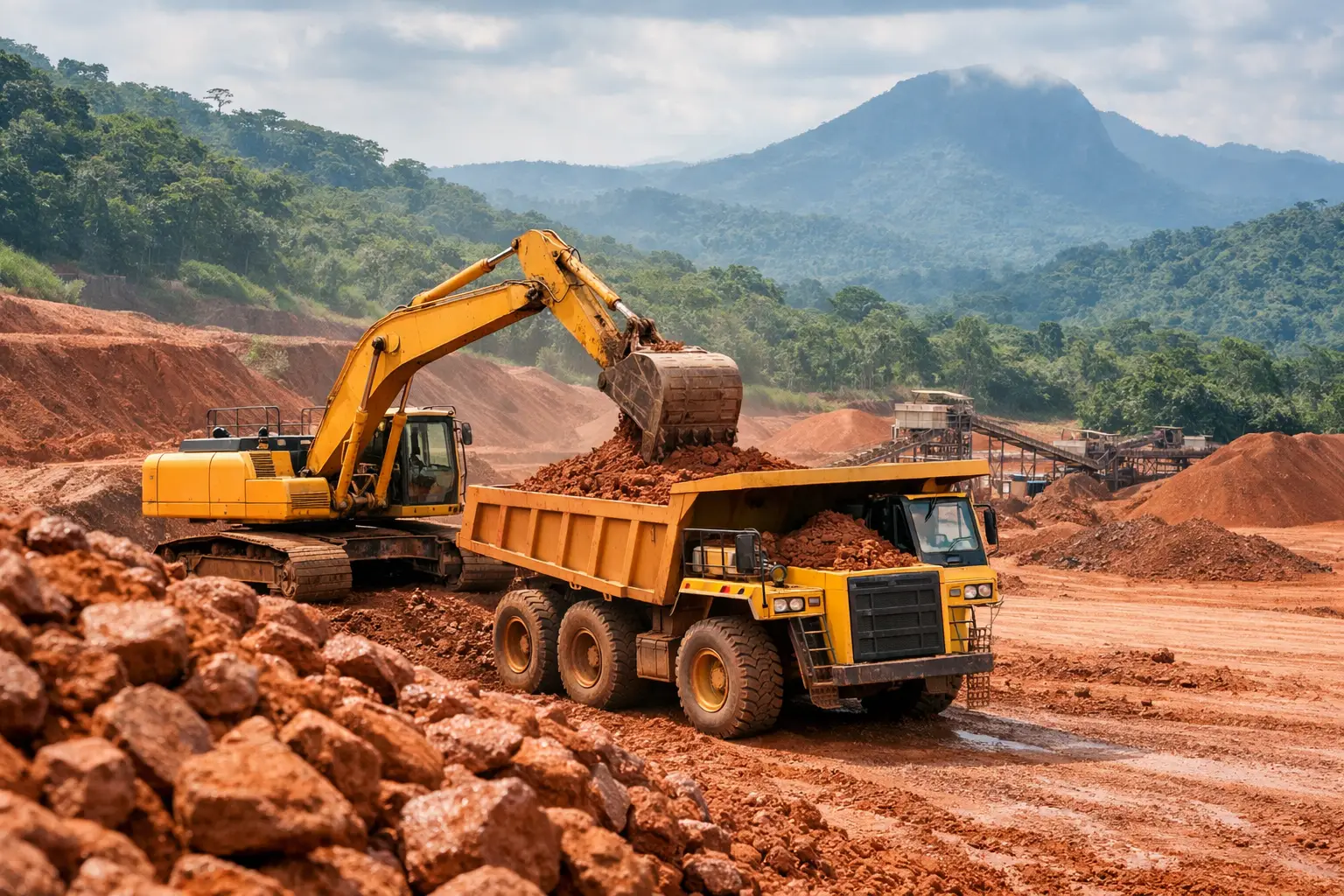
Few upstream minerals matter to aluminium buyers as much as bauxite. If you are evaluating long-term supply security, pricing logic, or regional industrial potential, Cameroon bauxite resources deserve close attention because they sit at the start of the aluminium value chain.
For procurement teams, traders, and manufacturers, the question is not simply whether Cameroon has bauxite. The more useful question is how those deposits translate into commercially viable alumina and aluminium output, and what that means for future sourcing decisions. Resource size matters, but so do grade, logistics, energy availability, infrastructure, and downstream processing capacity.
Why Cameroon bauxite resources matter to aluminium buyers
Bauxite is the principal ore used to produce alumina, which is then smelted into primary aluminium. That makes bauxite availability a strategic issue for every buyer involved in construction products, cable manufacturing, transport components, packaging inputs, and industrial fabrication.
Cameroon holds recognized bauxite deposits that position it as a potentially important upstream source in Central Africa. For industrial buyers, this creates two commercial implications. First, resource depth can support long-horizon supply planning. Second, any improvement in mining, rail, port, or refining infrastructure can increase the country’s relevance in regional and export-oriented aluminium markets.
This matters most when buyers are not just purchasing metal on spot terms, but building procurement strategies around dependable raw material access. A country with meaningful bauxite reserves can influence future alumina flows, refining investments, and eventually the availability of aluminium products for high-volume industrial use.
The role of bauxite in the aluminium chain
Bauxite is not a finished industrial input. It is the geological starting point. After extraction, bauxite is processed into alumina through refining, and alumina is then converted into aluminium metal through smelting. Each stage adds cost, complexity, and dependency on infrastructure.
That is why ore deposits alone do not guarantee immediate supply advantages. Buyers looking at Cameroon should think in terms of the full chain – mining quality, transport distance, processing capability, and export economics. A strong resource base is valuable, but commercial value rises sharply when the ore can move efficiently into alumina and metal production.
For businesses that purchase aluminium ingots such as A7, A8, A9, or A6 for downstream manufacturing, the upstream bauxite picture still matters. It influences future market depth, regional investment confidence, and the resilience of supply over time.
Known strengths of Cameroon bauxite resources
Cameroon’s main advantage is geological potential. The country is widely recognized for sizable bauxite occurrences, with deposits that have attracted attention because of their scale and strategic location within an underdeveloped but resource-rich region.
From a commercial perspective, large reserves can support mine-life expectations that appeal to long-term investors and industrial planners. This is especially relevant where buyers need confidence that a supply source is not a short-cycle opportunity but a durable part of the aluminium ecosystem.
Another strength is the broader industrial relevance of Cameroon within African minerals and energy discussions. The country already has significance in aluminium-related conversations because raw materials, transport corridors, and industrial policy can converge to support future expansion. Where infrastructure improves, resource countries can move from geological promise to practical export importance.
There is also a diversification argument. Global aluminium buyers increasingly evaluate country risk, shipping exposure, and concentration in supply chains. Cameroon bauxite resources can become more attractive when buyers want alternatives to more concentrated sourcing patterns.
The real constraints buyers should watch
Resource potential and commercial readiness are not the same thing. That distinction matters. Cameroon’s bauxite story has promise, but buyers should assess the practical bottlenecks that determine whether ore can move at scale and at a competitive delivered cost.
Infrastructure is the first filter
Bulk minerals depend on logistics. Rail access, road quality, port throughput, storage facilities, and loading efficiency all shape whether a deposit can be developed economically. If transport costs are too high or export routes are unreliable, even a strong deposit can struggle to compete.
For bauxite specifically, volume is essential. Mines need cost-effective movement from inland deposits to processing plants or ports. Any supply outlook tied to Cameroon bauxite resources must therefore account for infrastructure timelines, not just reserve estimates.
Energy and refining capacity change the equation
If Cameroon exports raw bauxite, it captures one level of value. If it refines alumina or supports more domestic aluminium production, the value proposition becomes stronger. But refining and smelting are energy-intensive. That means power reliability and industrial energy pricing are central to sector growth.
For buyers, this is an important trade-off. A country may have excellent ore resources yet remain primarily an upstream exporter if energy and processing investment lag. That can still matter to the global market, but it changes how quickly local aluminium product ecosystems mature.
Policy and project execution matter
Mining projects require permits, financing, development schedules, and stable commercial frameworks. Delays are common in resource sectors. Buyers should avoid assuming that a promising deposit will automatically become a near-term supply source.
The practical approach is to monitor project execution milestones. Resource statements are useful, but transport agreements, production targets, and shipment records are more meaningful indicators of market impact.
What Cameroon’s bauxite base could mean for aluminium supply
Over time, a stronger bauxite sector can support a broader aluminium supply chain in several ways. It can attract mining capital, encourage refinery planning, improve export infrastructure, and strengthen confidence among industrial buyers sourcing aluminium-linked materials from the region.
That does not mean Cameroon immediately becomes a dominant finished aluminium producer. In many markets, the path starts with ore development and exports, then moves into partial downstream integration where economics allow. Whether that progression happens depends on capital intensity, energy access, and long-term policy consistency.
For commercial buyers, the near-term value is strategic visibility. Countries with meaningful bauxite reserves often become more relevant to aluminium trade over time, particularly when demand for lightweight, corrosion-resistant metal remains strong across construction, power transmission, machinery, and transportation.
How industrial buyers should read Cameroon bauxite resources
If you buy aluminium in bulk, the smartest reading is neither overly optimistic nor dismissive. Cameroon offers upstream potential, but procurement decisions should be based on actual supply chain maturity.
A useful framework is to separate three layers of opportunity. The first is geological confidence – does the country have enough bauxite to matter? Cameroon clears that threshold. The second is logistics readiness – can the material move reliably and competitively? That depends on infrastructure development. The third is downstream conversion – does ore availability support alumina and metal supply at commercial scale? That remains a more conditional question.
This layered view helps buyers make better sourcing decisions. If your priority is immediate metal availability, focus on proven suppliers with clear grade specifications and reliable shipment capability. If your priority is long-term market positioning, keep close watch on Cameroon’s bauxite development because upstream expansion can improve regional supply options over time.
Commercial relevance for downstream aluminium products
For manufacturers and distributors, the value of a bauxite-rich market is not abstract. A stronger upstream base can eventually support more stable aluminium availability for products used in building systems, cable and conductor manufacturing, automotive parts, industrial castings, packaging components, and engineered assemblies.
That matters because aluminium demand is tied to performance, not just price. Buyers choose aluminium for its low weight, corrosion resistance, conductivity, and forming efficiency. When the raw material base behind those products becomes more secure, downstream planning improves as well.
This is one reason industrial suppliers track mineral development closely. Companies serving buyers in markets such as Germany, Turkey, Vietnam, and China often evaluate raw material trends not as academic data, but as signals for future procurement leverage, product positioning, and supply continuity.
Where the opportunity is strongest
The strongest opportunity in Cameroon is not hype. It is the combination of resource scale and future industrial optionality. If transport and processing capacity improve, the country can strengthen its role in alumina and aluminium supply discussions. If those factors move slowly, Cameroon may still remain important as a resource base with long-term strategic value.
For buyers, that means patience and discipline. Watch the ore, but watch the infrastructure even more closely. Follow project execution, not just reserve headlines. And when evaluating aluminium procurement, connect upstream resource logic with the product specifications you actually need – purity, grade consistency, corrosion resistance, and delivery reliability.
For any business buying aluminium at industrial scale, Cameroon bauxite resources are worth tracking because they point to where future supply strength may come from. The best purchasing decisions are rarely made at the final transaction stage alone. They are made earlier, by understanding the ground beneath the metal.