
A part that is 30% lighter can change more than shipping cost. It can alter machine speed, payload limits, forming behavior, energy use, and even whether a finished product stays competitive in its market. That is why lightweight aluminium for manufacturing remains a serious material choice for buyers who need performance gains without giving up durability, corrosion resistance, or scalable supply.
For industrial procurement teams, the real question is not whether aluminum is light. It is whether the right grade, purity level, and product form will support production targets at the volume and consistency a factory requires. In manufacturing, material selection is rarely about one property alone. Weight matters, but so do conductivity, machinability, castability, corrosion behavior, and cost per finished unit.
Why lightweight aluminium for manufacturing keeps gaining ground
The strongest case for aluminum is not simply low mass. It is the balance between low weight and usable mechanical performance. Compared with heavier metals, aluminum allows manufacturers to reduce overall part weight while maintaining structural integrity for many commercial and industrial applications.
That matters in transportation equipment, machine housings, packaging systems, electrical enclosures, consumer durables, and fabricated industrial components. Lower weight can mean lower fuel use in mobility applications, easier handling on the production floor, and less stress on connected assemblies. In some product categories, it also supports better thermal management and faster fabrication.
Corrosion resistance adds another commercial advantage. In environments where moisture, outdoor exposure, or chemical contact are part of normal service conditions, aluminum can outperform materials that require heavier protective treatment. For manufacturers, that can reduce finishing requirements or extend service life in the field.
There is also a productivity angle. Aluminum is widely selected because it works across multiple manufacturing processes, including casting, extrusion, rolling, machining, and fabrication. A material that can move efficiently through different production methods gives buyers more flexibility when product design or output volumes shift.
The properties that matter on the factory floor
Lightweight aluminium for manufacturing is usually evaluated through a combination of practical and technical factors. Density is the headline feature, but buyers do not place bulk orders based on density alone.
Strength-to-weight ratio is often the first serious filter. A lighter metal only delivers value if it can still perform under load, vibration, or repeated use. In many manufactured products, aluminum offers enough strength for the job while reducing total mass in the assembly.
Conductivity is another major consideration, especially for electrical and power-related products. Aluminum is a widely used material in cable, busbar-related systems, and electrical infrastructure components because it combines lower weight with good conductive performance.
Machinability and formability also affect total production cost. A material that cuts cleanly, casts predictably, or forms into the required geometry with fewer rejects can improve throughput. Some aluminum grades are better suited to casting, while others are preferred for rolling or extrusion. That is where grade selection becomes critical.
Thermal performance should not be overlooked. Manufacturers in automotive, electronics, and industrial equipment often need metals that dissipate heat effectively. Aluminum can support this requirement well, but exact performance depends on alloy composition and part design.
Not all aluminum is the same
Industrial buyers know that “aluminum” is too broad to be useful in a purchasing decision. Manufacturing outcomes depend on the grade, purity, and intended process route.
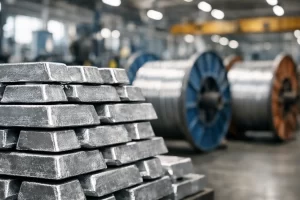
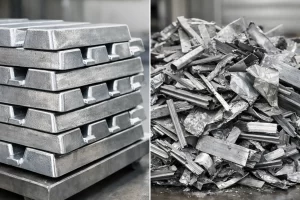
High-purity primary aluminum ingots such as A7, A8, A9, and A6 are relevant for manufacturers that need consistent chemistry for downstream processing. These grades are commonly considered when purity, conductivity, and controlled input quality are priorities. For some manufacturers, especially those producing cast products, rolled stock, extruded profiles, or electrical applications, raw material consistency can directly affect yield and final product performance.
The trade-off is simple. Higher purity may improve conductivity and reduce contamination risk, but it may not always be the most economical choice for every fabricated product. Some applications need tighter specifications. Others are more cost-sensitive and can tolerate broader material ranges. The right buying decision depends on end use, compliance requirements, and process sensitivity.
This is where suppliers need to do more than quote a price per ton. They need to align grade selection with the customer’s production method and commercial objective.
Where manufacturers use lightweight aluminum most effectively
Transportation is one of the clearest examples. Vehicle and component manufacturers use aluminum to reduce mass in body parts, wheels, structural sections, housings, and internal systems. Lower weight can improve fuel efficiency, range, and payload. But the gains only hold if the chosen material also meets forming and durability requirements.
In electrical manufacturing, aluminum is valued for conductivity and lower weight, especially in large-scale infrastructure and cable-related production. For these buyers, purity and consistency matter because electrical performance can decline if raw material quality is unstable.
Packaging manufacturers use aluminum because it is light, corrosion-resistant, and highly workable. It supports high-volume production and protects contents effectively. In this segment, material quality affects forming behavior, surface finish, and waste rates.
Machinery and industrial equipment producers often use aluminum for frames, covers, brackets, and fabricated assemblies where weight reduction improves handling or equipment efficiency. In some cases, lighter components can reduce strain on motors and moving systems.
Construction-related manufacturing also benefits. Window systems, facade components, roofing products, and fabricated structural elements use aluminum because it combines low weight with corrosion resistance and long service life. For commercial buyers, that means easier transport, lower maintenance, and strong suitability for humid or coastal conditions.
The sourcing questions buyers should ask
A lightweight material only adds value if supply is dependable. For manufacturers buying in volume, sourcing risk can do more damage than a marginal price increase.
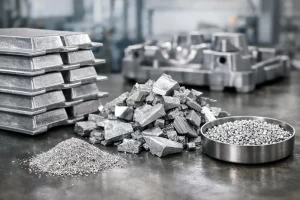
The first question is grade suitability. Buyers should confirm whether the supplied aluminum matches the intended manufacturing process, whether that is remelting, casting, rolling, or extrusion. A generic quote without process alignment creates downstream risk.
The second question is specification control. Purity level, dimensional tolerance, and batch consistency all influence production performance. Variability in feedstock can lead to defects, process instability, or extra refining cost.
The third question is volume reliability. Industrial manufacturing does not stop because a supplier cannot scale. Buyers need confidence that tonnage can be maintained across repeated orders, especially for long production runs or project-based demand.
The fourth question is application fit. Aluminum for aerospace-grade work, packaging, electrical use, and general manufacturing are not interchangeable decisions. Procurement teams should expect suppliers to speak clearly about where each grade performs best and where it may not be the ideal choice.
Manufacturing trade-offs buyers should weigh
Aluminum offers strong advantages, but it is not automatically the best answer in every case. That is where disciplined sourcing matters.
If an application demands very high hardness, extreme wear resistance, or low raw material cost above all else, another metal may still be more suitable. Aluminum can also behave differently in welding, finishing, or high-load structural use depending on alloy and design conditions.
There is also the price-performance question. A lighter component may reduce logistics costs, improve efficiency, and support better end-product performance, but those savings need to be measured against raw material pricing and processing requirements. In many sectors, aluminum wins on total value rather than lowest upfront cost.
Manufacturers should also consider scrap recovery and recyclability. Aluminum performs well here, which can improve long-term economics. For operations with strong material recovery systems, that advantage becomes more significant over time.
Supply matters as much as material choice
For buyers evaluating Cameroon-linked aluminum supply, the broader industrial story adds value. Cameroon’s bauxite base supports its relevance in the global aluminum conversation, particularly for companies tracking stable raw material sources and regional supply potential. That does not replace the need for verified specifications, but it does matter when procurement teams assess long-term sourcing options.
A supplier such as Aluminum Cm is strongest when it connects that resource position with practical commercial delivery – clear grade segmentation, bulk availability, and material suited to real manufacturing applications. Buyers are not looking for theory. They are looking for aluminum they can put into production with confidence.
When lightweight aluminum is selected well, the result is not just a lighter part. It is a better manufacturing equation: lower transport burden, strong corrosion resistance, broad process compatibility, and dependable industrial use across sectors. The smartest purchasing decision is the one that matches grade, purity, and supply capability to the exact demands of the finished product – because in manufacturing, weight savings only matter when the rest of the material story holds up.